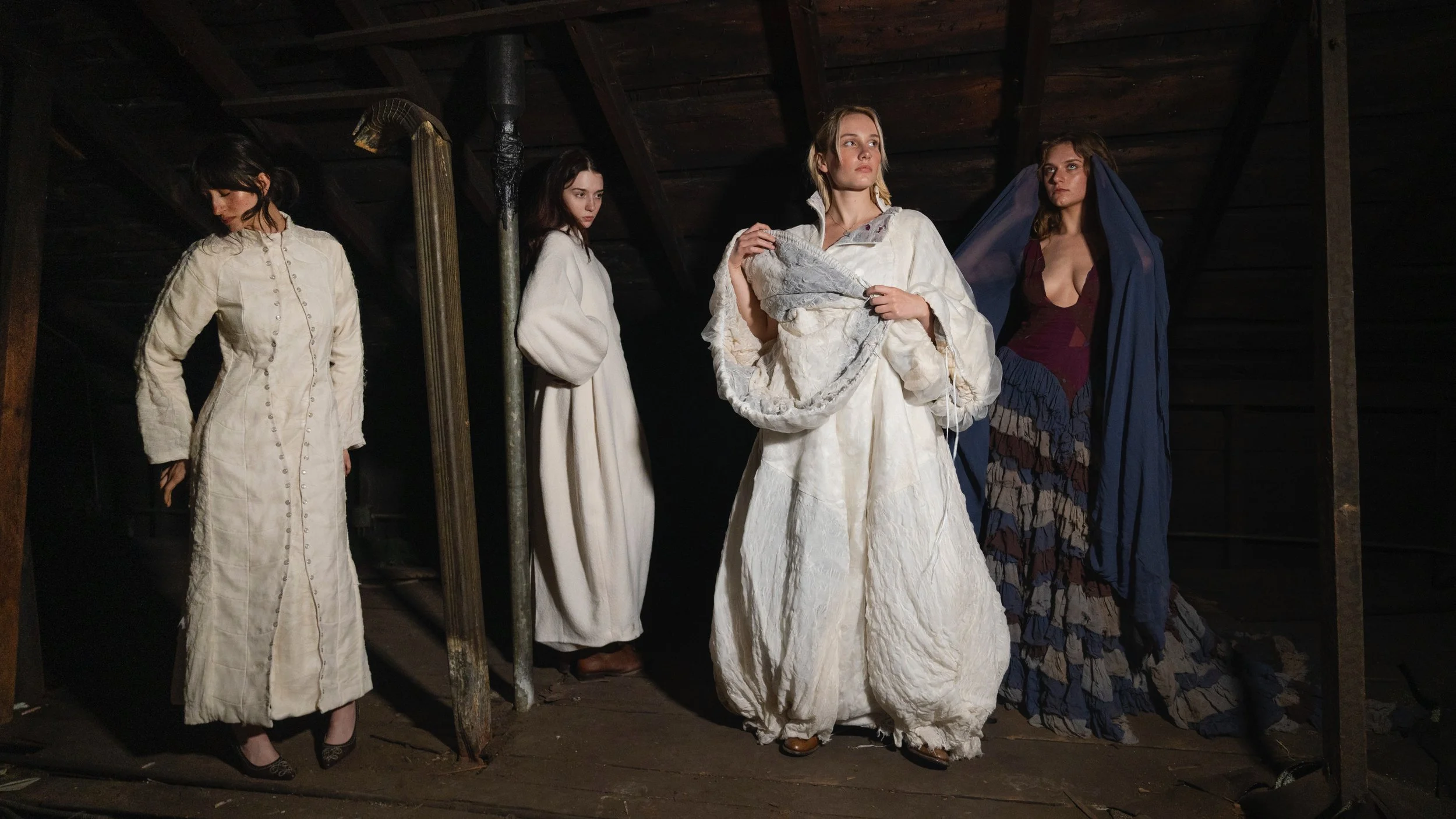
METAMORPHOSIS
This collection started with my own experience with self-acceptance. Like a lot of people, l’ve struggled with insecurity and have had difficulty accepting who I am. But over time, I’ve been able to appreciate that change is natural, and that who we are, flaws and all, is always evolving.
I was able to connect this statement of transition to the metamorphosis of moths, my collection explores the ongoing cycles of transformation within the human body and mind. This collection follows a progression through four main looks transitioning from silkworm, cocoons, and moths.
Each fabric choice and construction method reflects the form and feeling of the phase it represents. I used only natural fiber fabrics and silk thread to reinforce the integrity of the concept and maintain a commitment to sustainability throughout the collection.
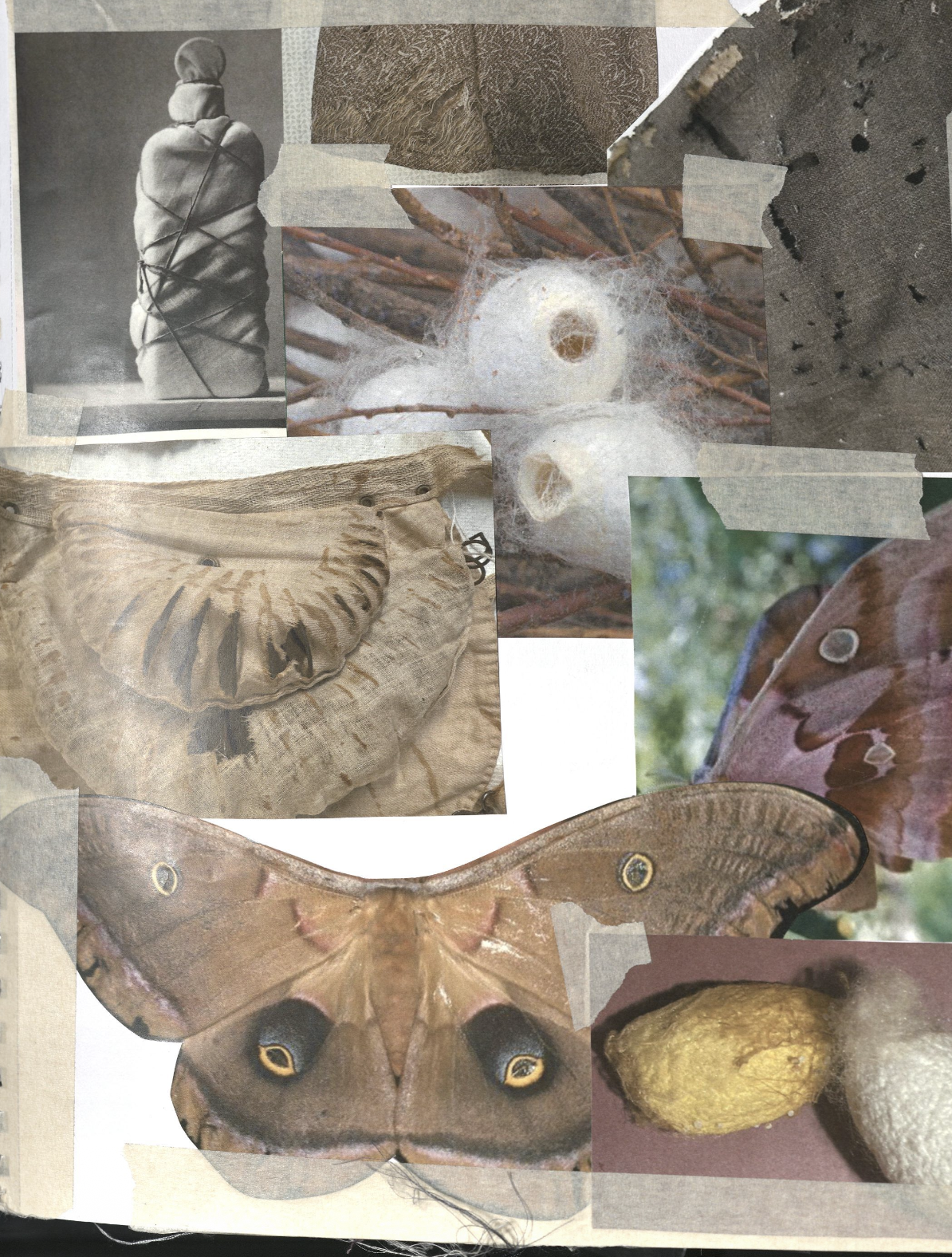
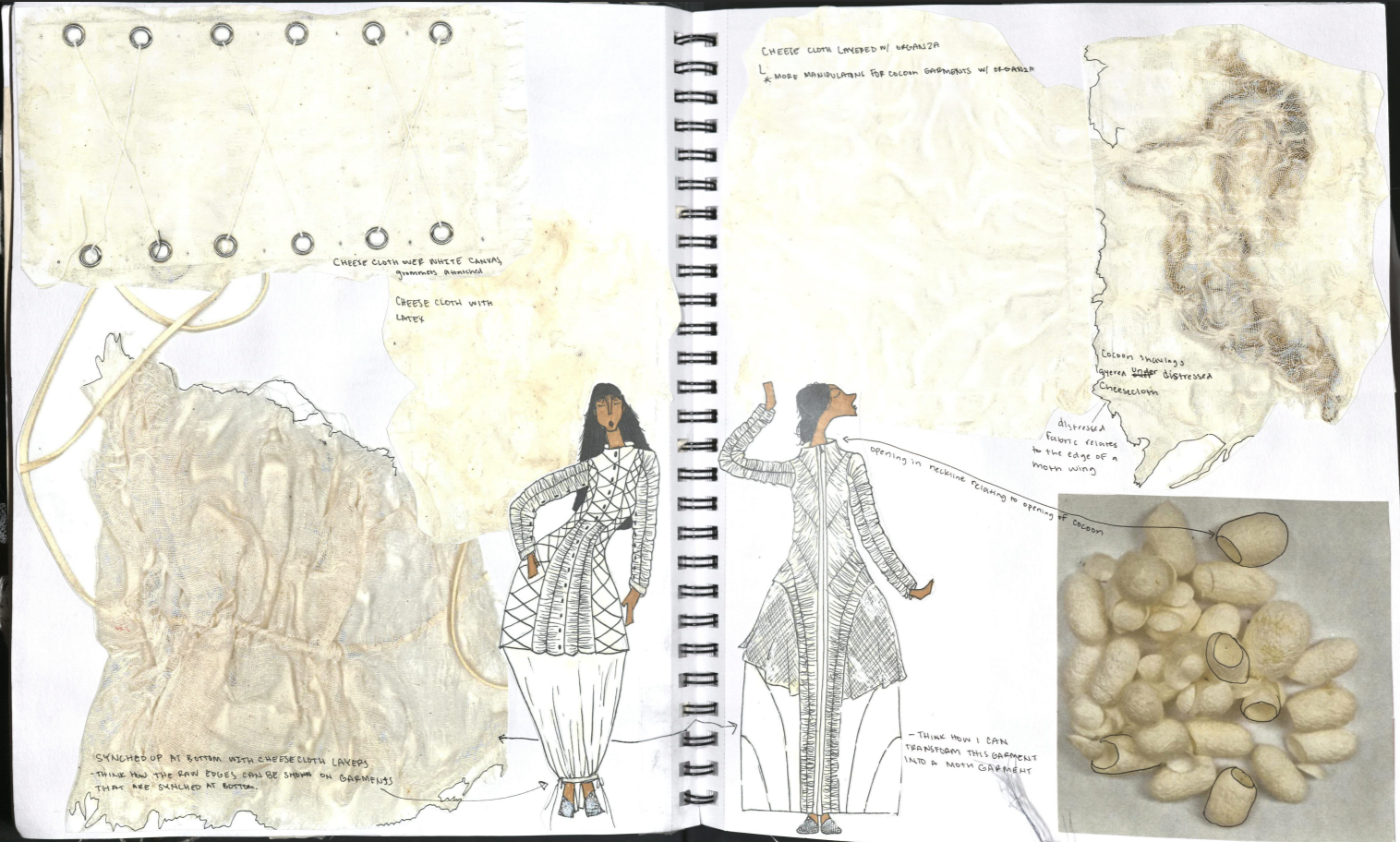
EARLY RESEARCH AND DESIGN
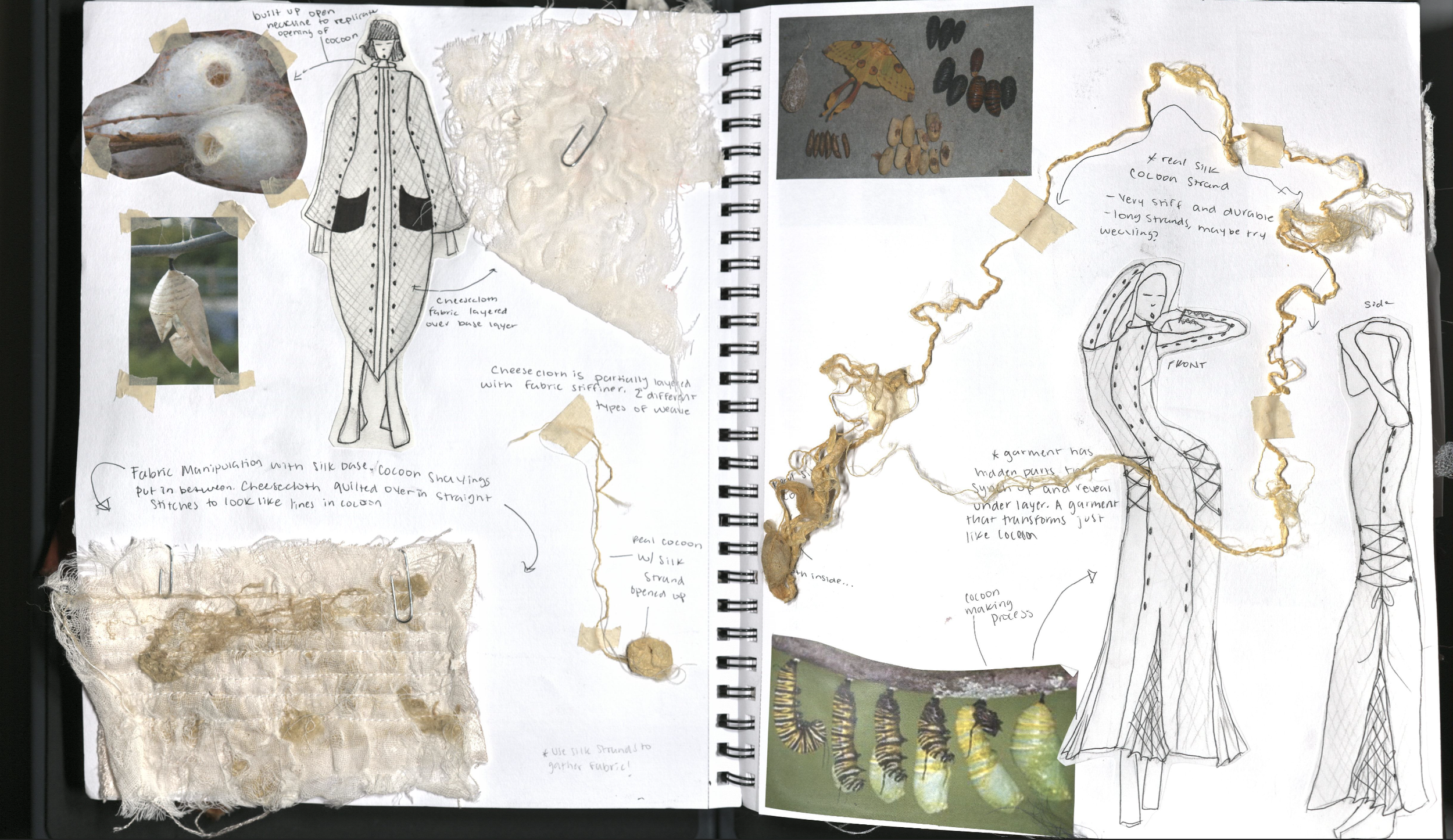
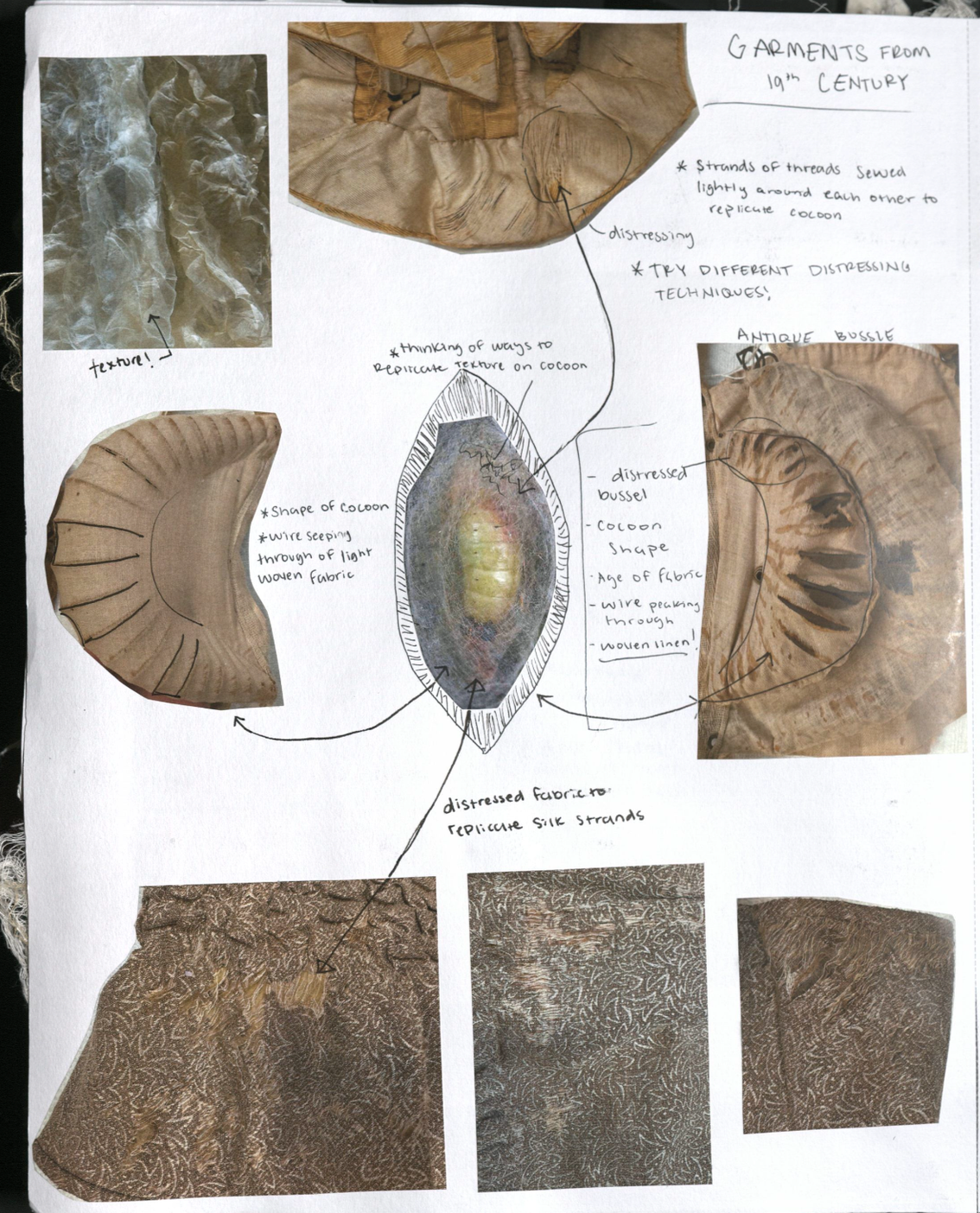
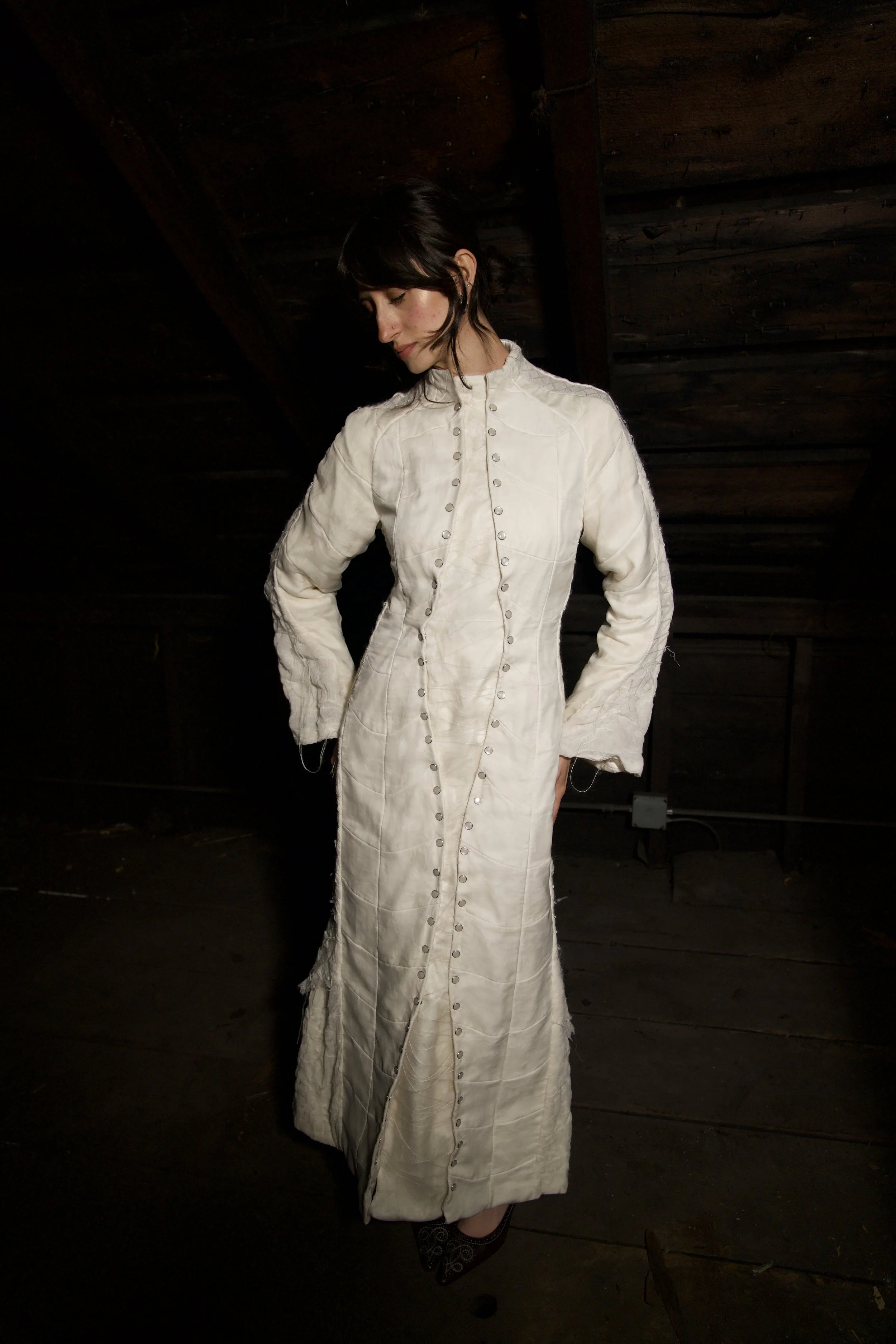
LOOK ONE
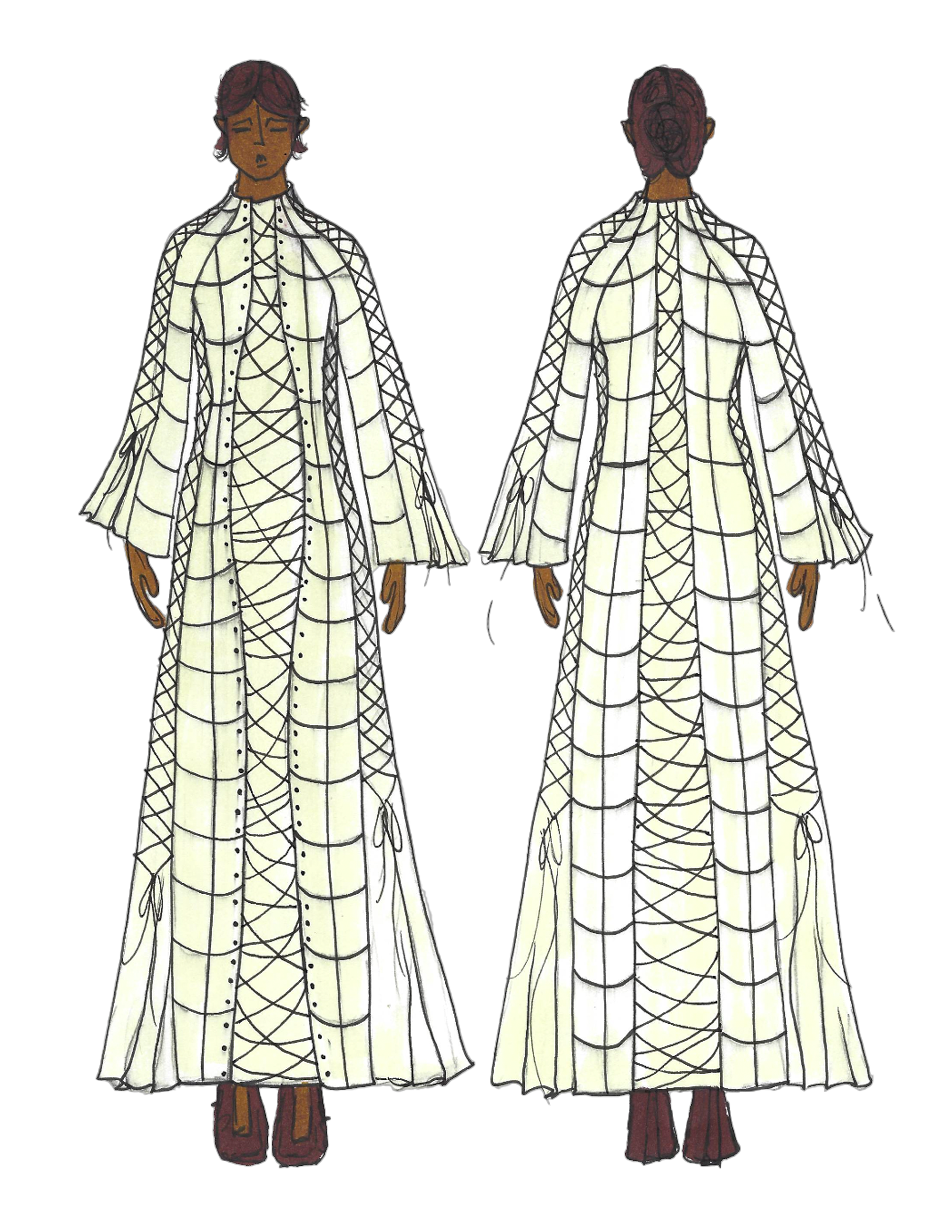
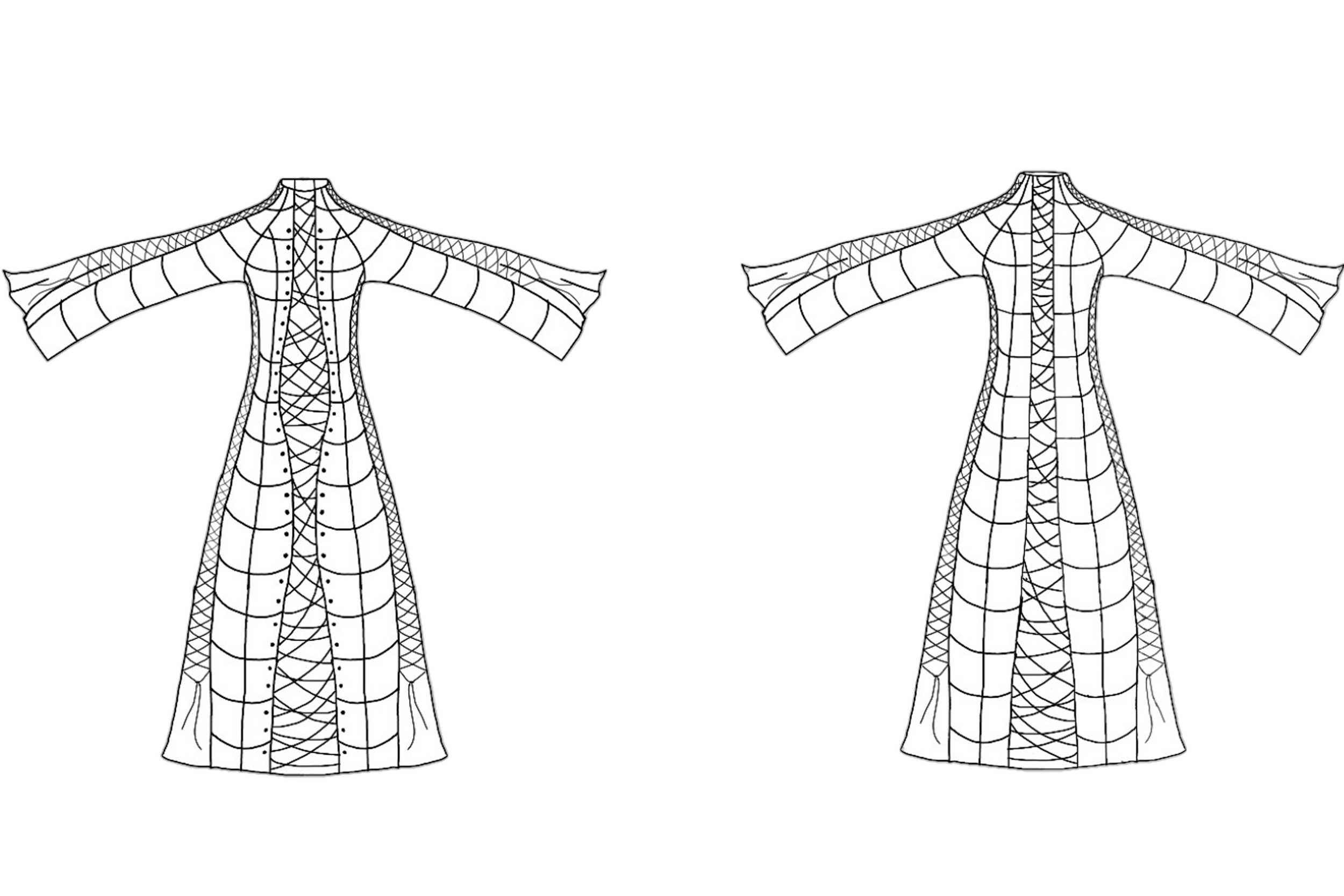
Replicates the silk worm before the cocoon transformation
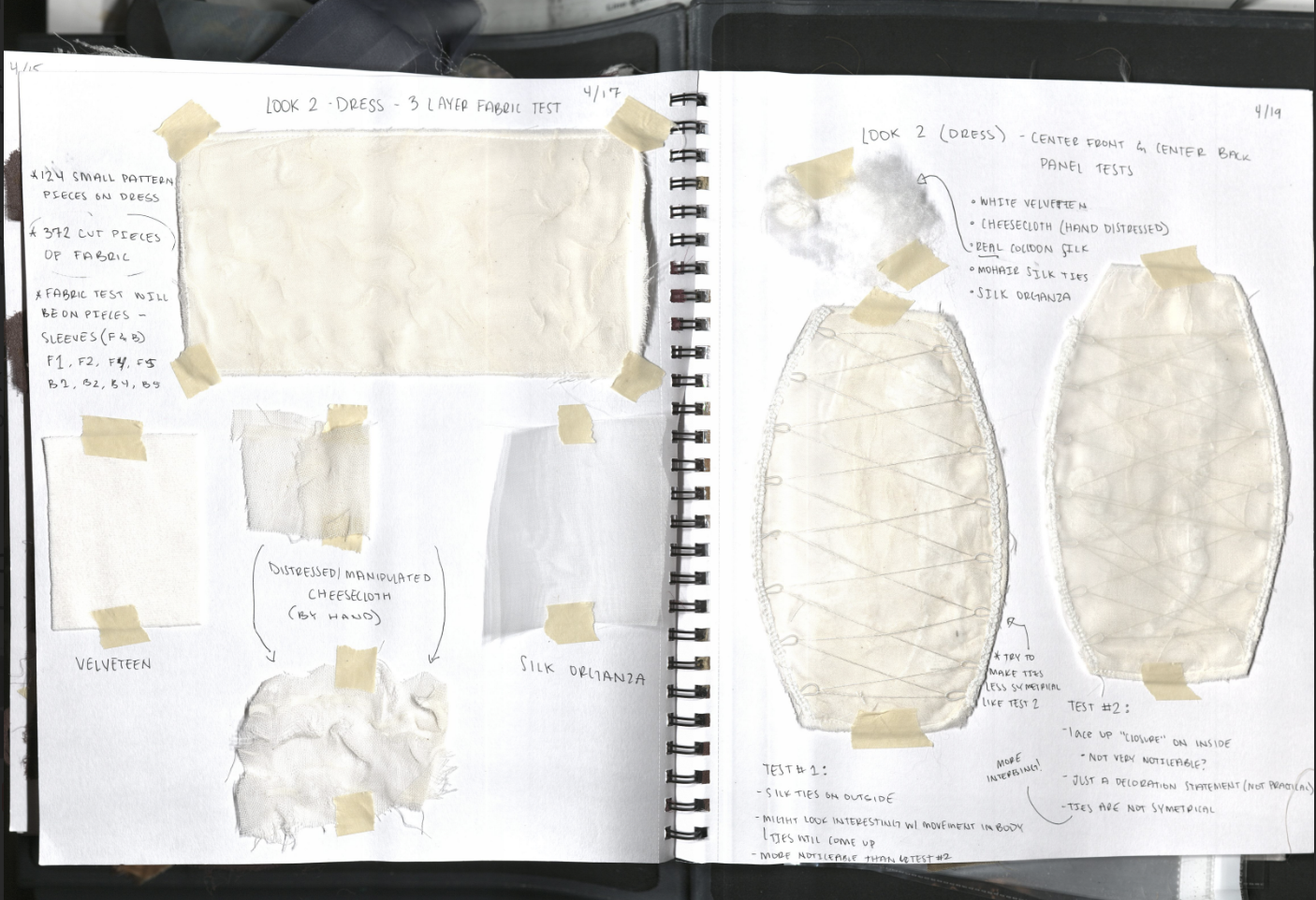
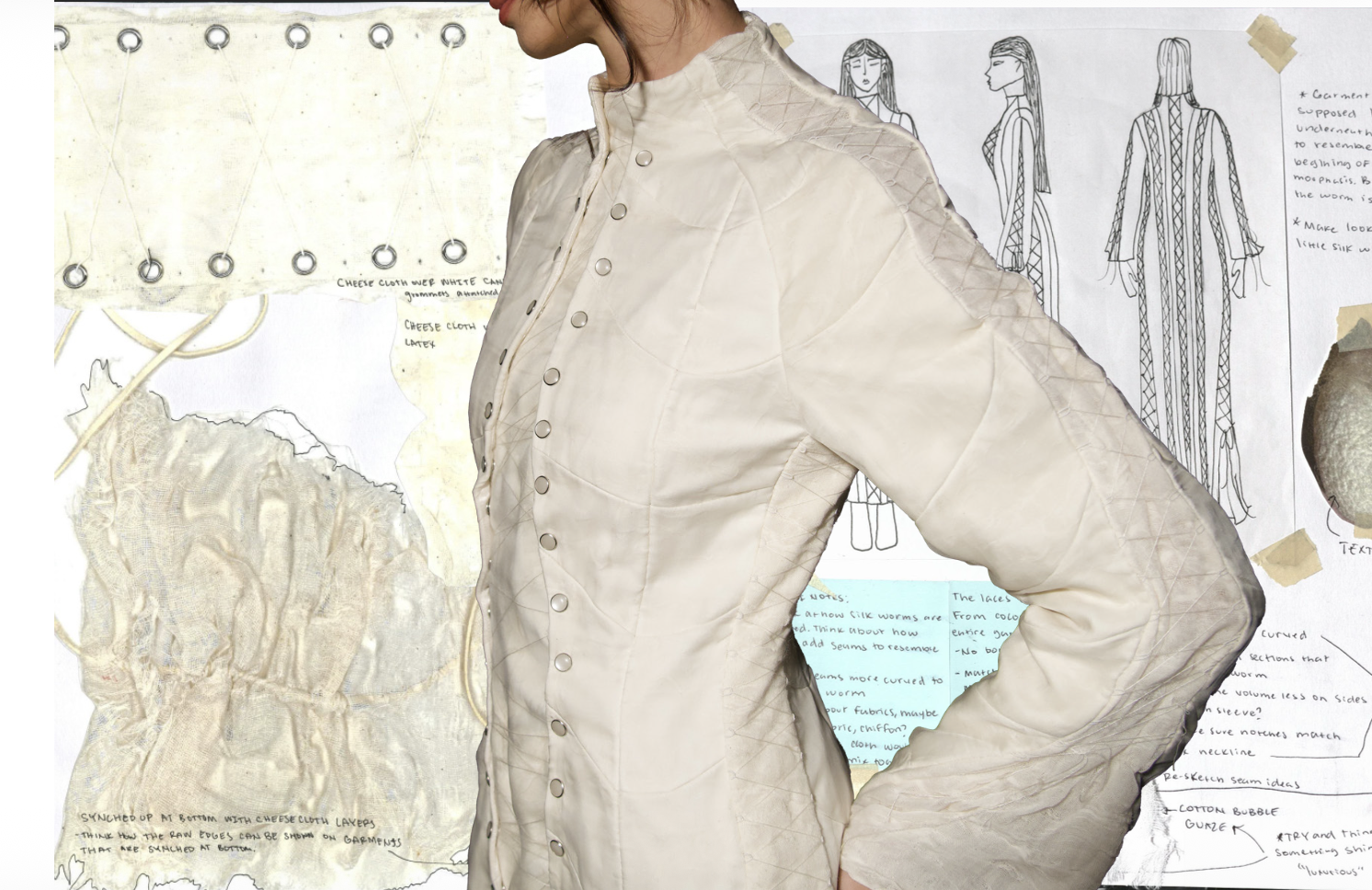
DETAIL AND PROCESS
Replicating the texture and shape of the silkworm to garment with 400 cut pieces consisting of 3 layers: cotton velveteen, hand distressed cheesecloth and silk organza.
Silk mohair is used to wrap and tie around garment as if a cocoon is beginning to form
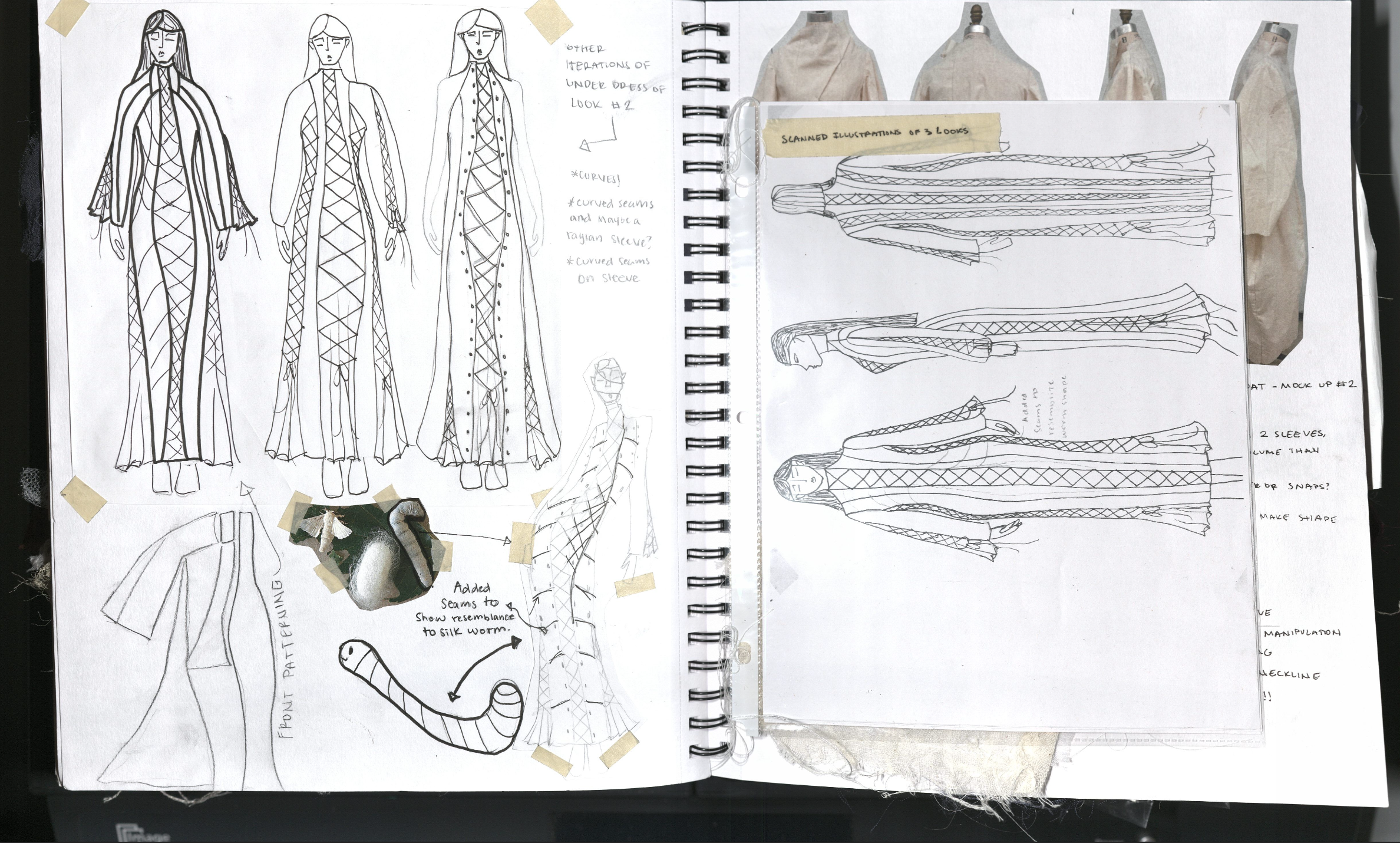
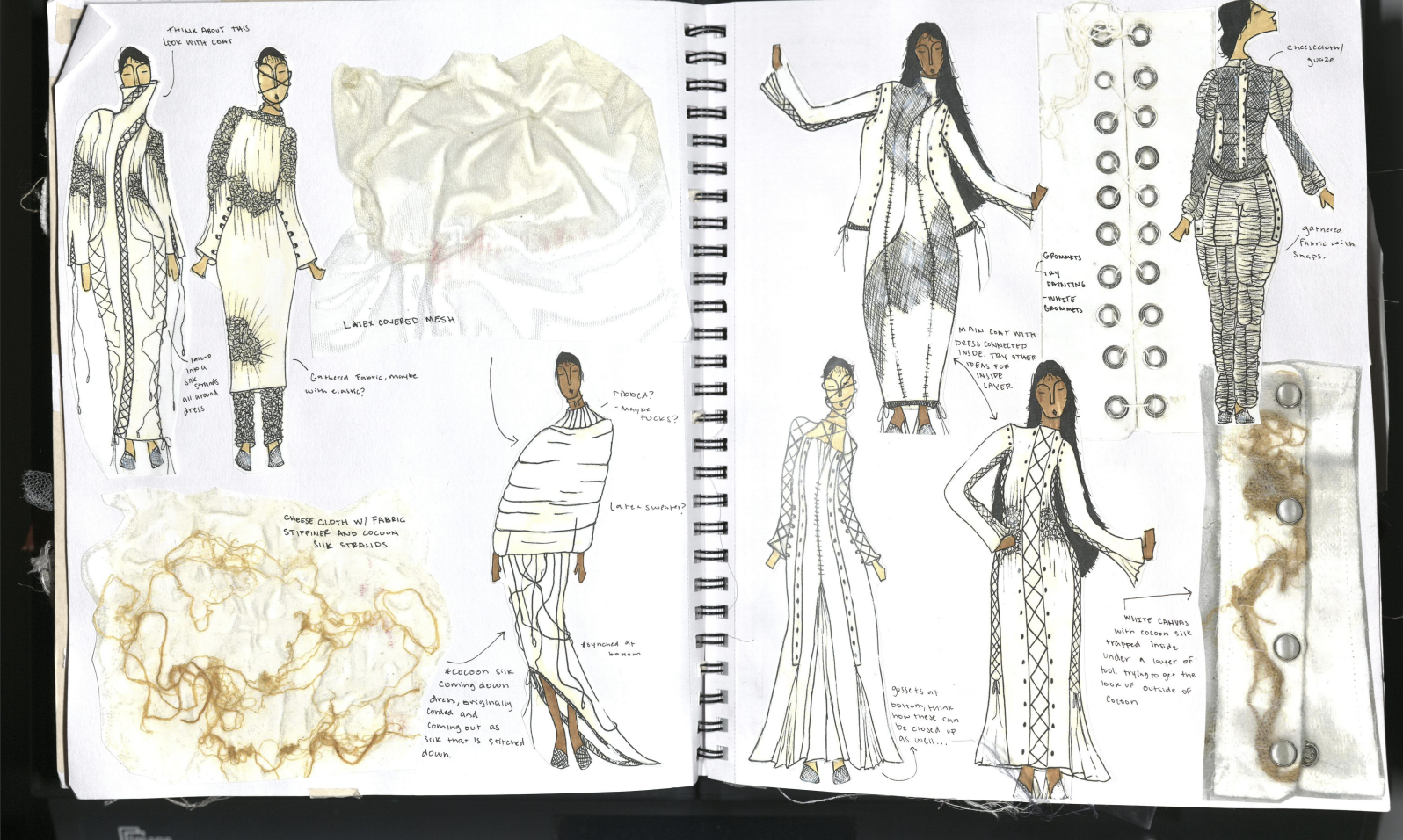
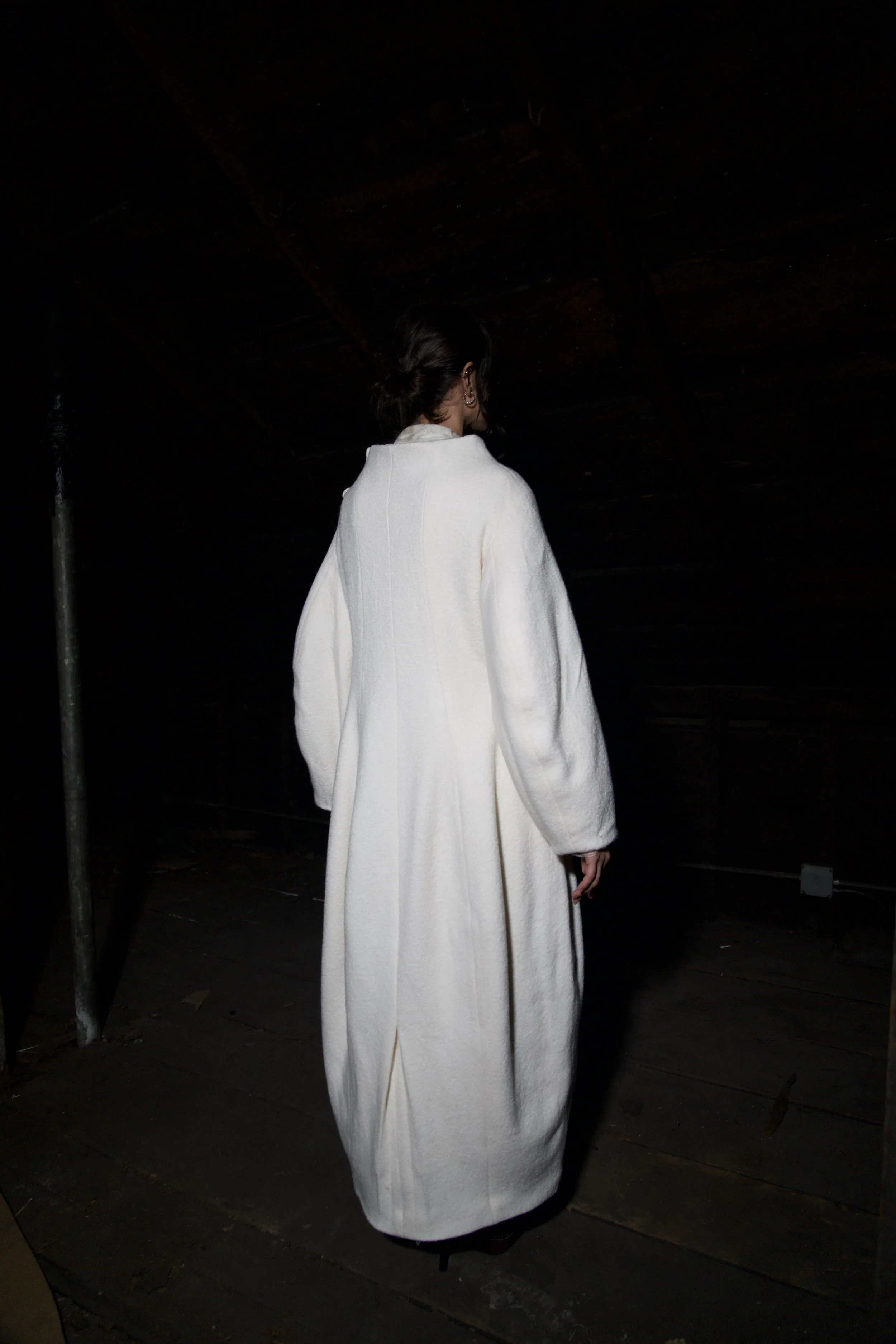
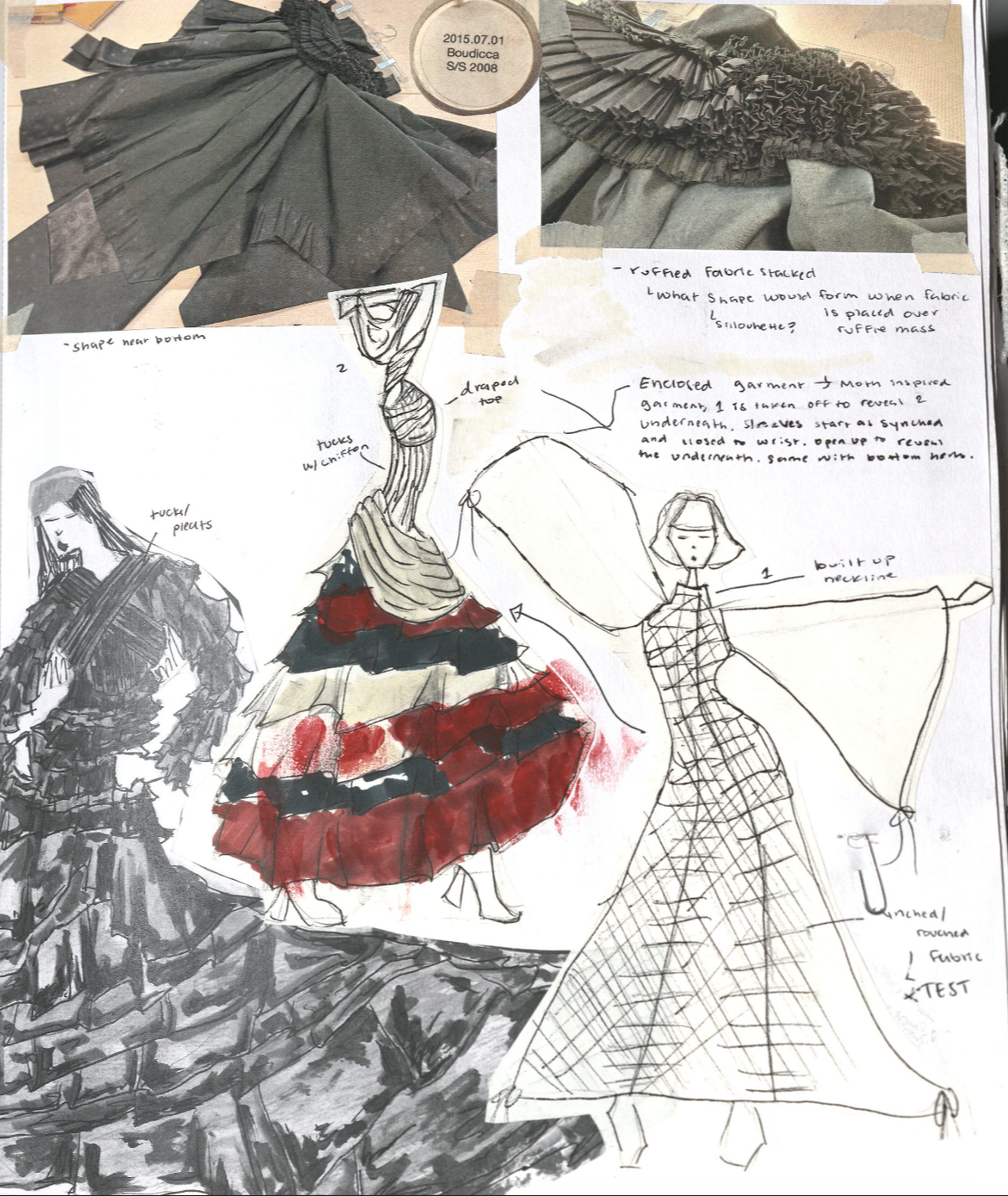
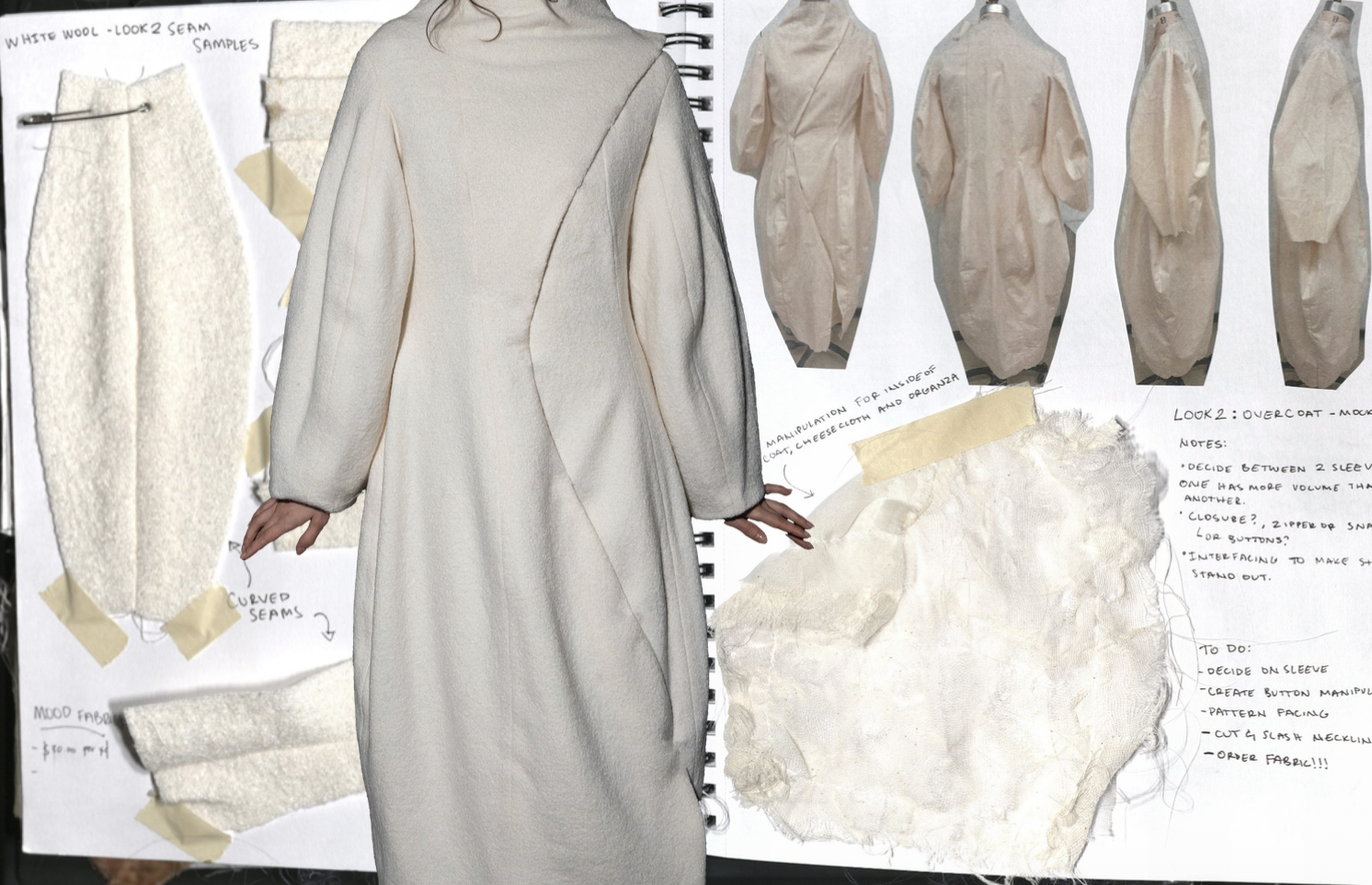
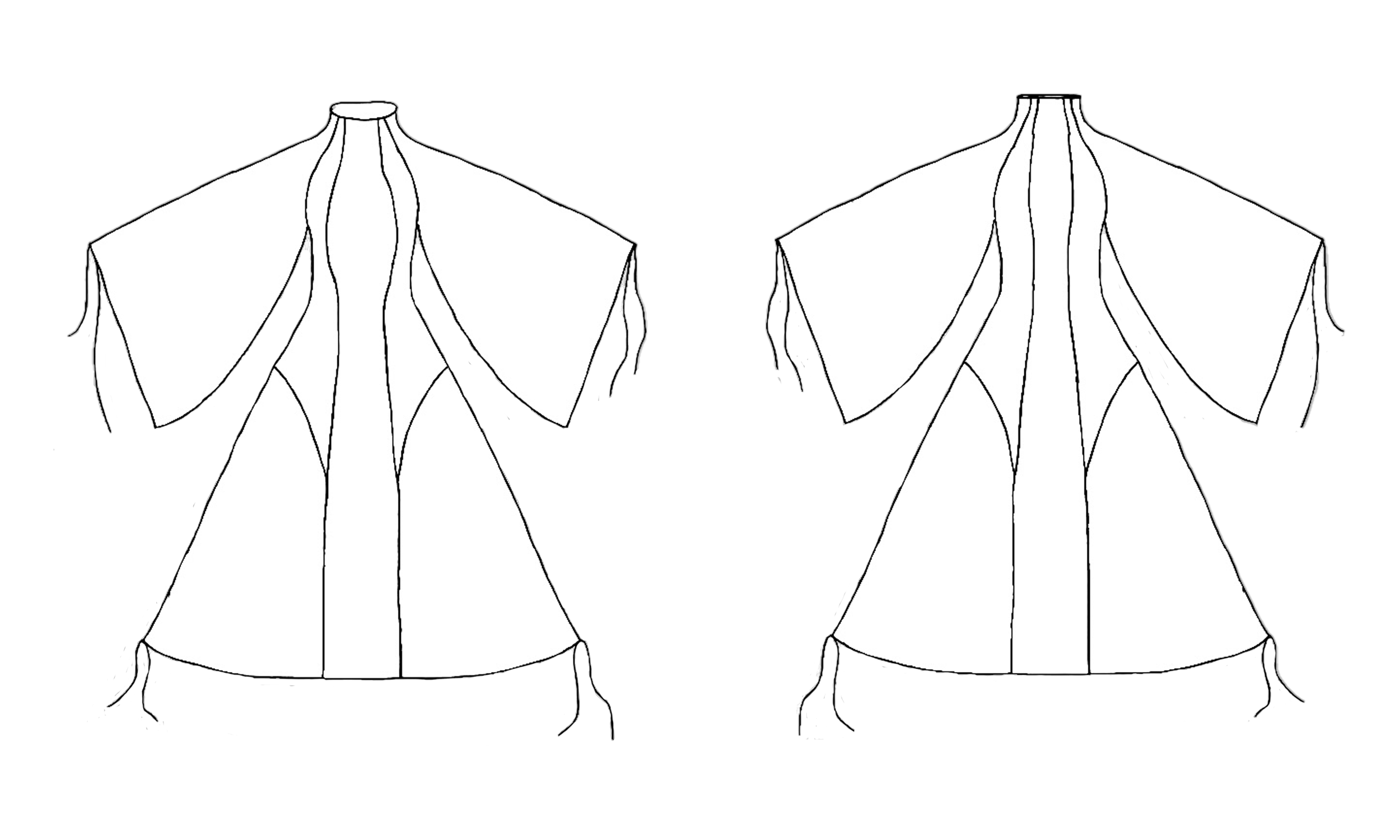
EARLY DESIGN AND SKETCH PROCESS
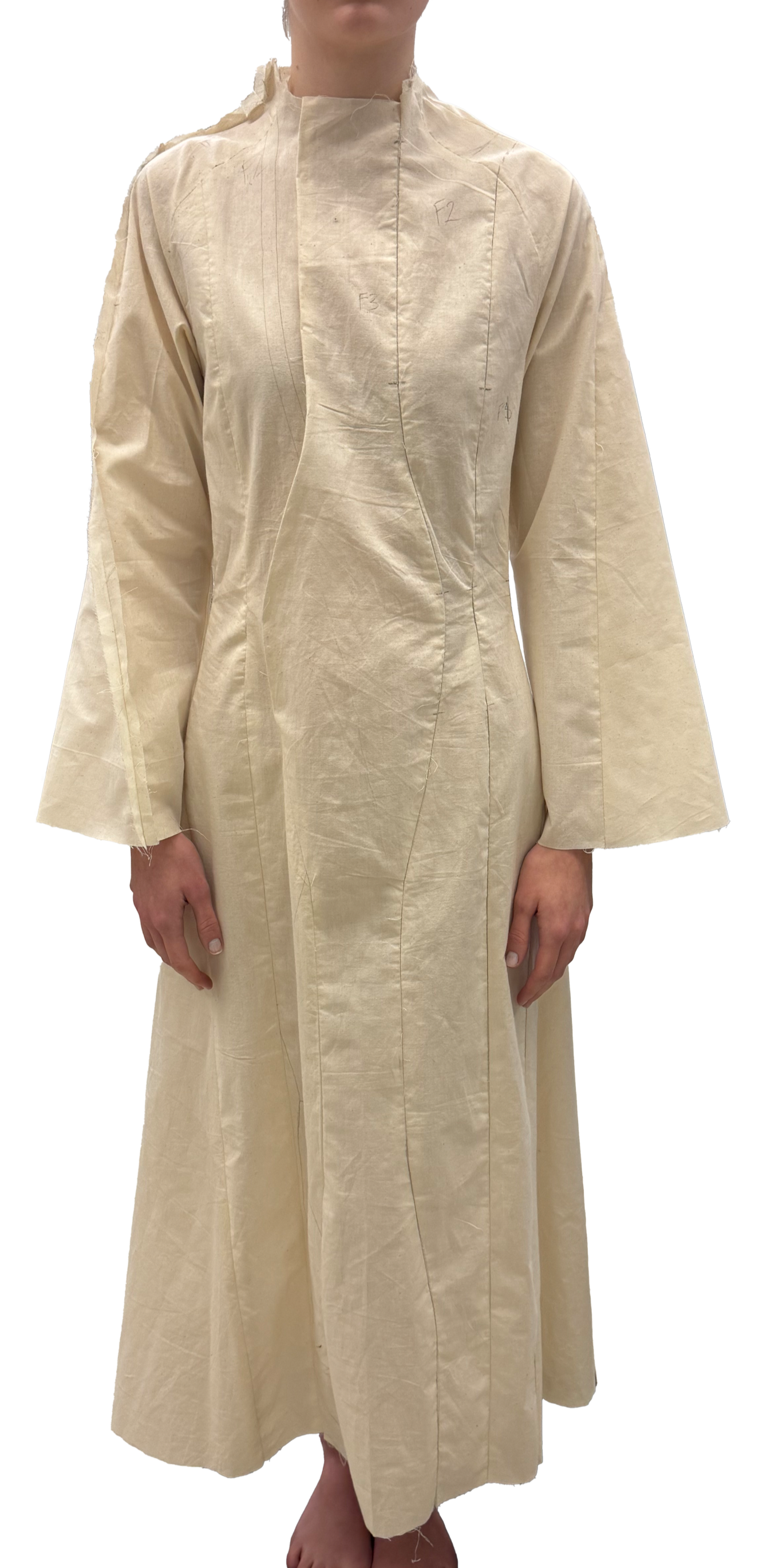
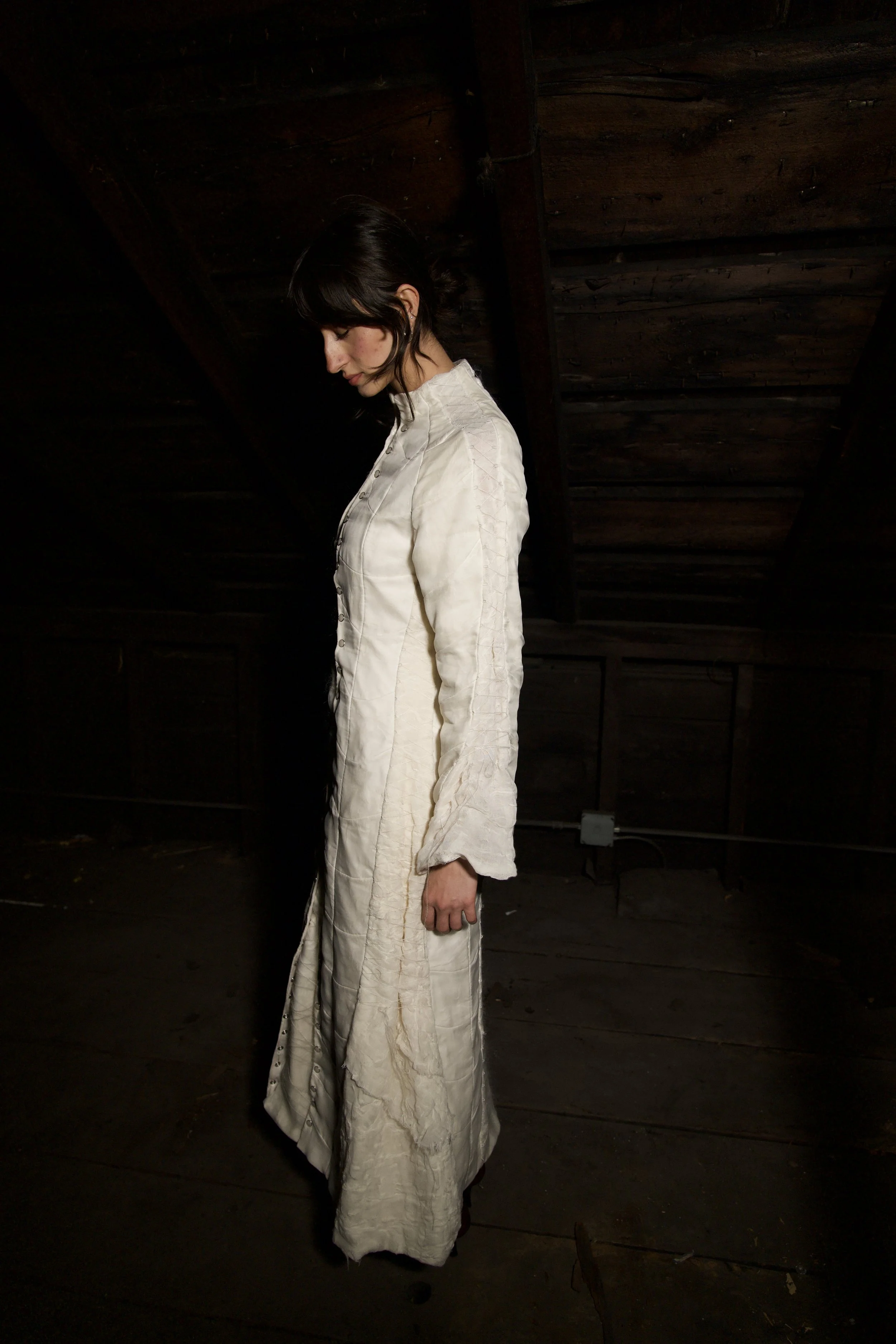
LOOK TWO
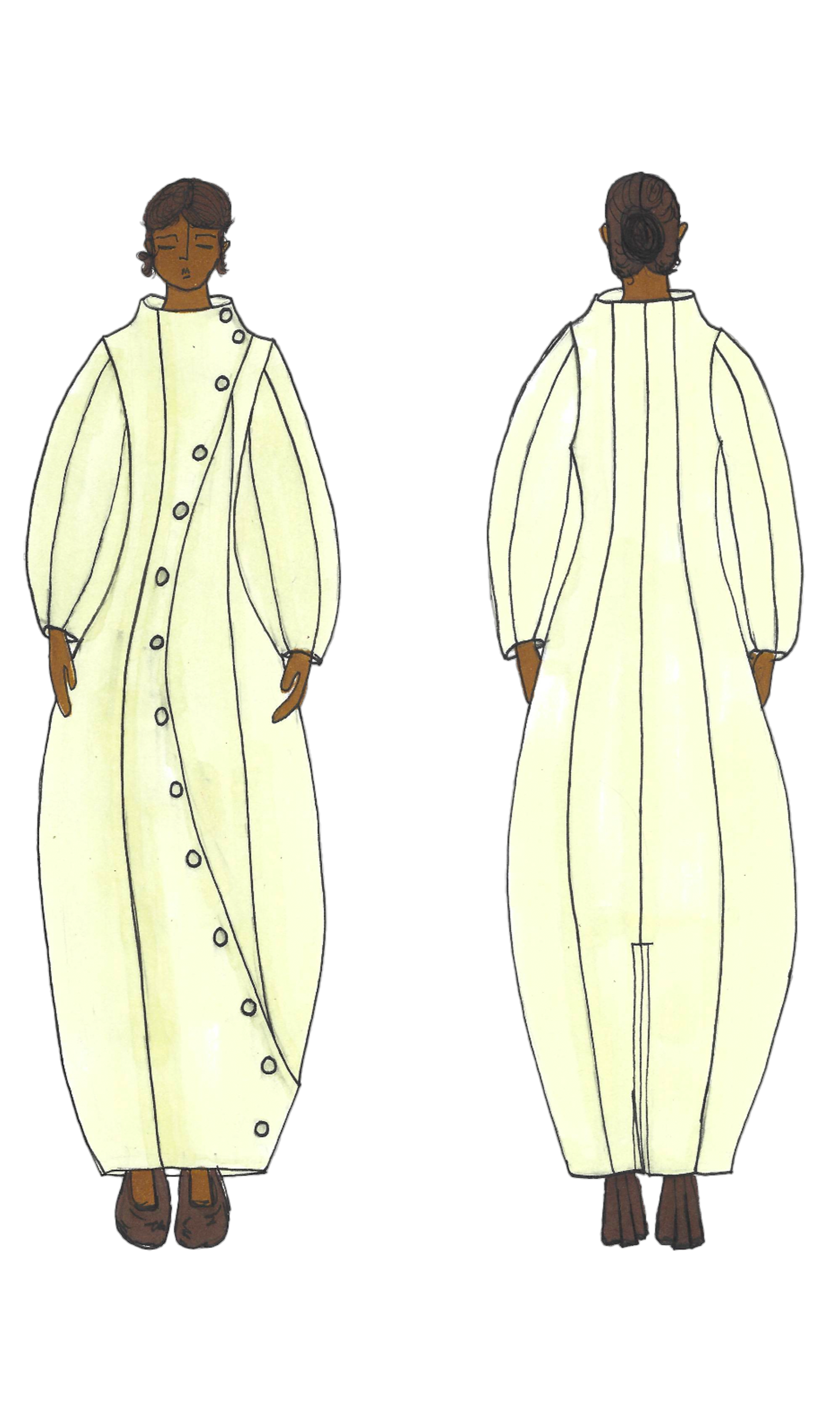
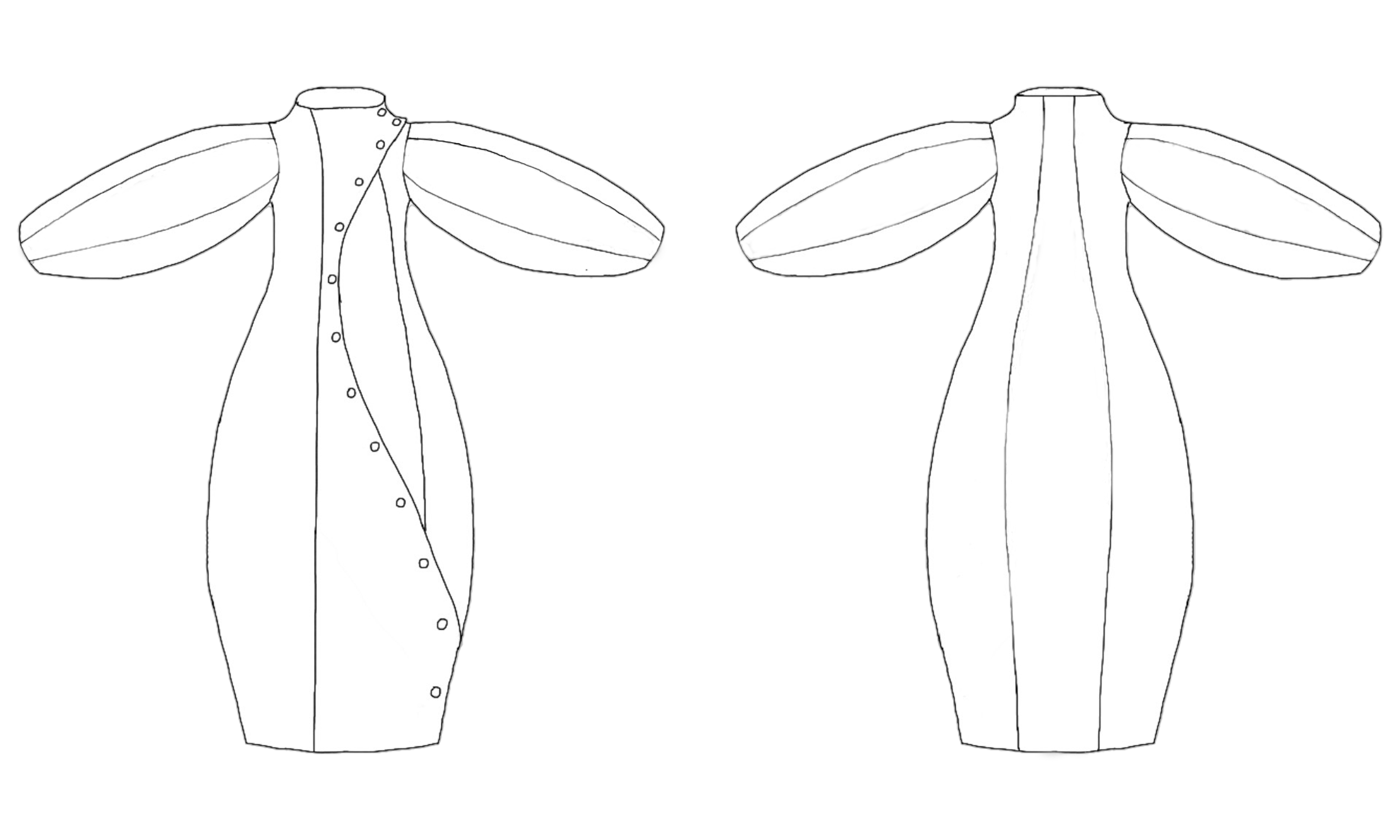
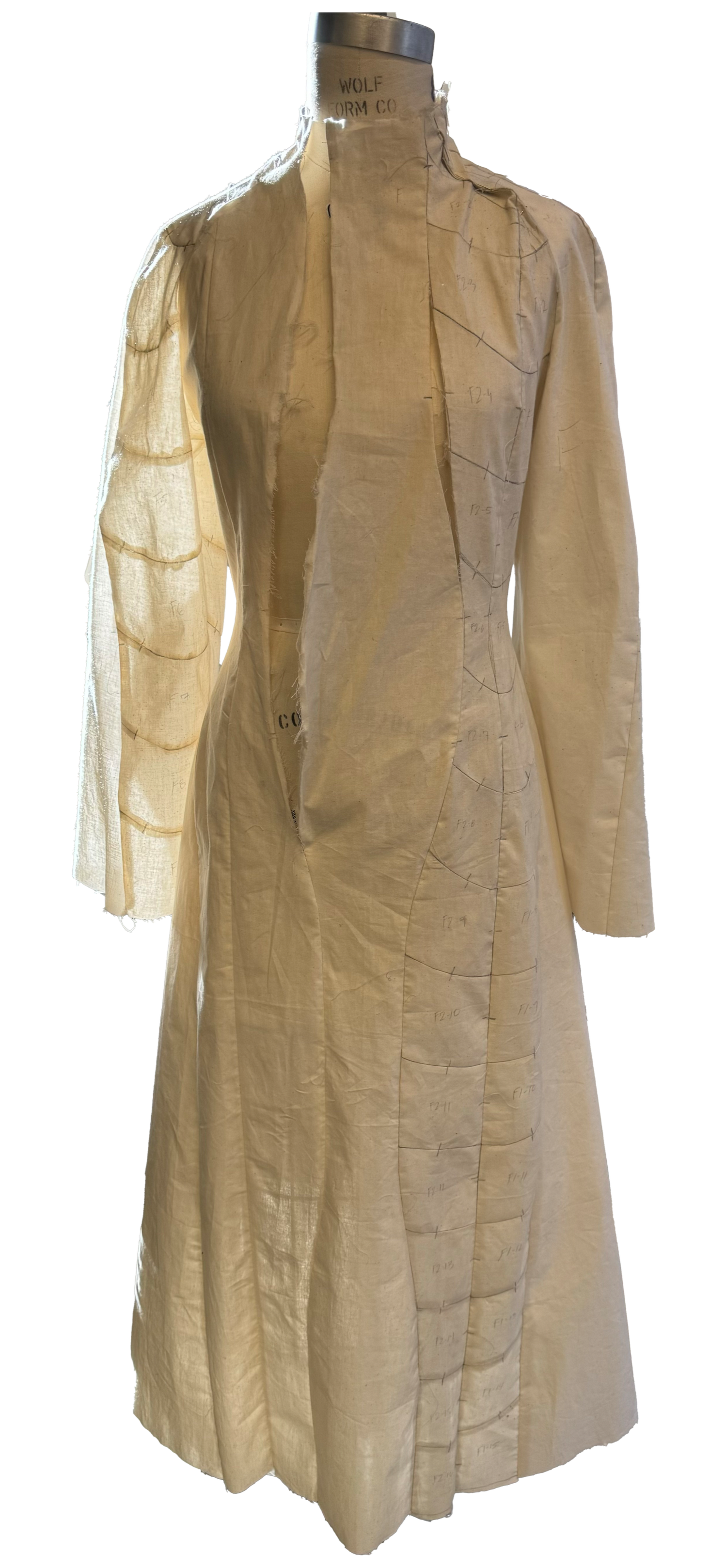
Replicates the silk worm before the cocoon
transformation
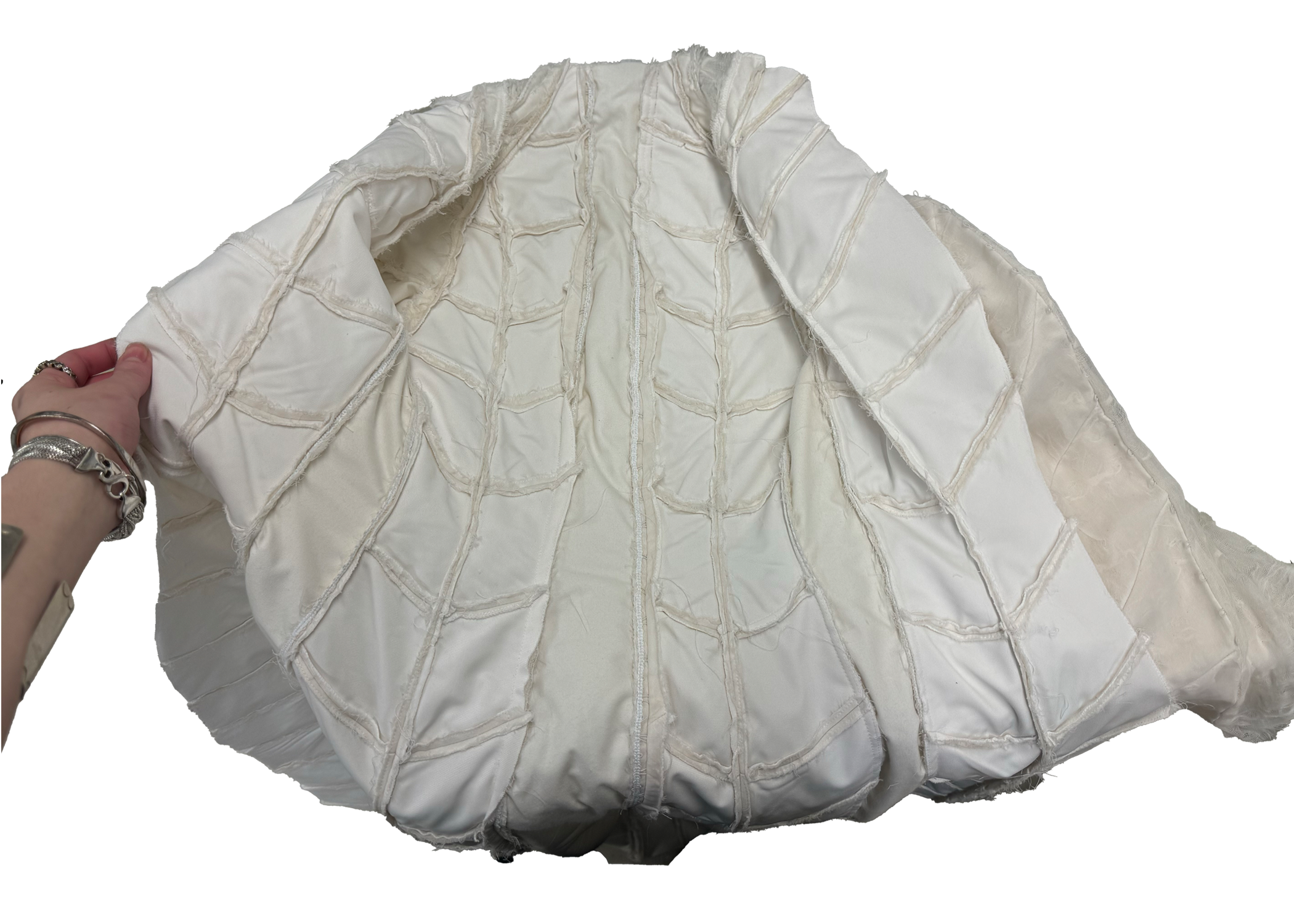
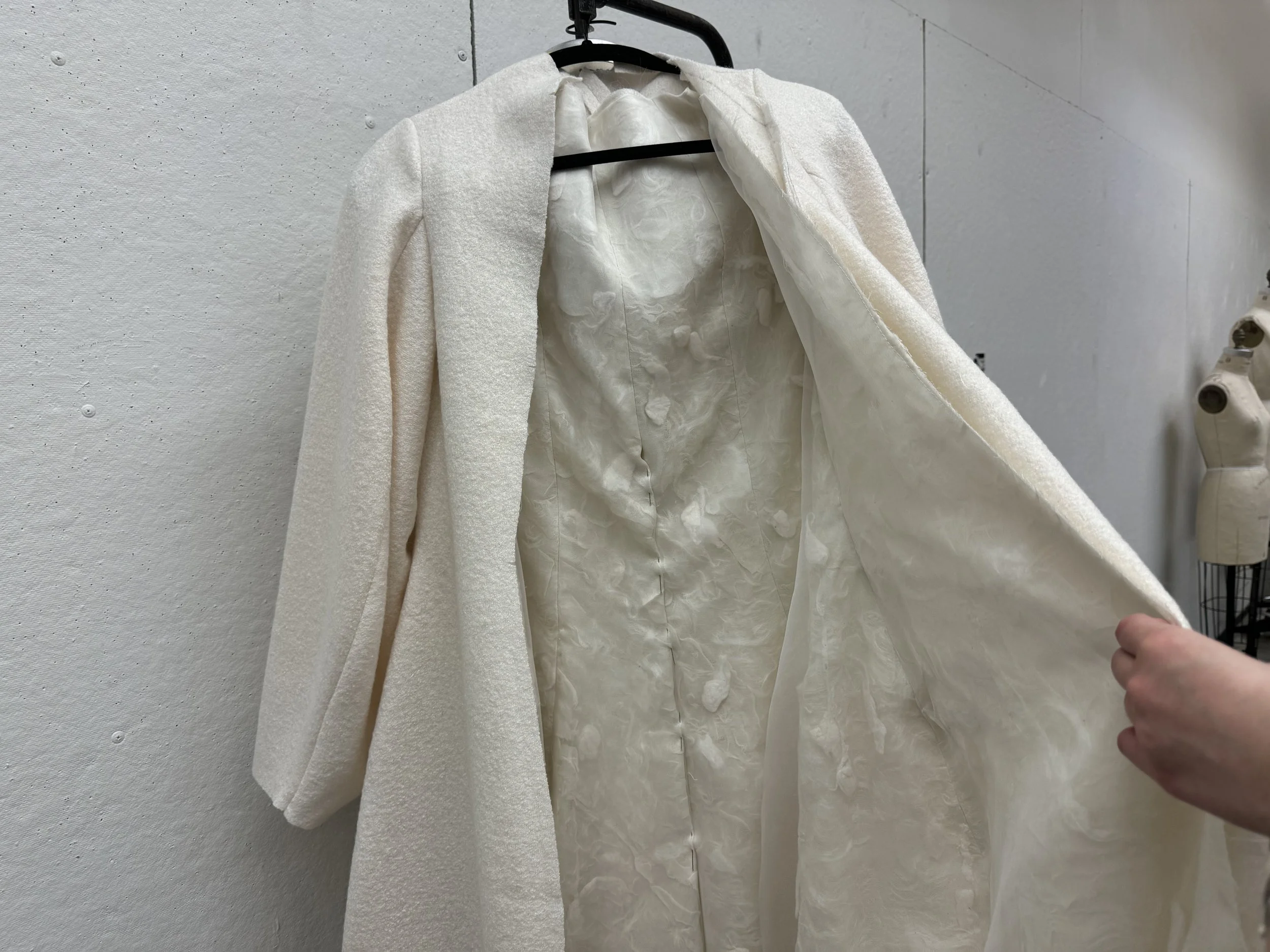
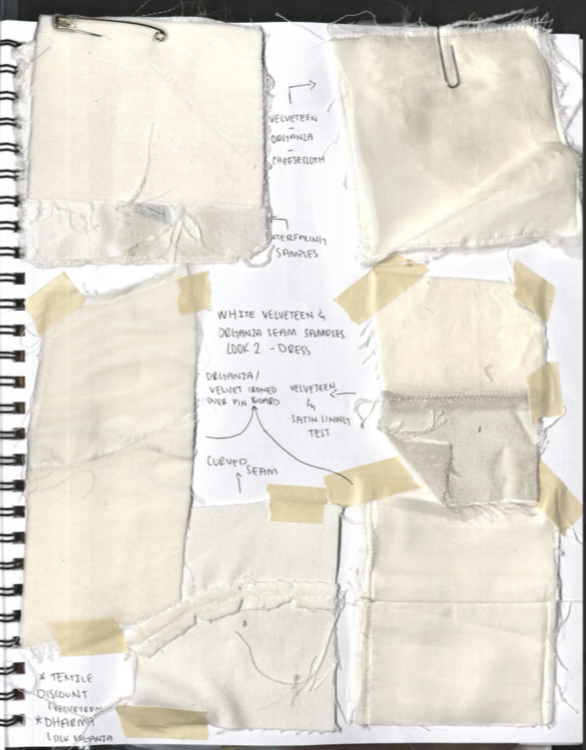
3 types of coat lining tests and seam samples
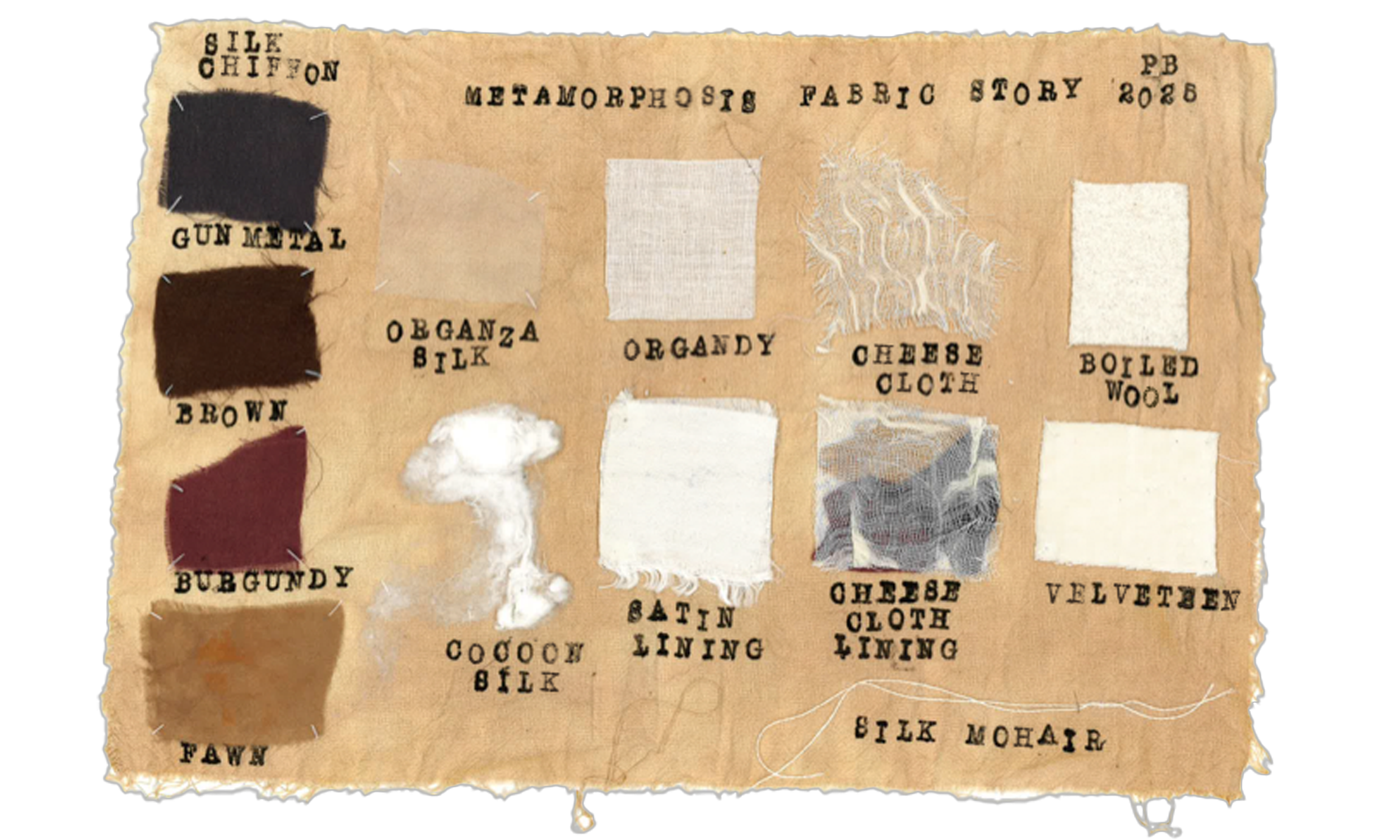
FABRIC STORY
SILK CHIFFON
SILK ORGANZA
SILK SATIN
BOILED WOOL
COTTON ORGANDY
COCOON SILK
COTTON CHEESECLOTH
COTTON VELVETEEN
SILK MOHAIR
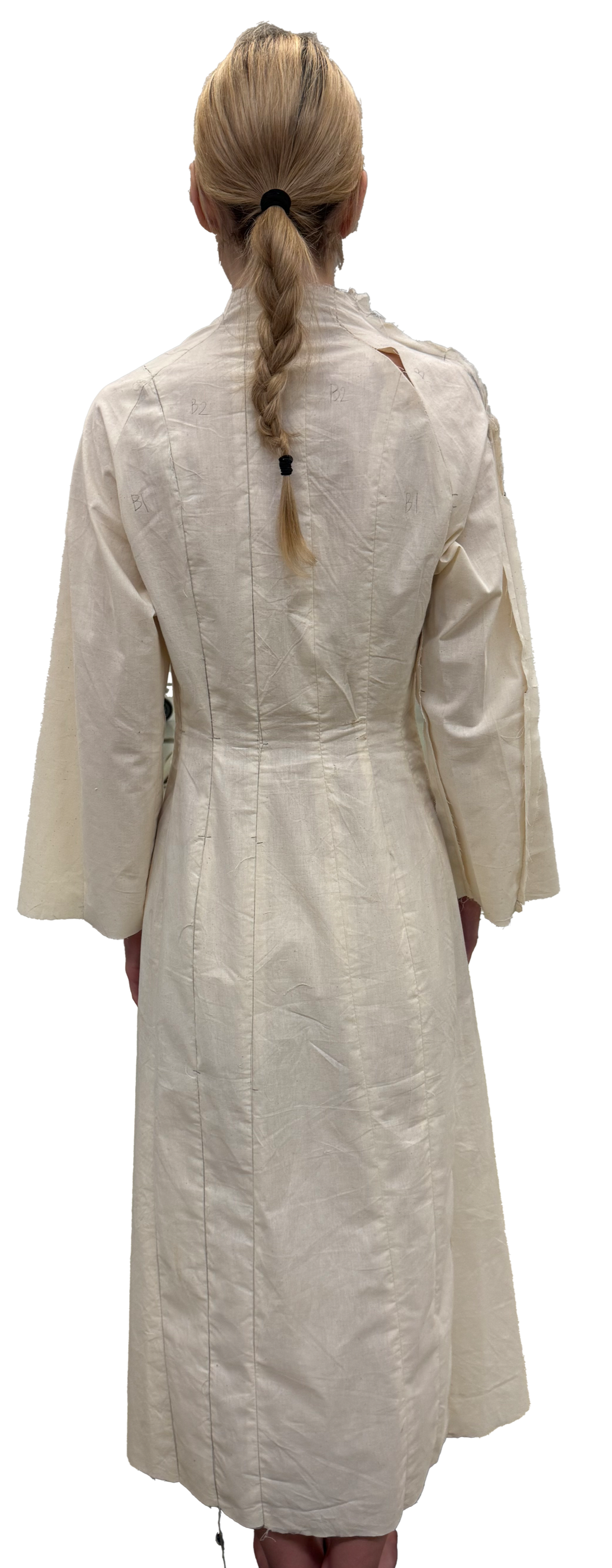
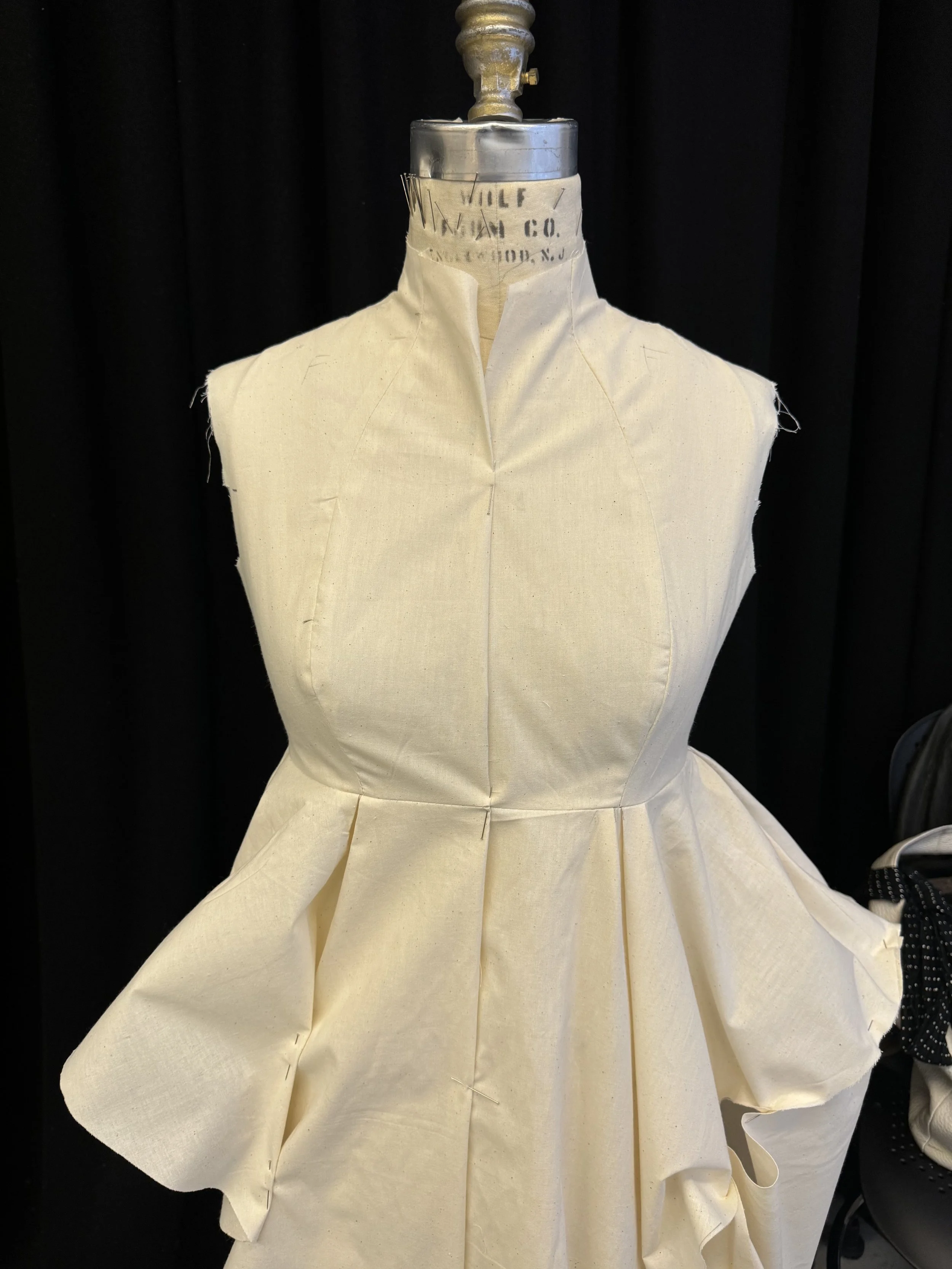
TOILE PROCESS
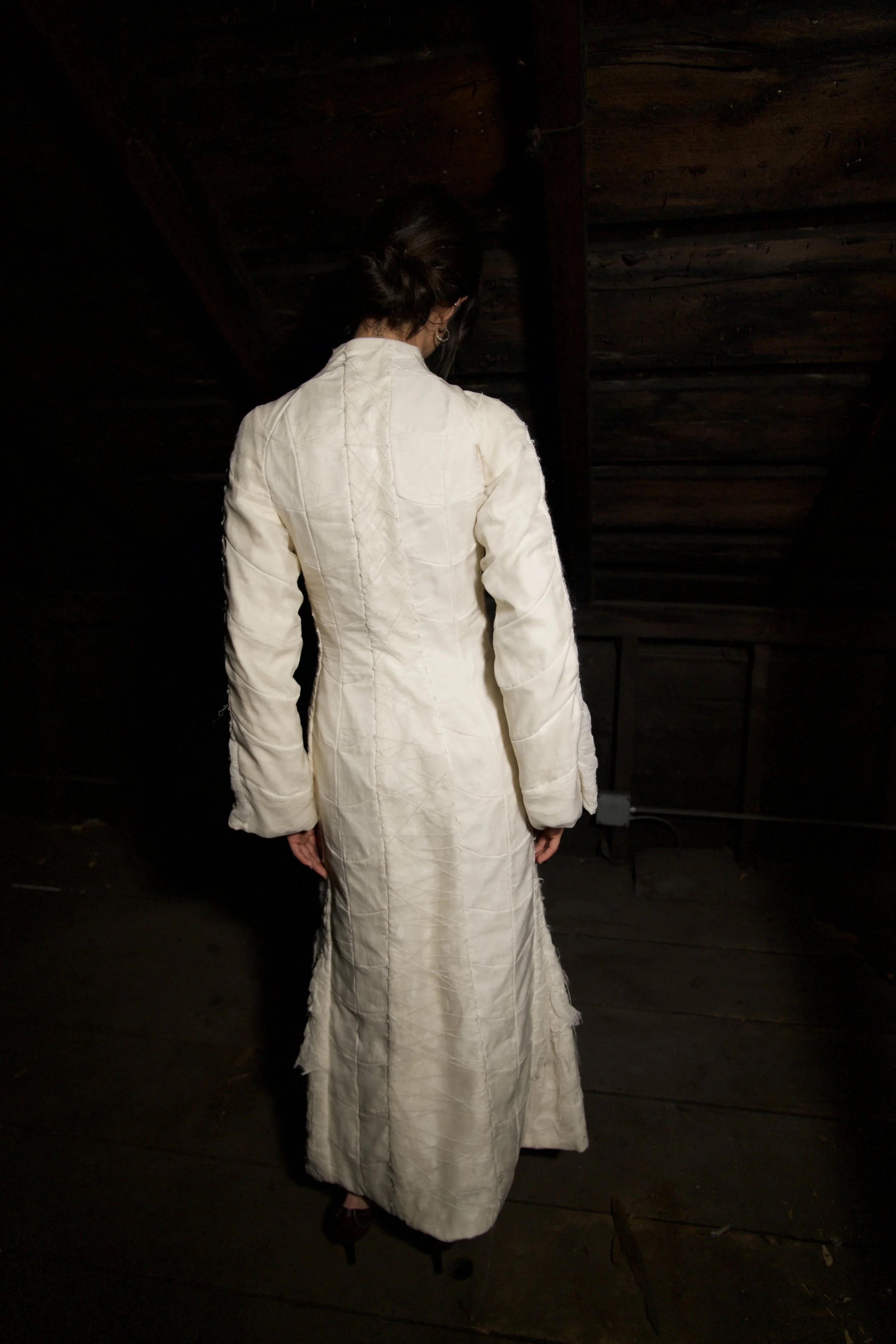
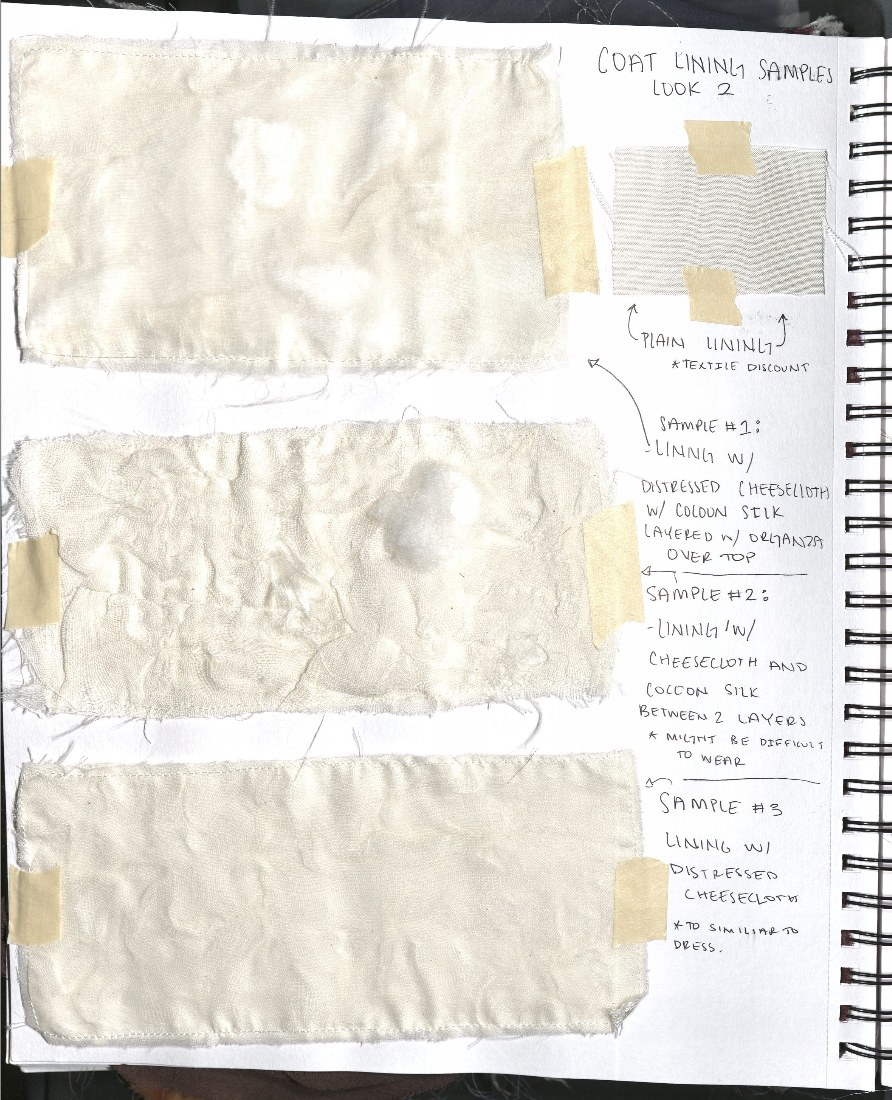
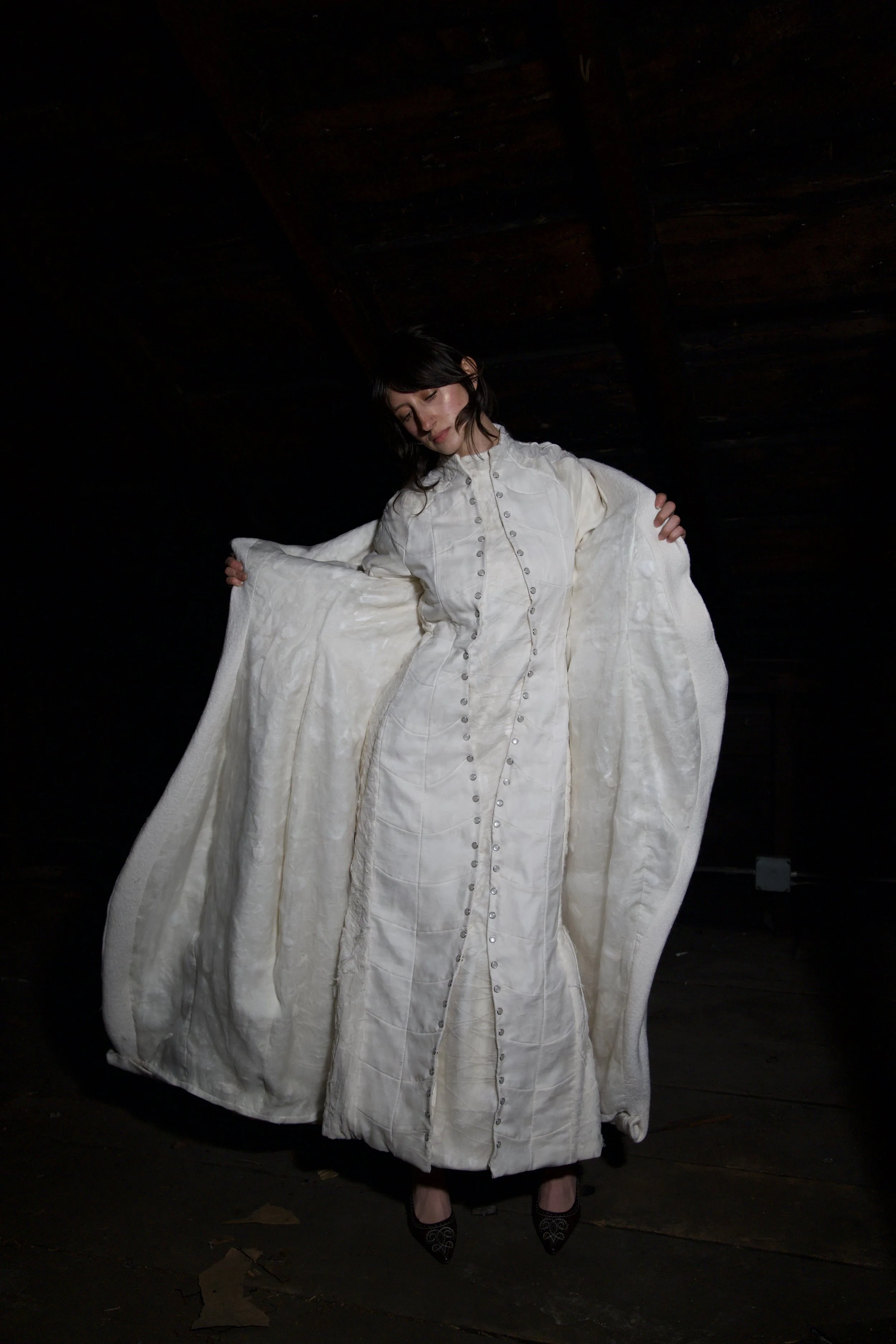
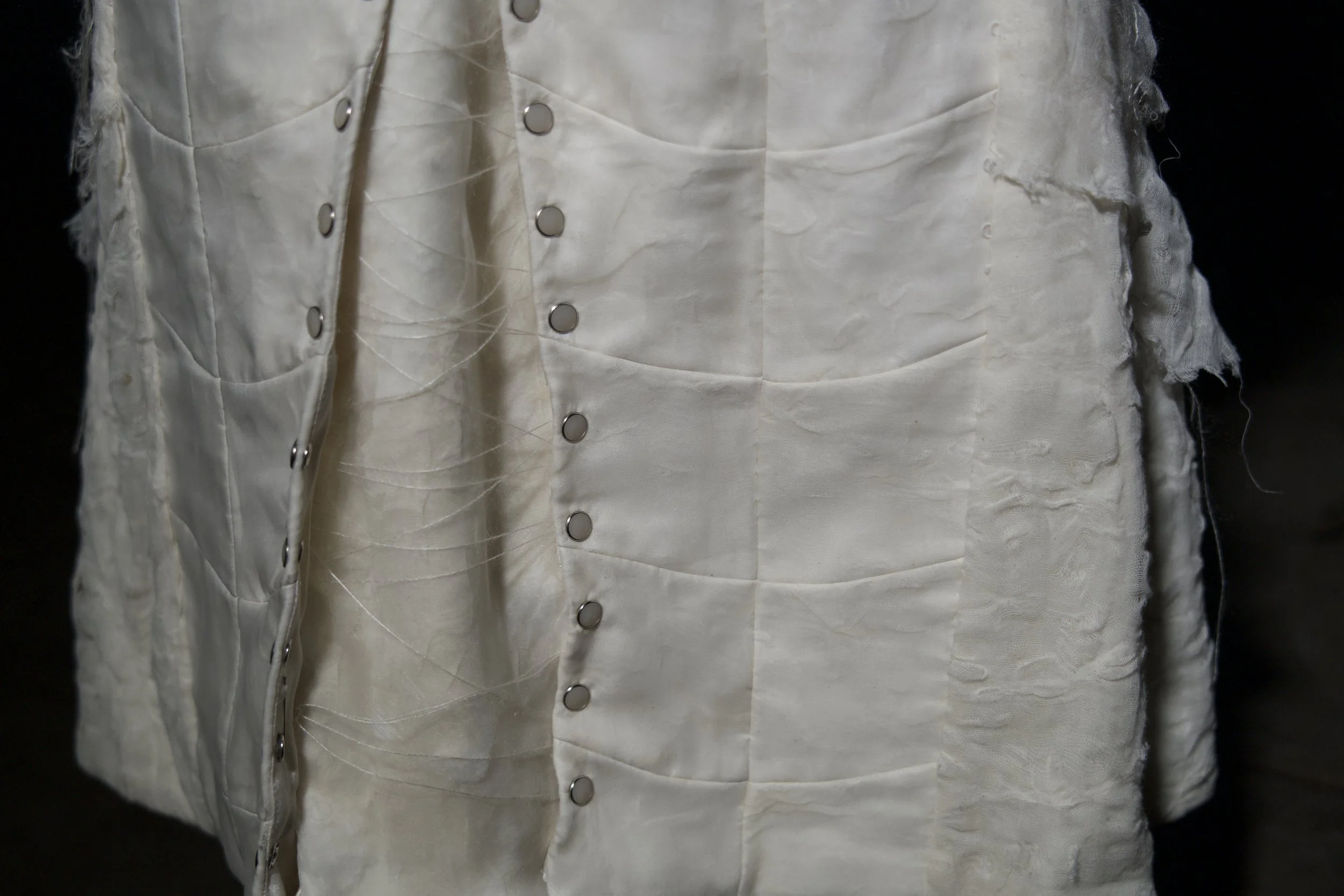
COAT LINING
MADE OF 4 LAYERS:
Satin Lining
Hand Distressed Cheese Cloth
Bombyx Mori Cocoon Silk
Silk Organza
LOOK THREE
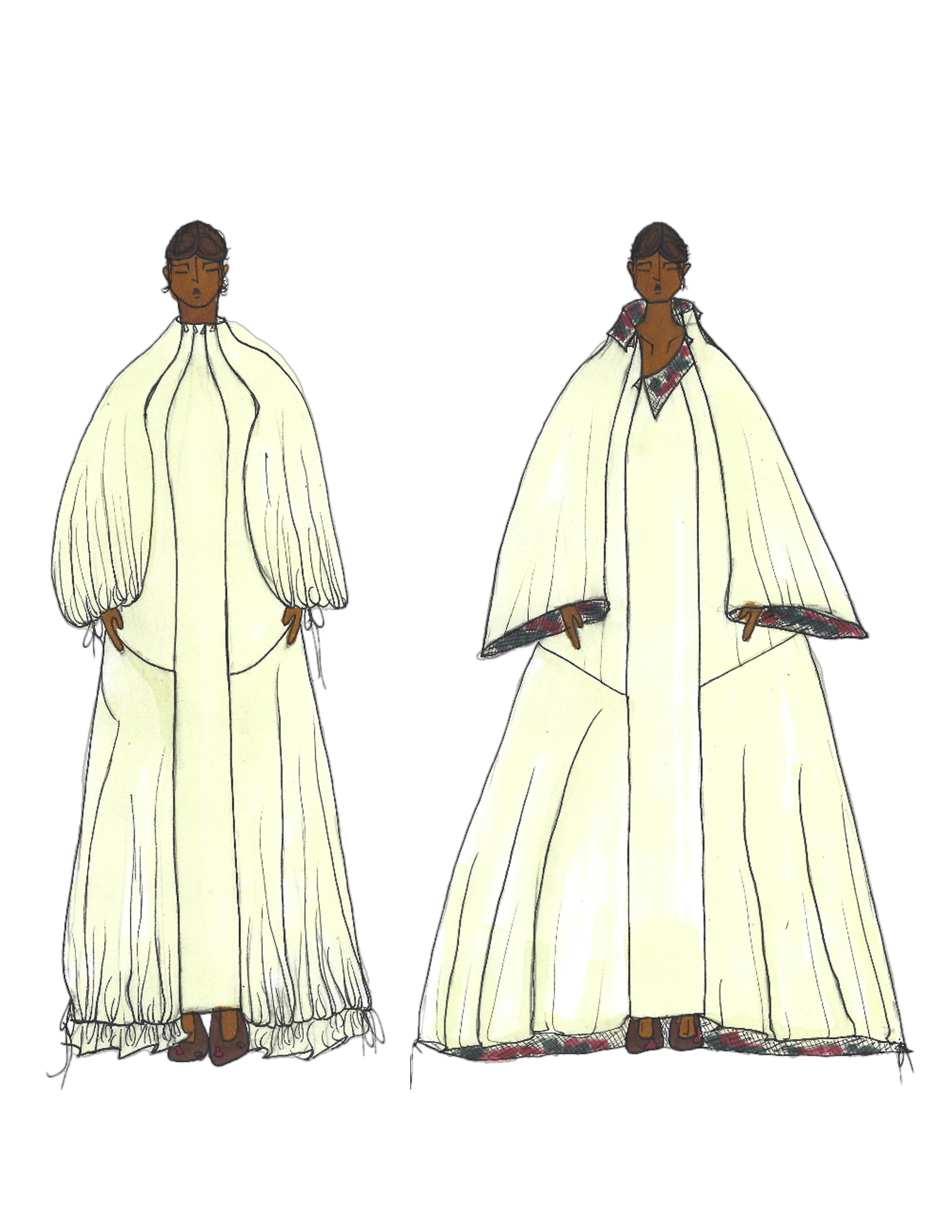
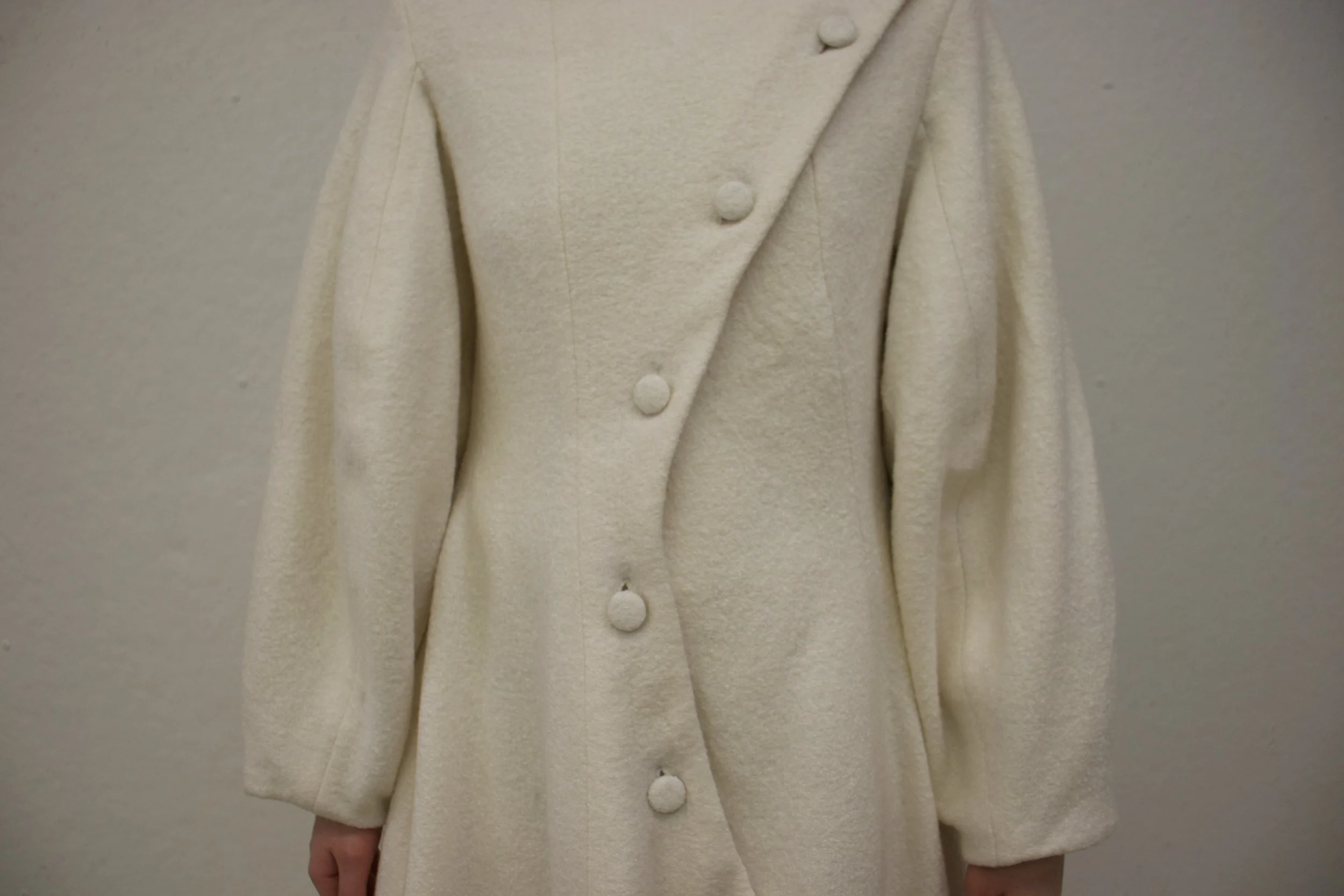
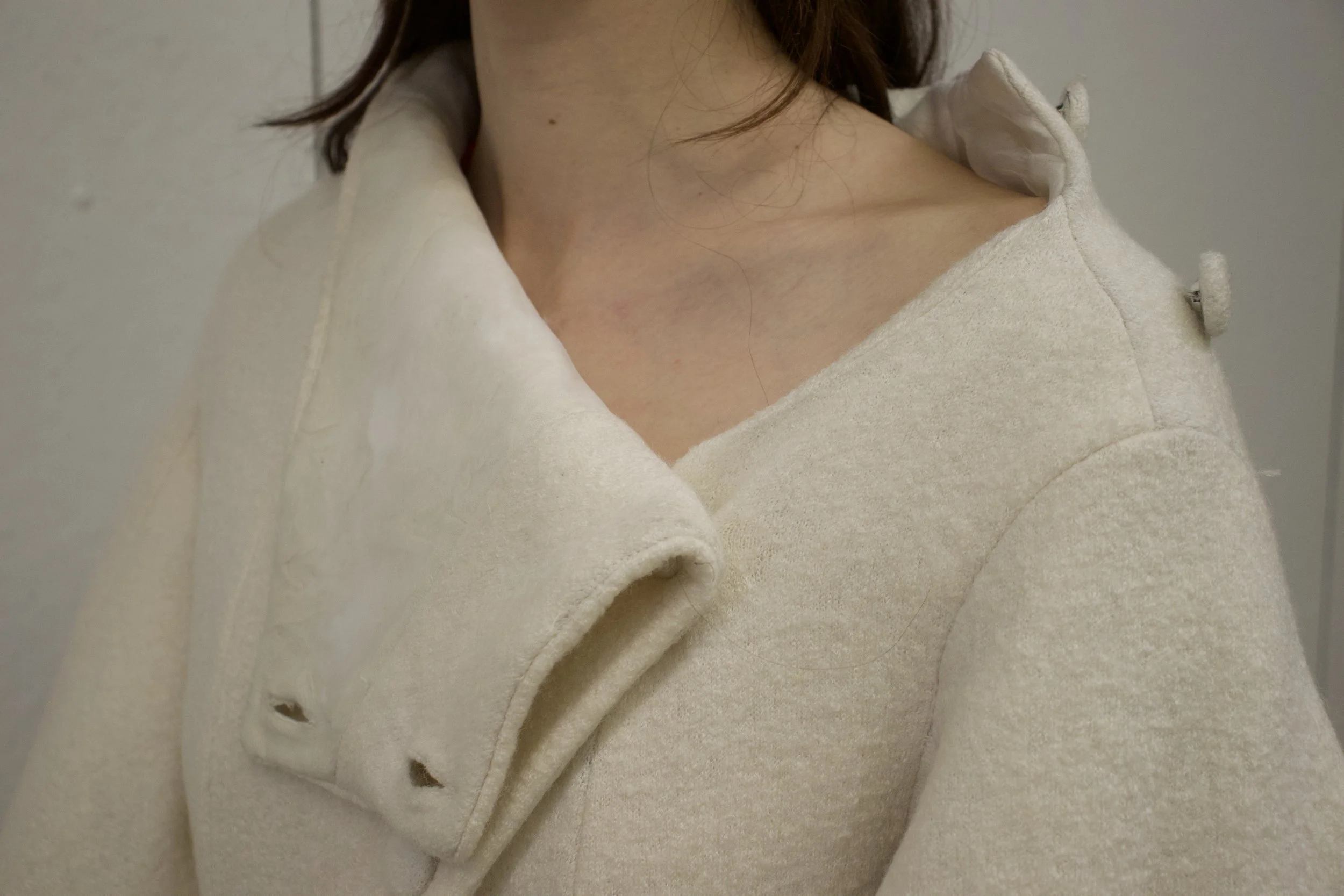
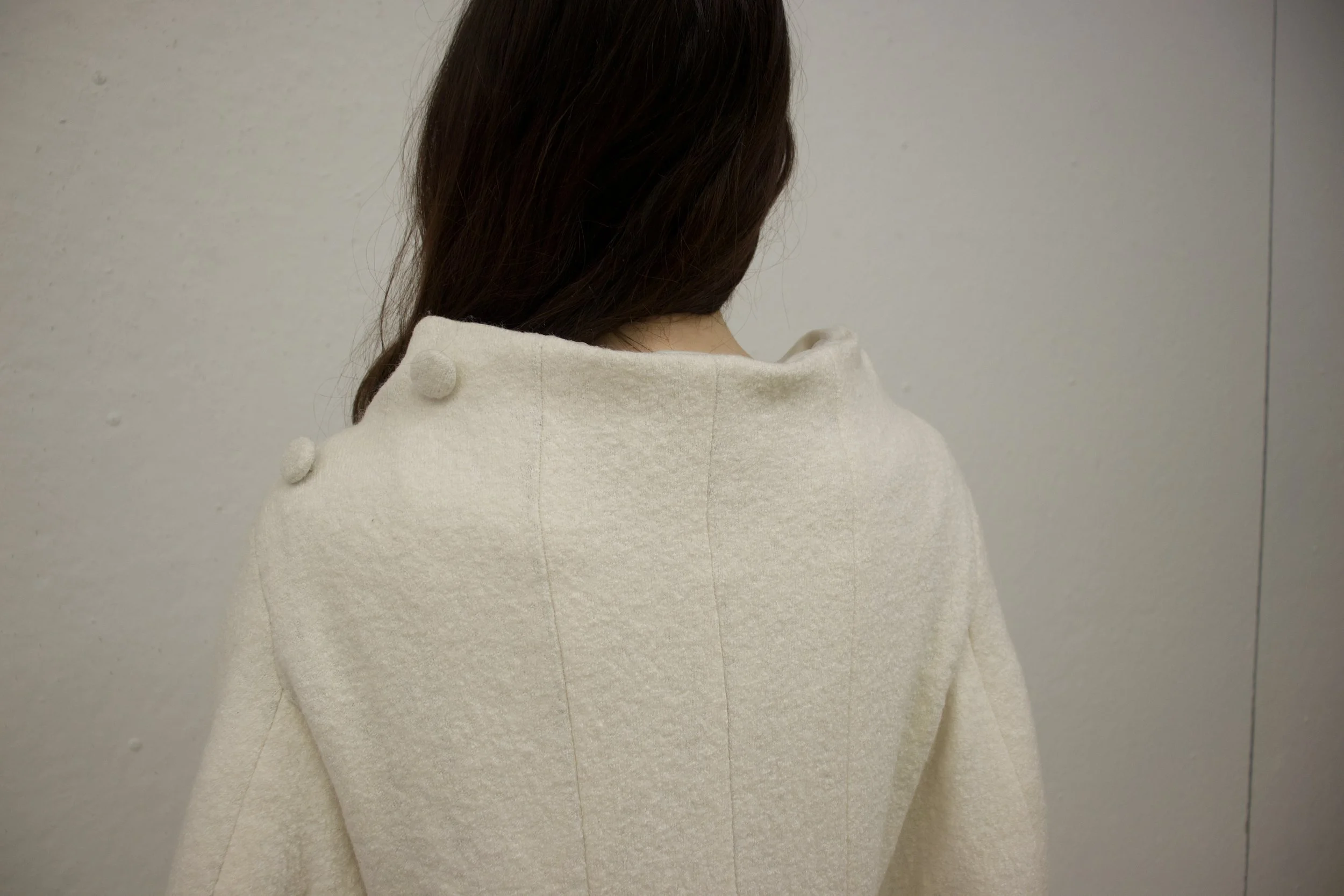
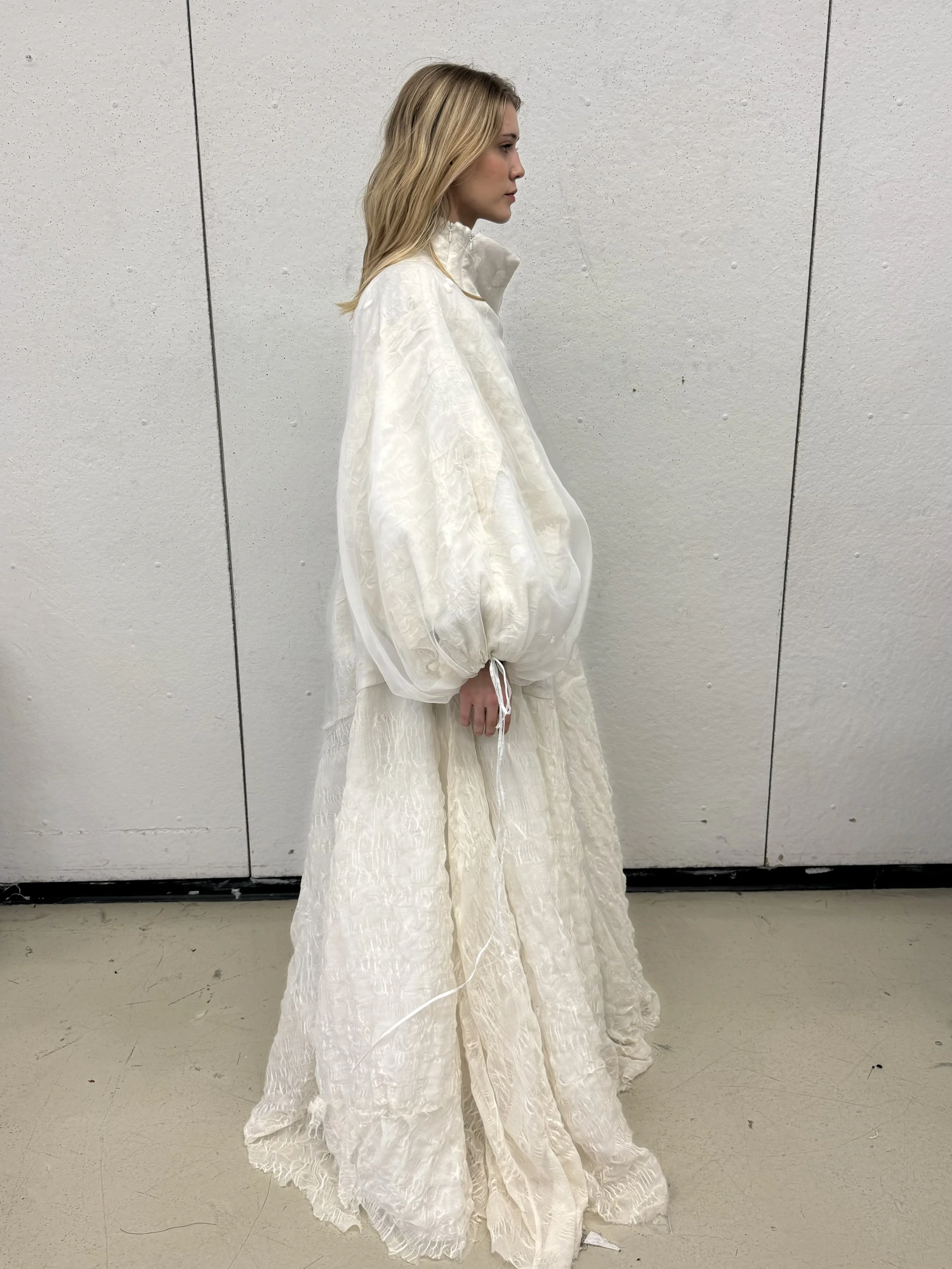
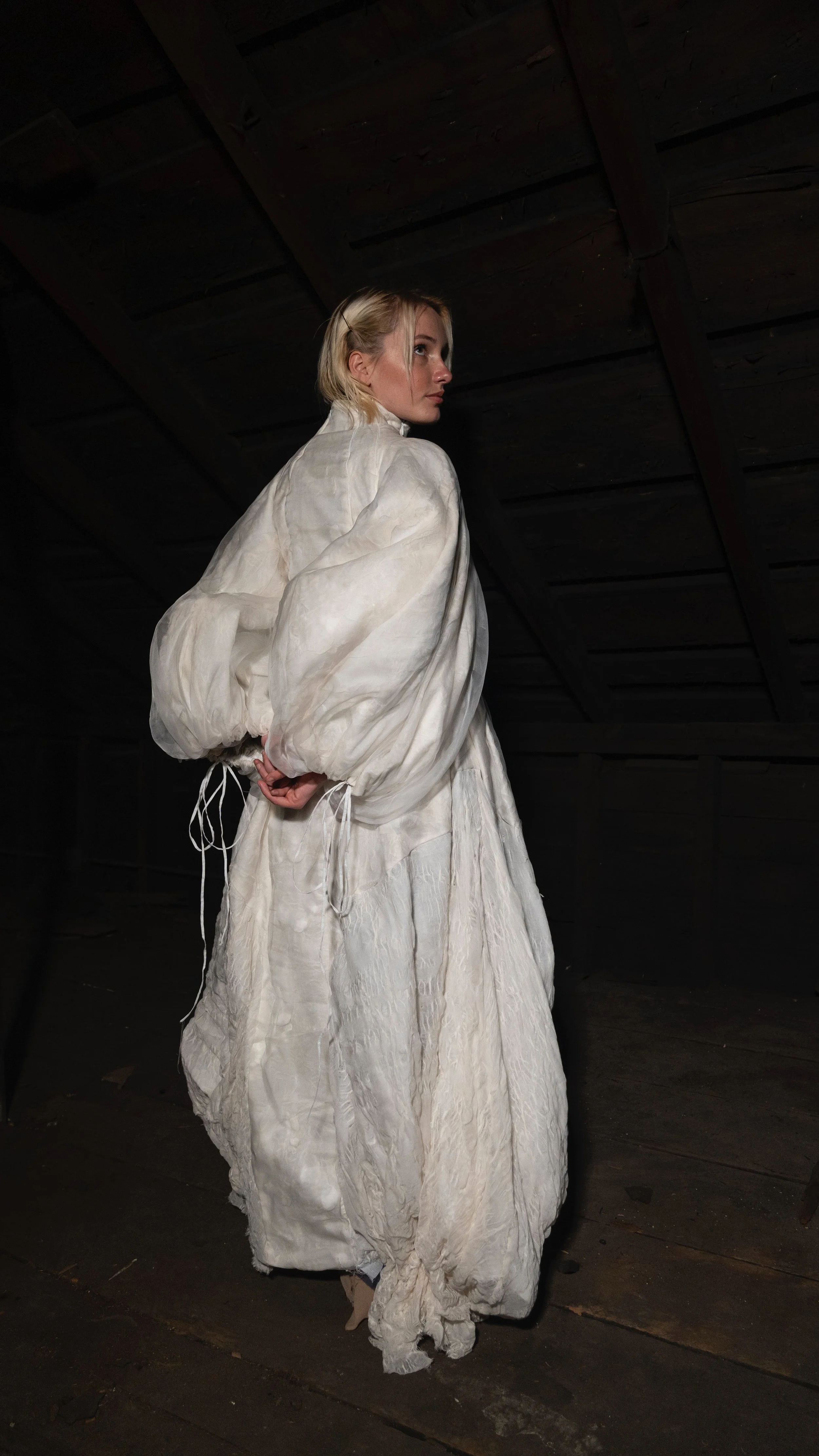
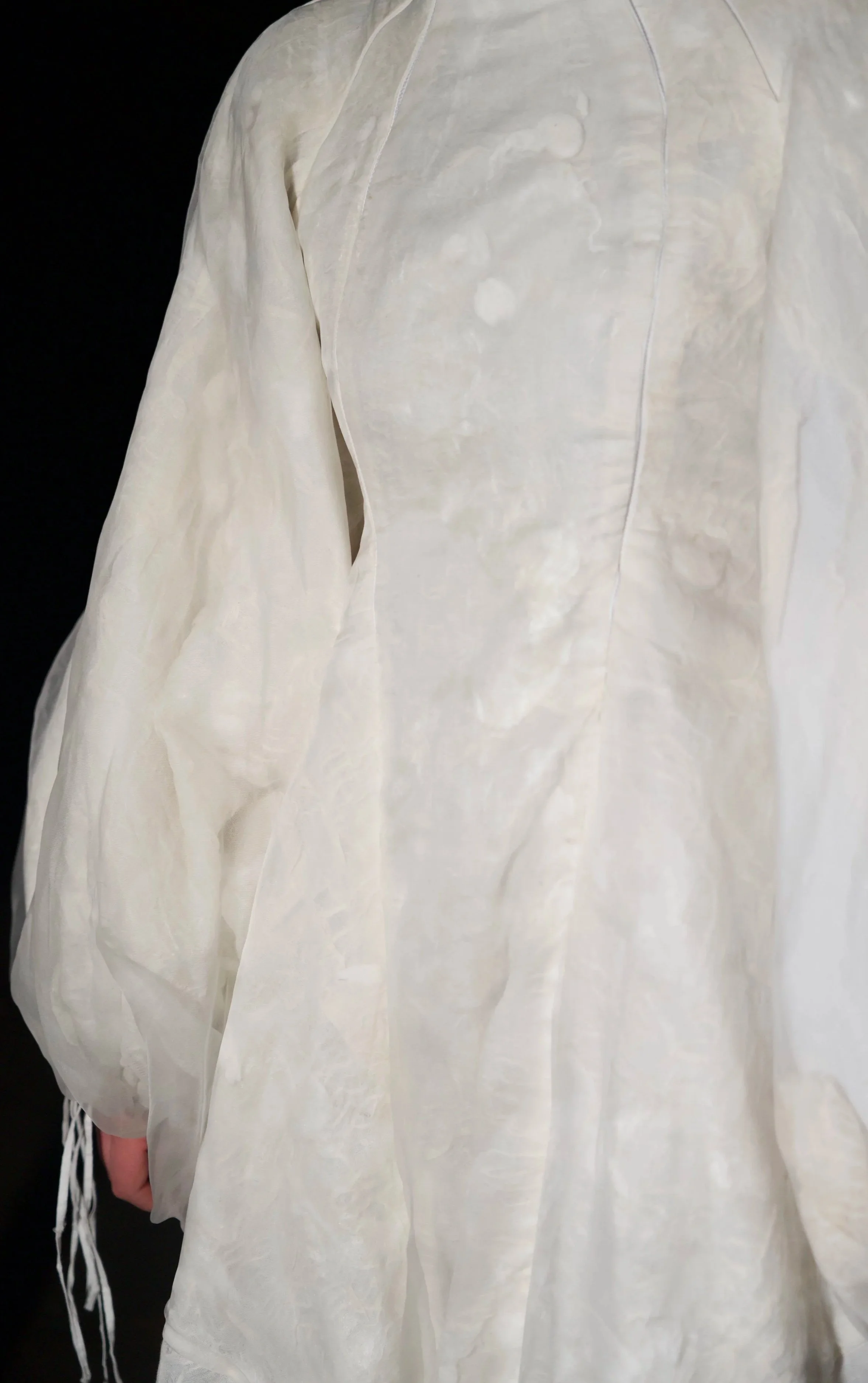
The cocoon just before metamorphosis ends, the moth is ready to emerge
LINING
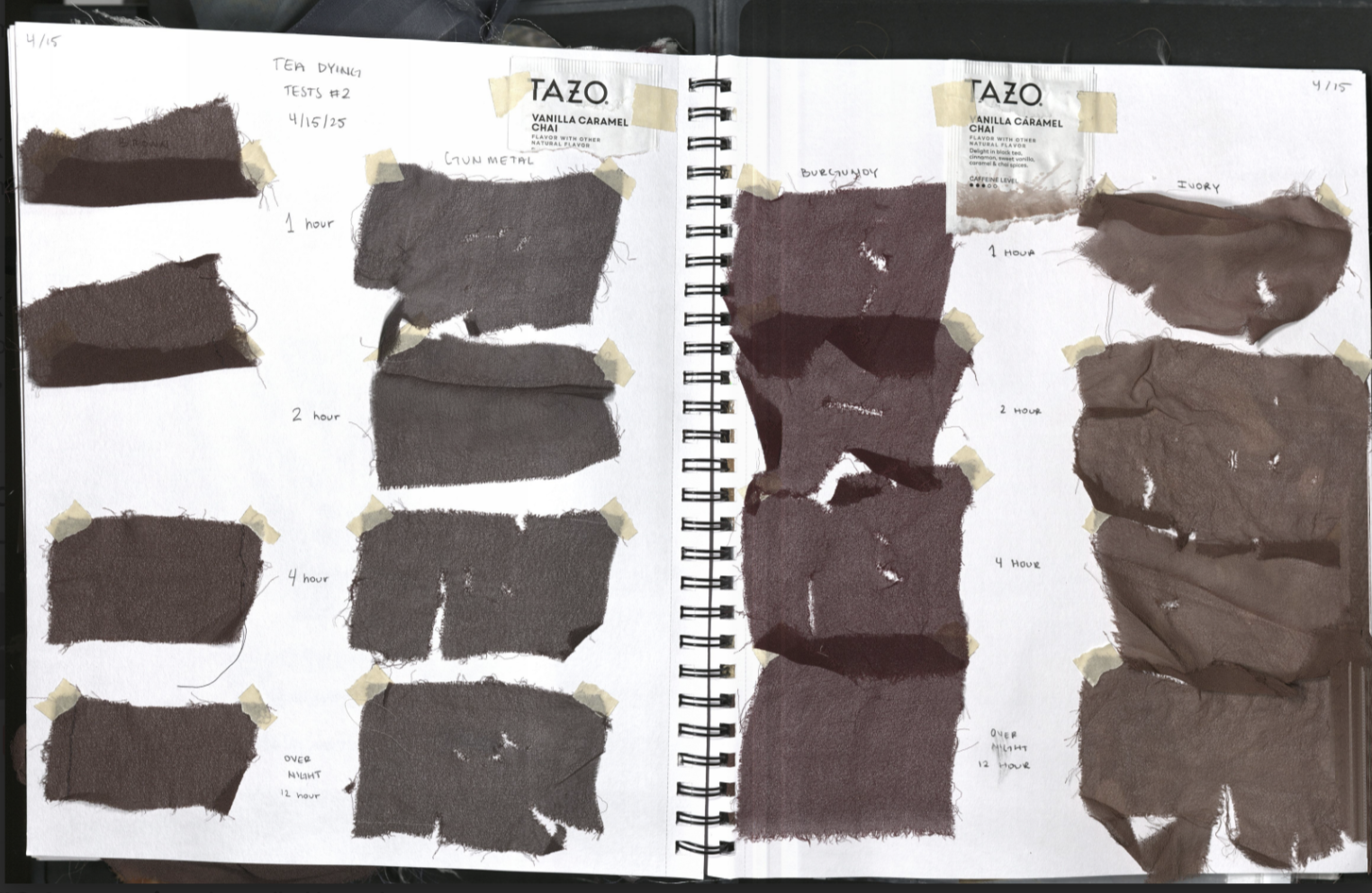
DYE TESTS
Silk chiffon tests dyed with black tea over original dye. Used in lining of look three, slightly revealing color
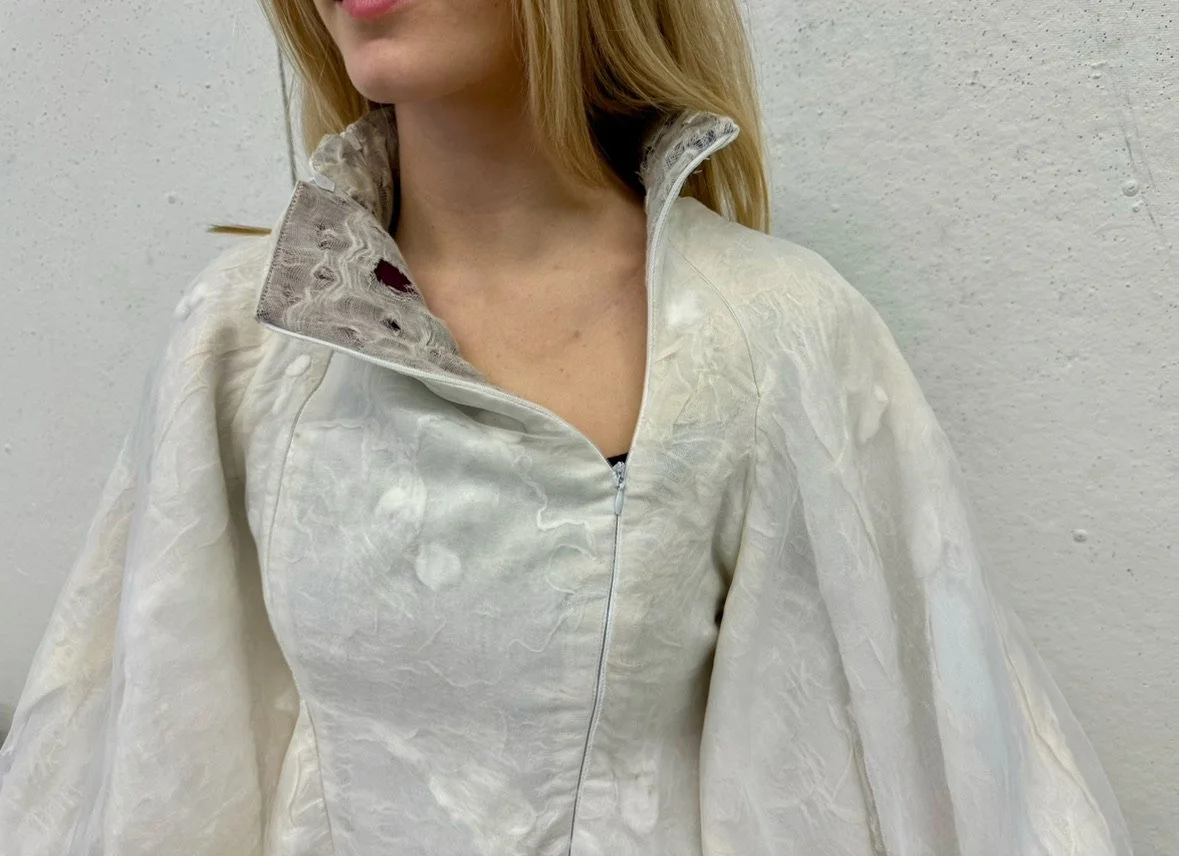
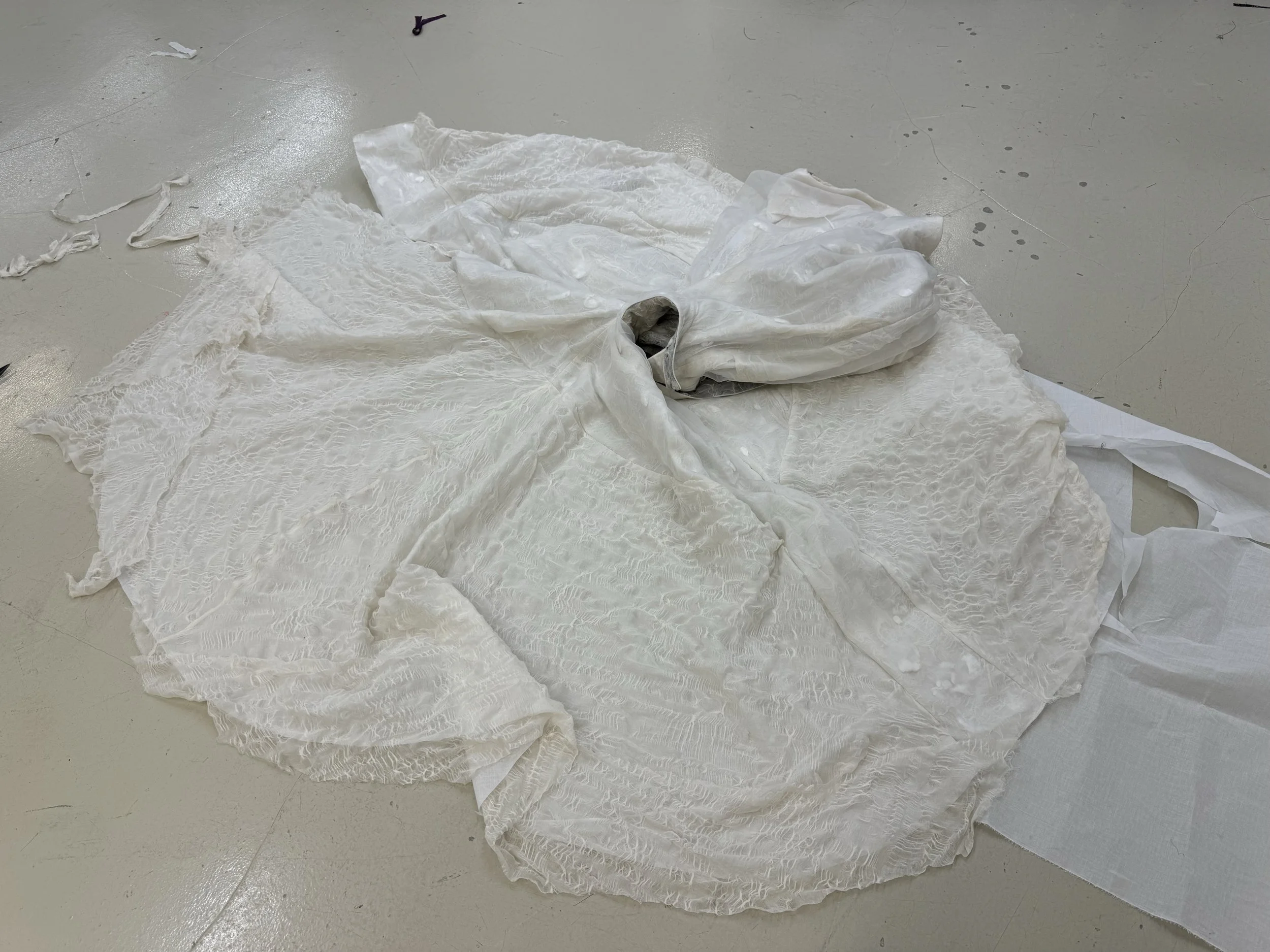
DETAIL AND TOILE PROCESS
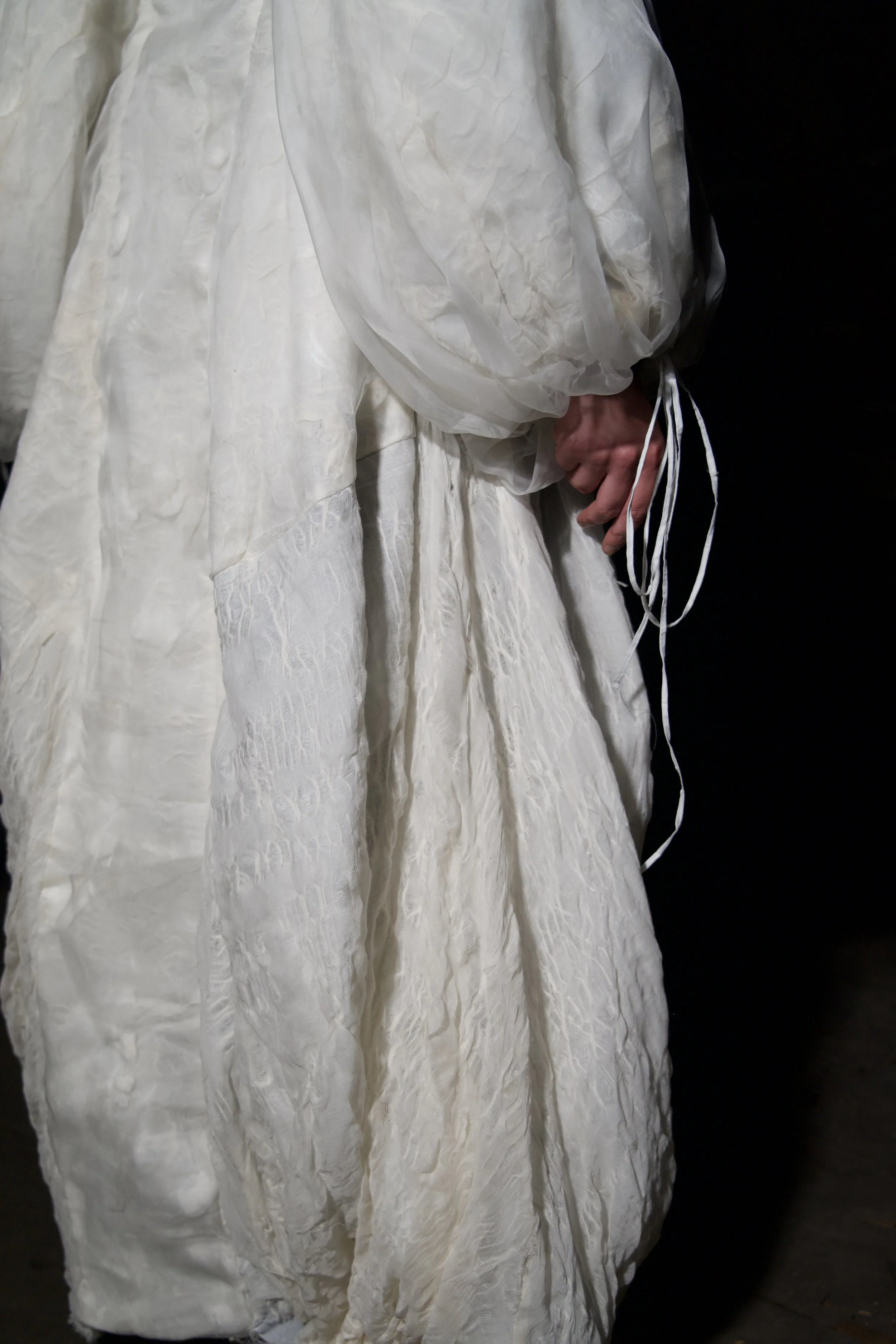
Shell Made of 4 Layers:
Cotton Organdy, Distressed
Cheesecloth, Cocoon Fiber, Silk Organza
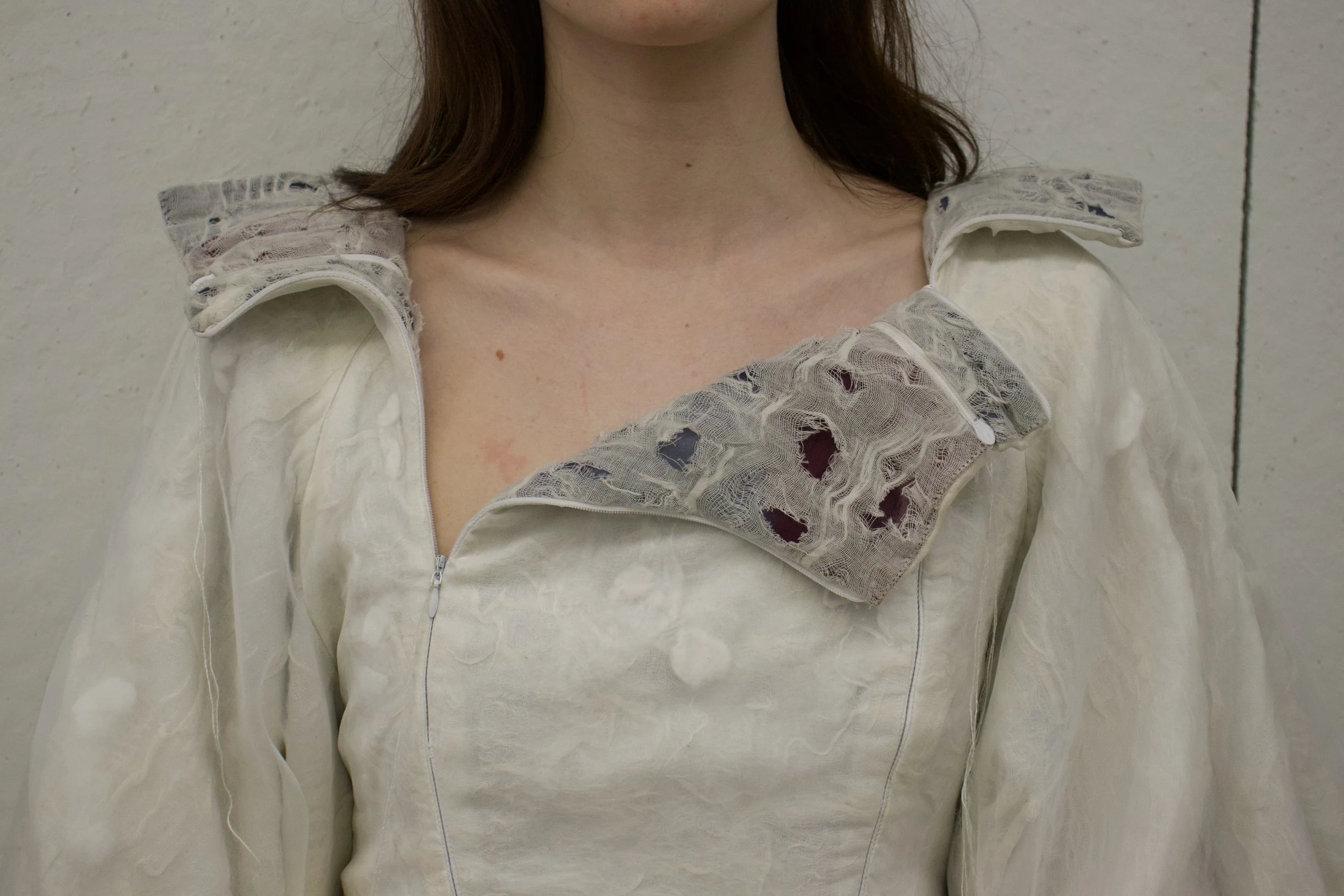
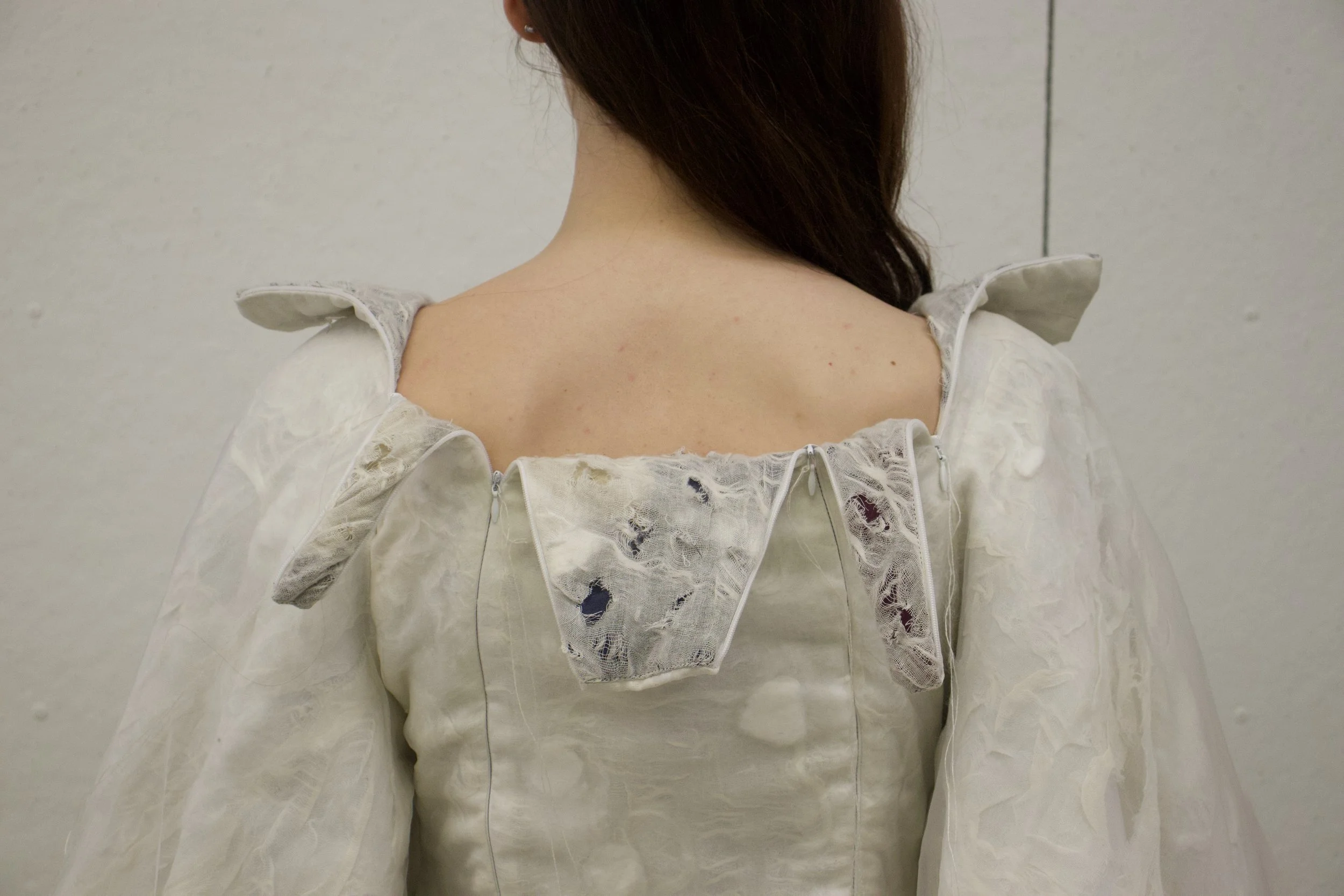
Lining made of 3 Layers:
Cotton Organdy, Tea Dyed Silk Chiffon,
and Distressed Cheesecloth
Hints of color peeking out in the fabric lining to represent the moths emergence. Use of & zippers and synched ties along the sleeves and hem to represent that change is on the verge of happening.
LOOK THREE
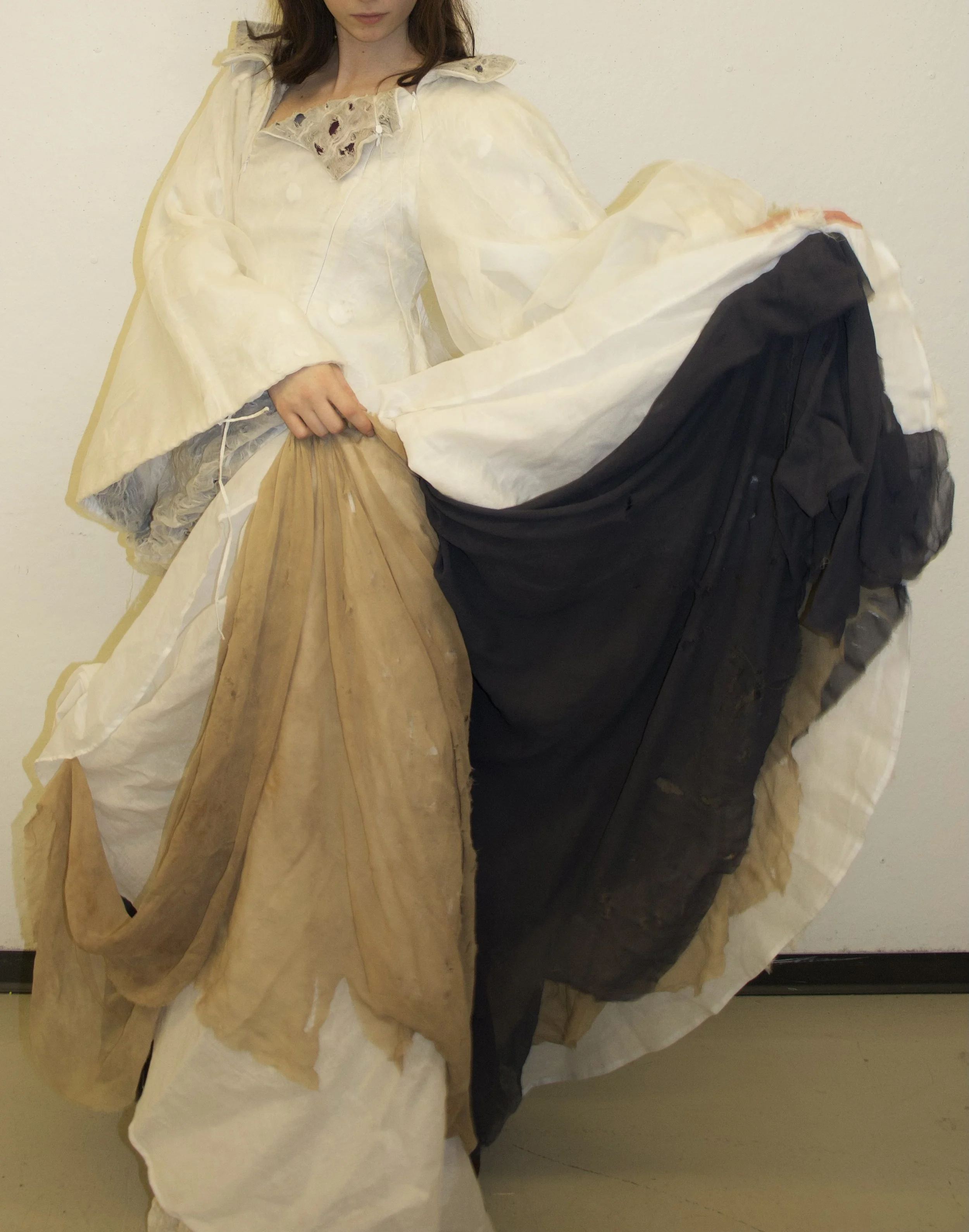
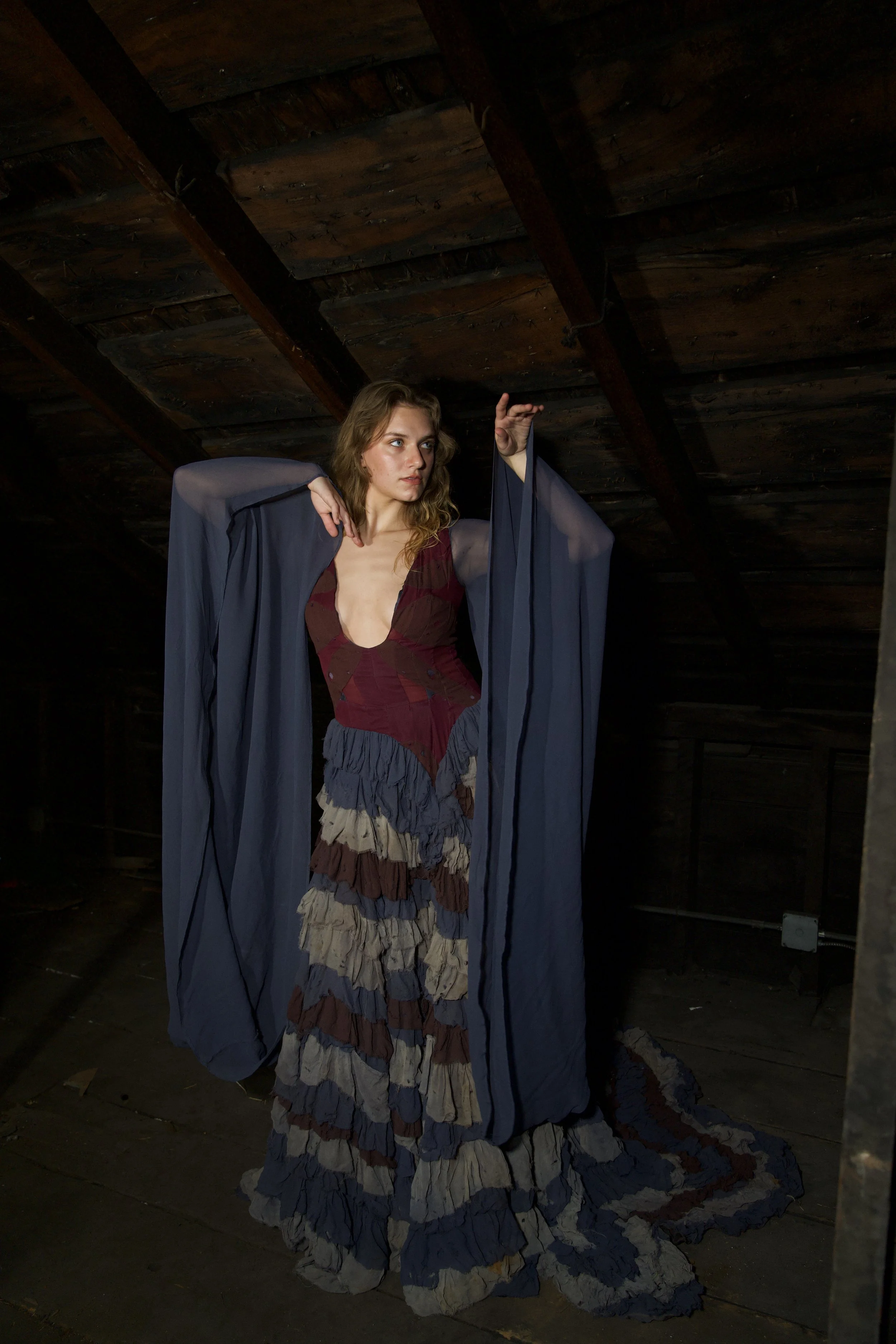
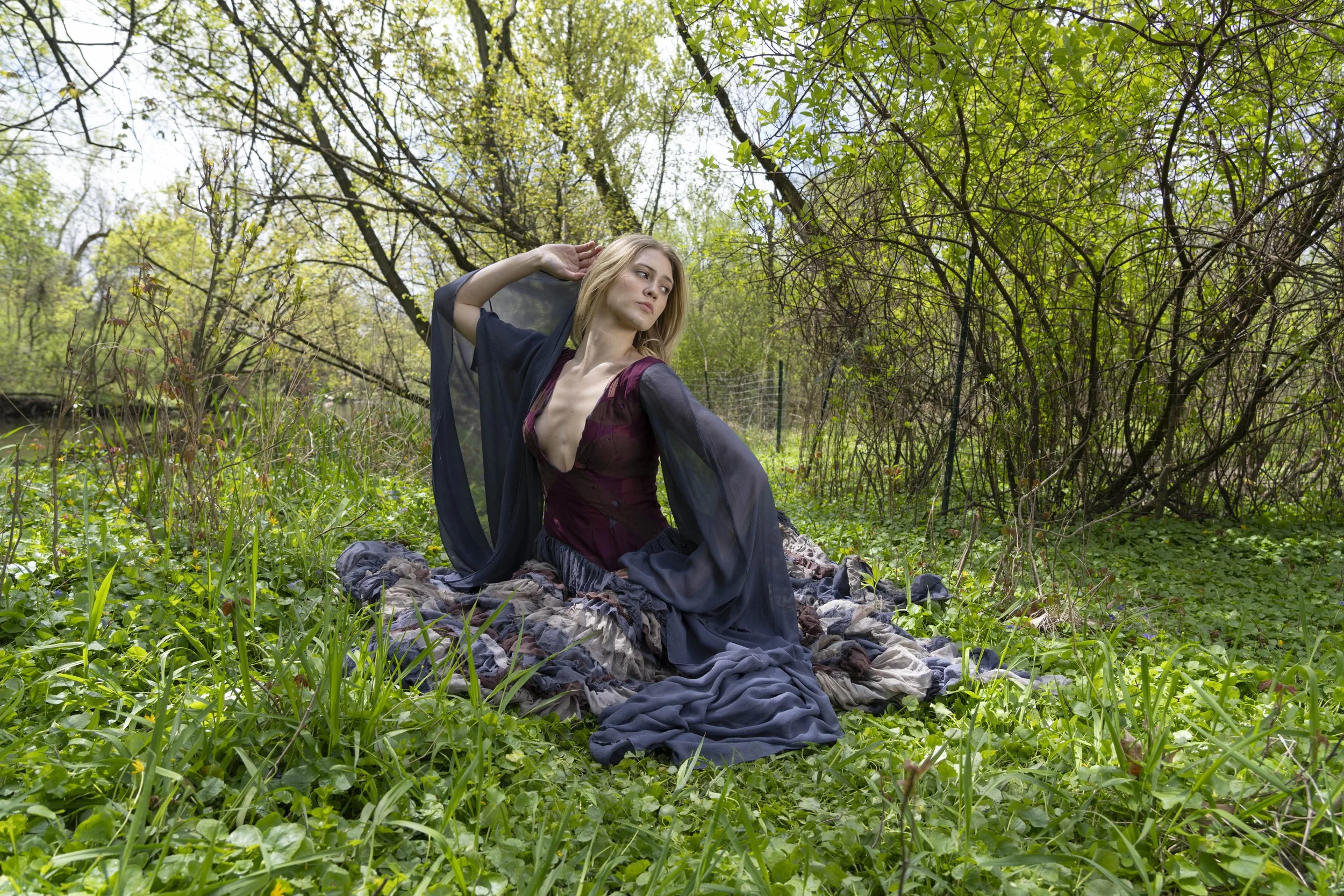
The moth has emerged from the cocoon.
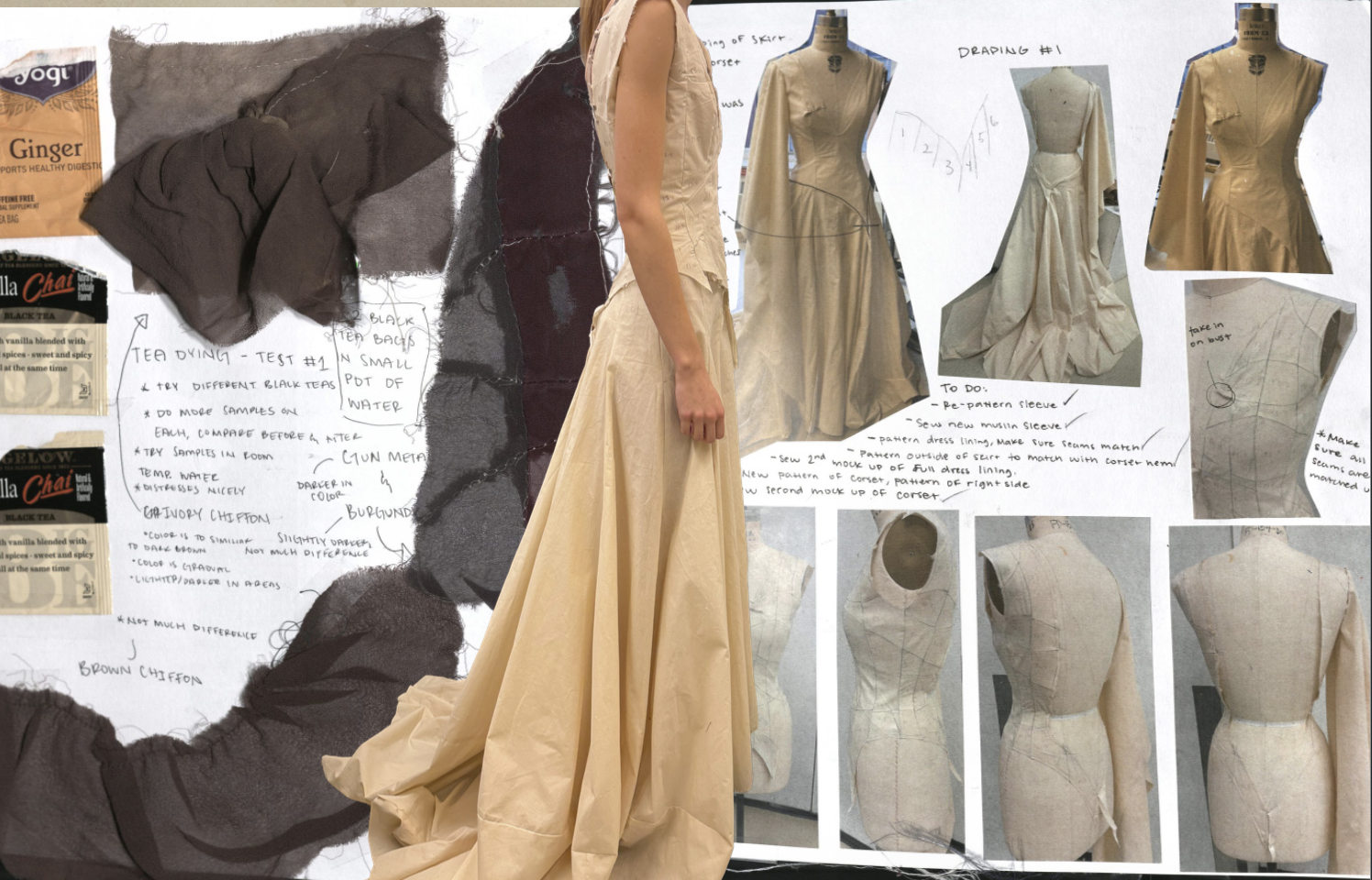
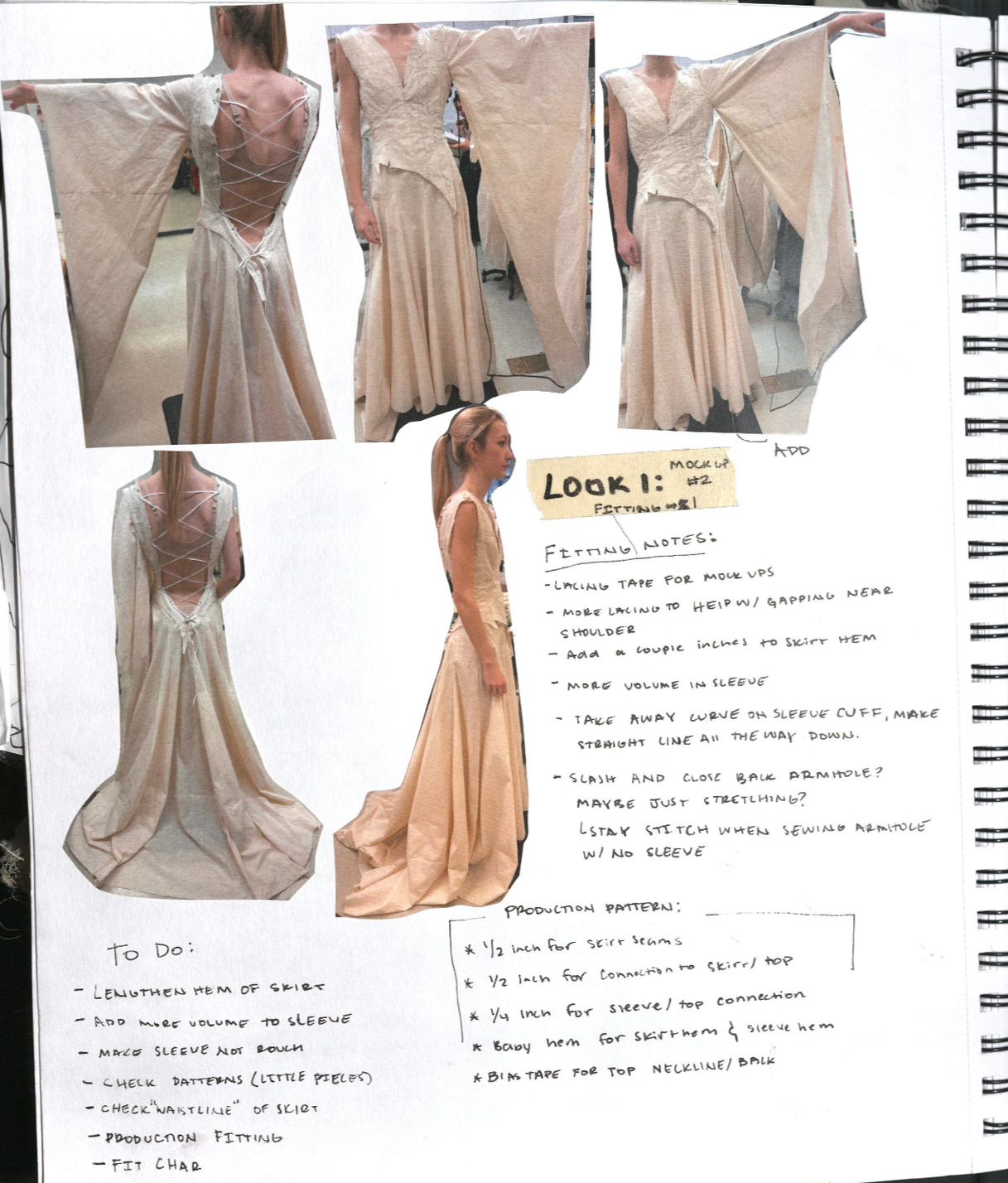
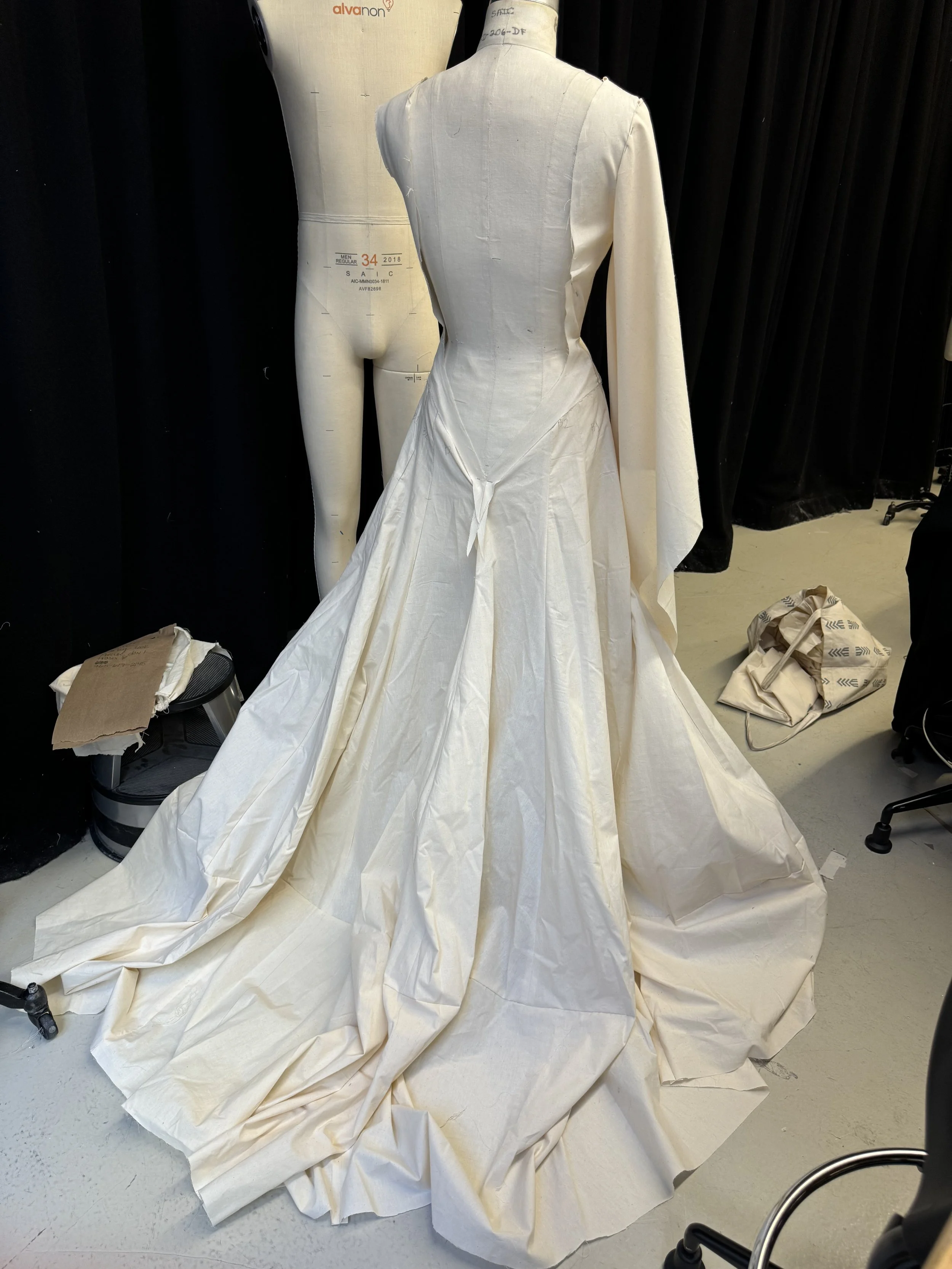
FINAL TOILES
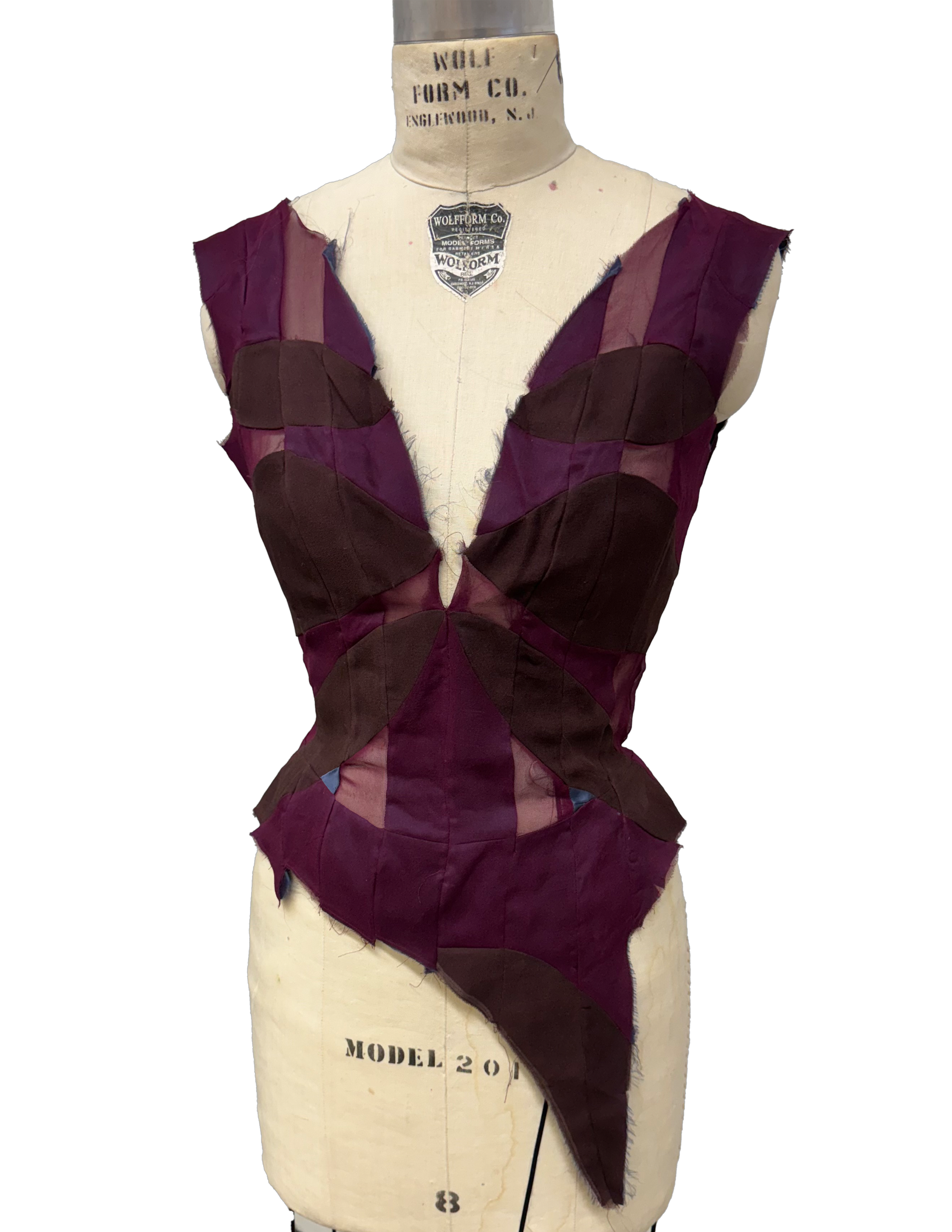
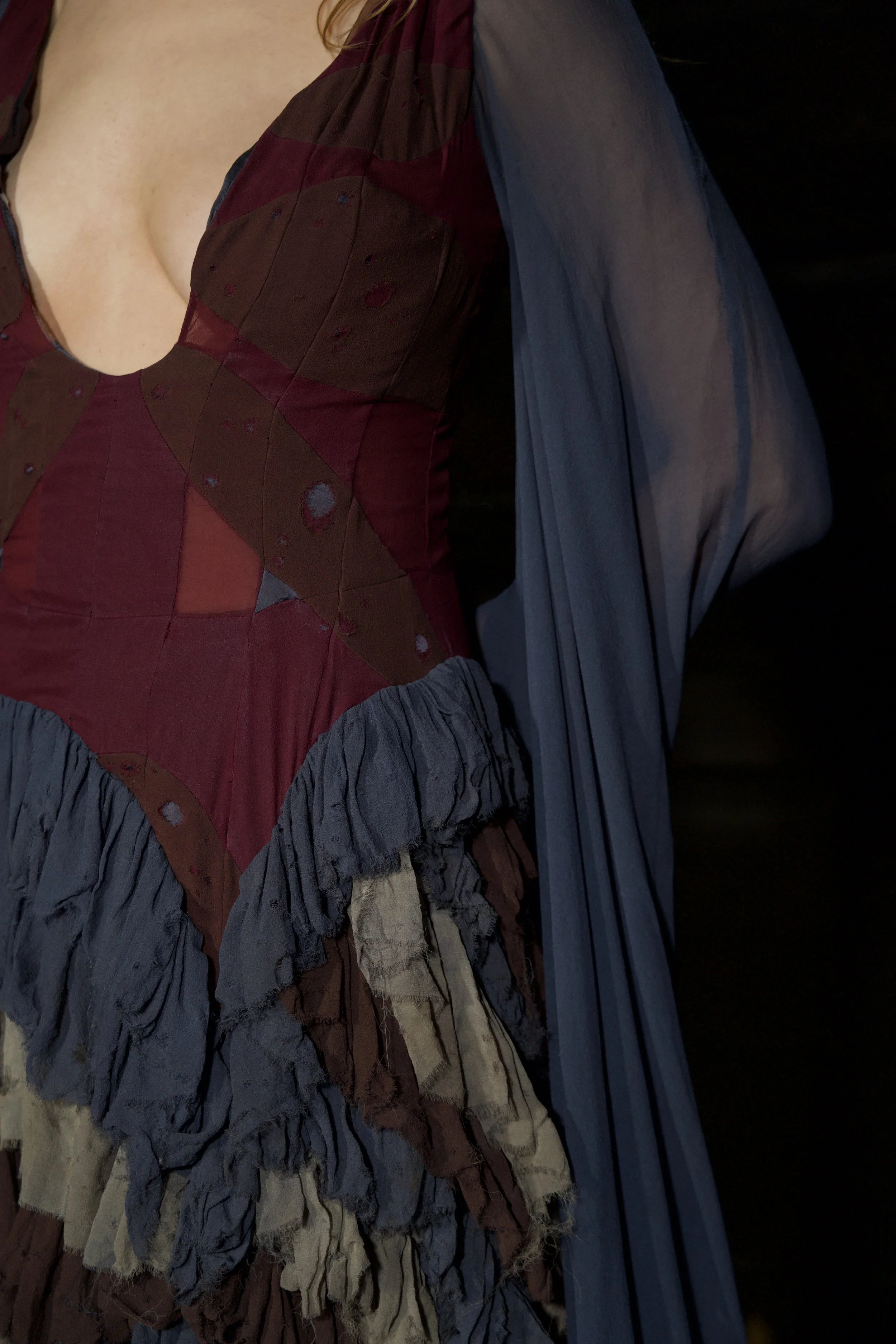
BODICE SELF
Silk Charmeuse and Chiffon
PHOTOGRAPHER: CHLOE O’NEILL.
This bodice contains 280 cut pieces of silk chiffon and is completely symmetrical. The hand cut holes replicate how moths chew through fabric.
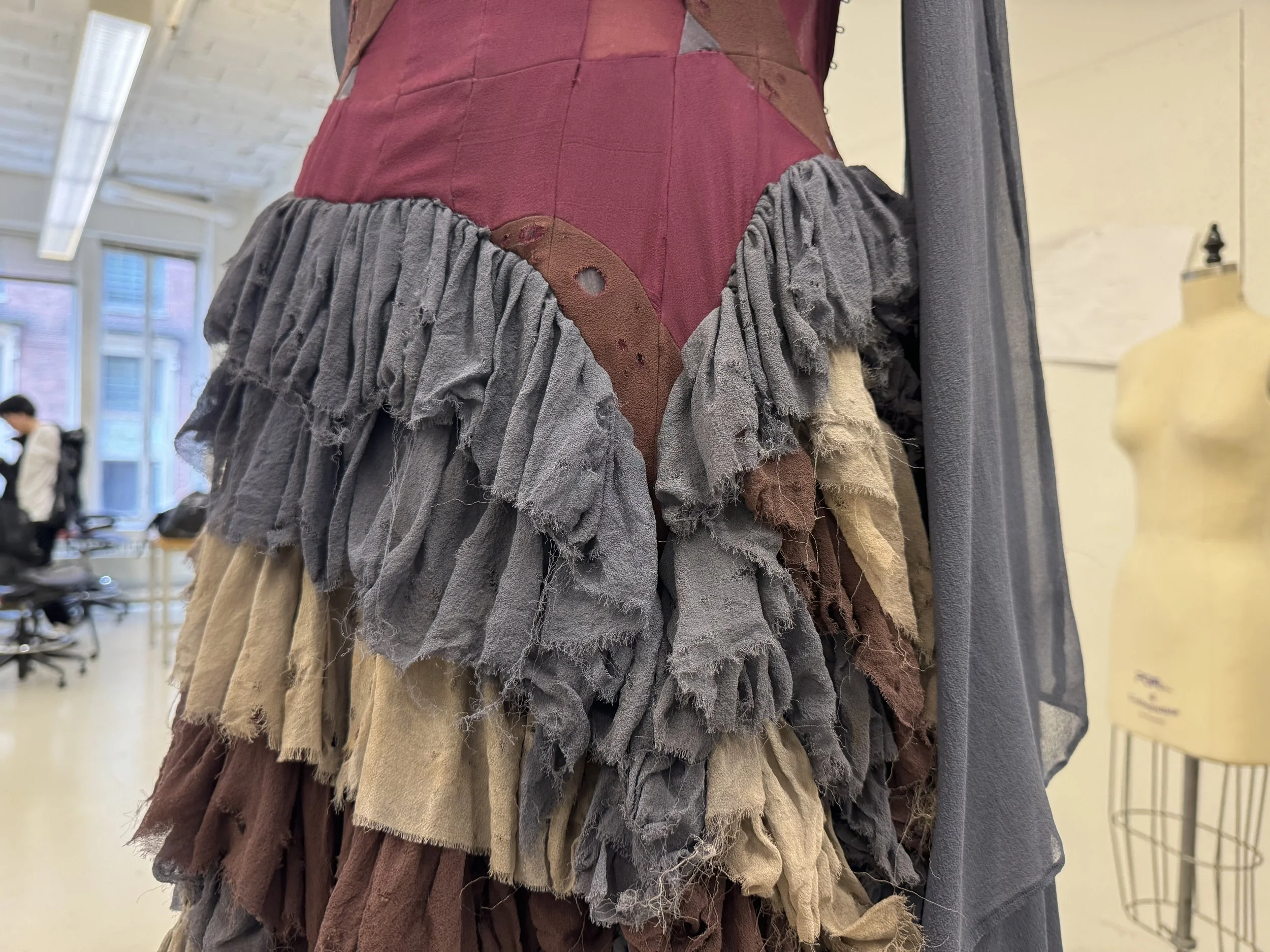
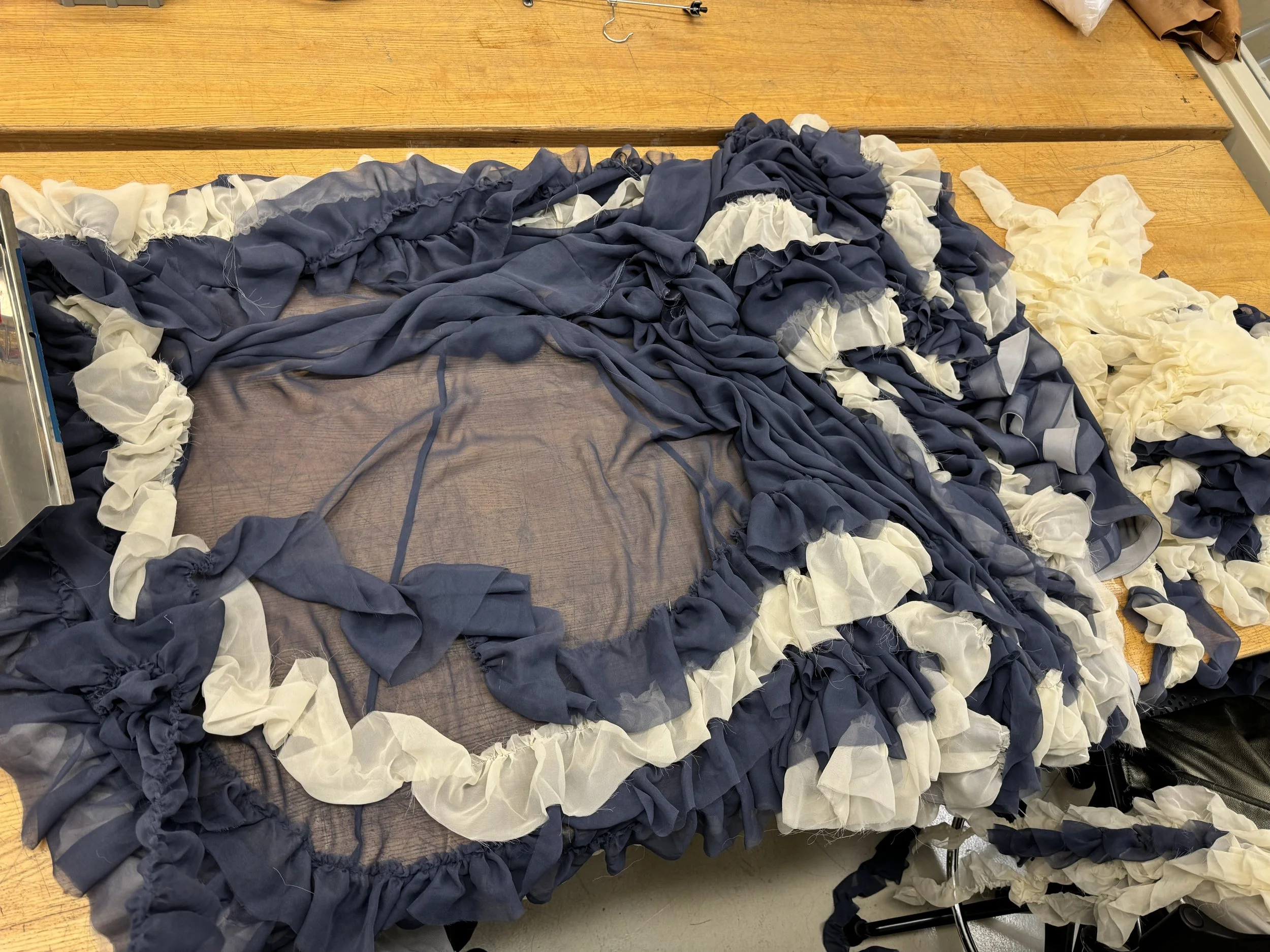
PROCESS ADDING HUNDREDS STRIPS OF GATHERED CHIFFON TO BASE OF CHIFFON SKIRT
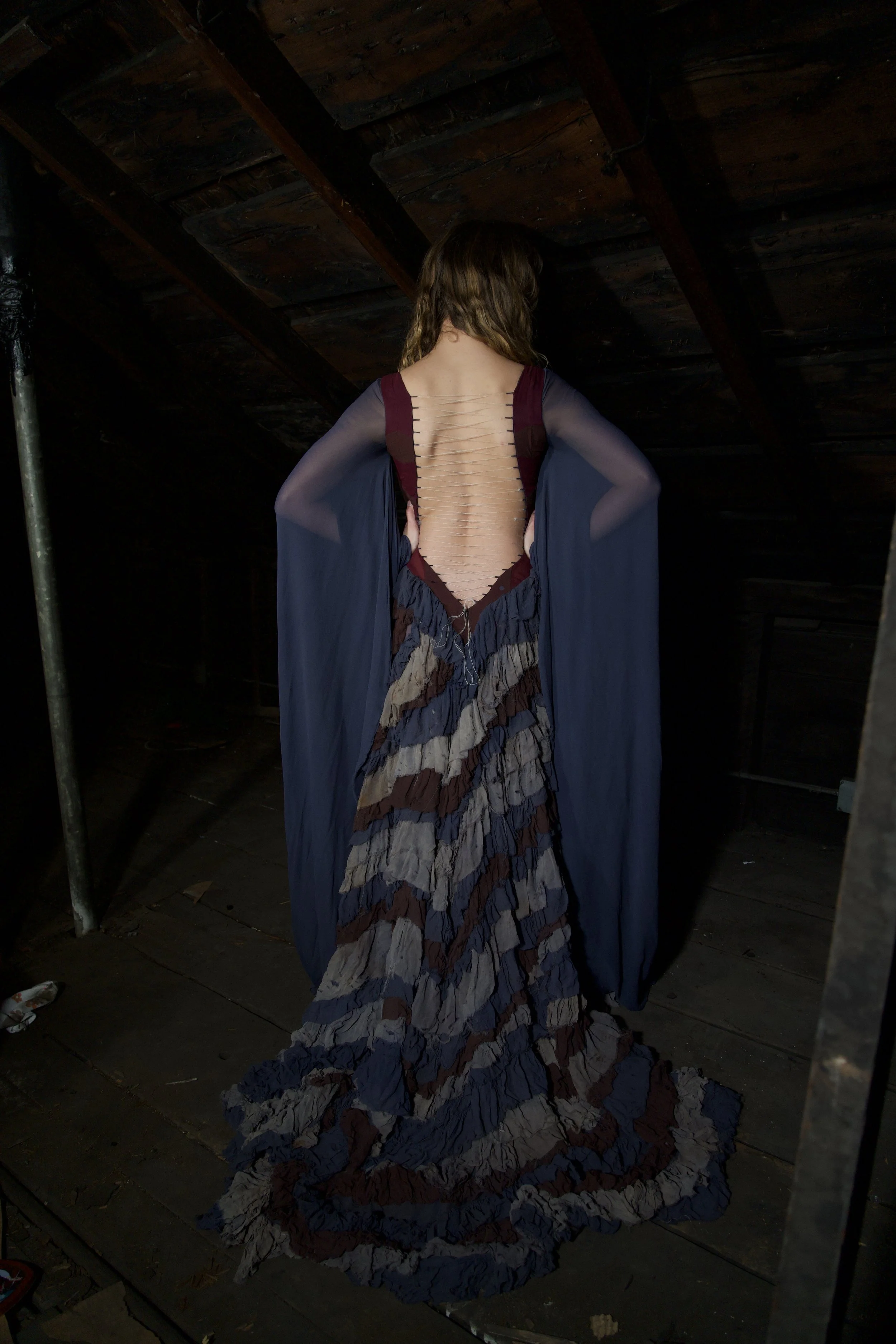
The symmetry in the corset replicates the symmetry in the moth’s wing as well as the sheer chiffon pieces layered over the lining to capture the wing’s transparency and delicacy.
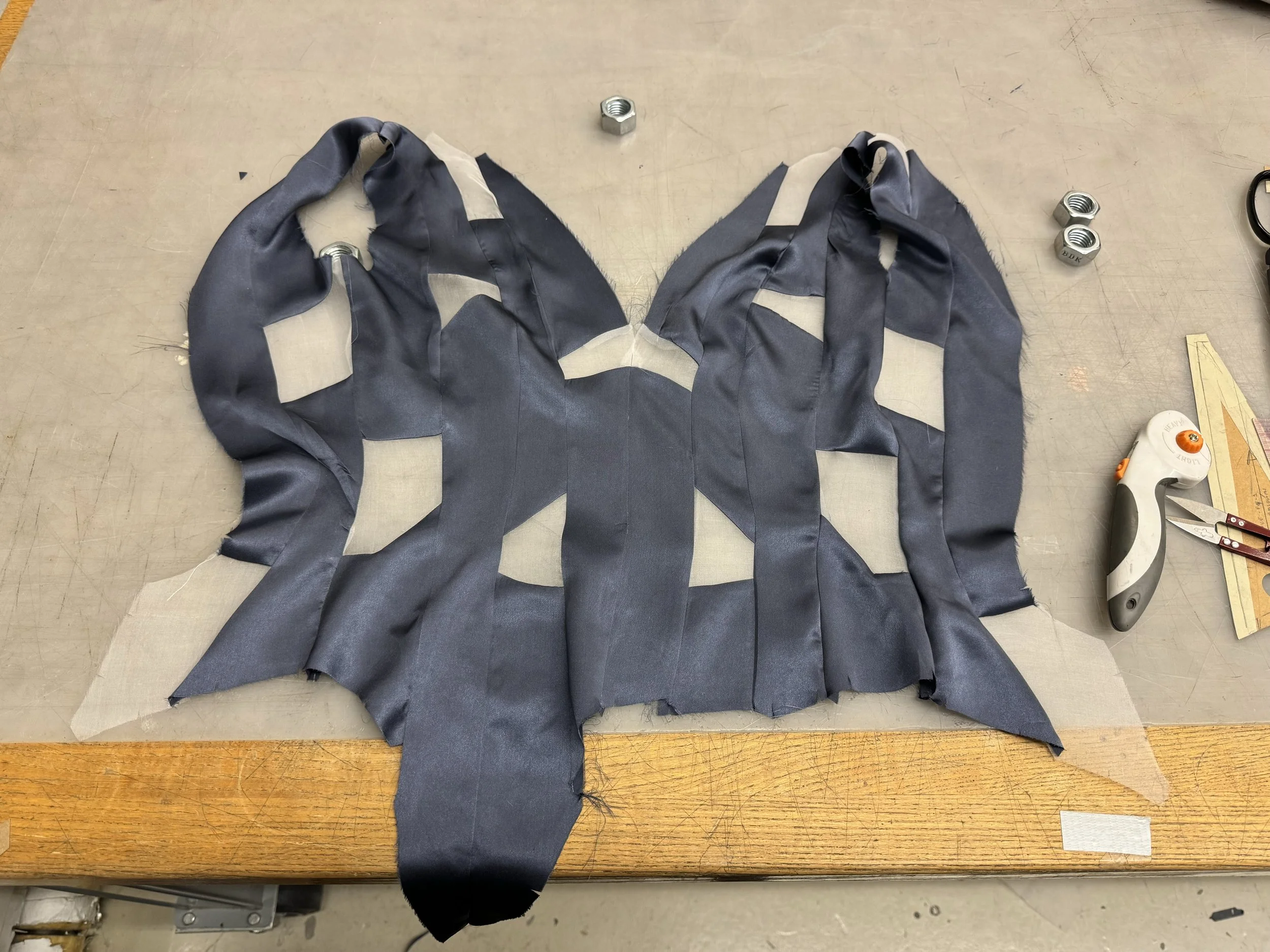
BODICE LINING
HAND DISTRESSED CHIFFON, DYED WITH BLACK TEA
PHOTOGRAPHER: CHLOE O’NEILL.
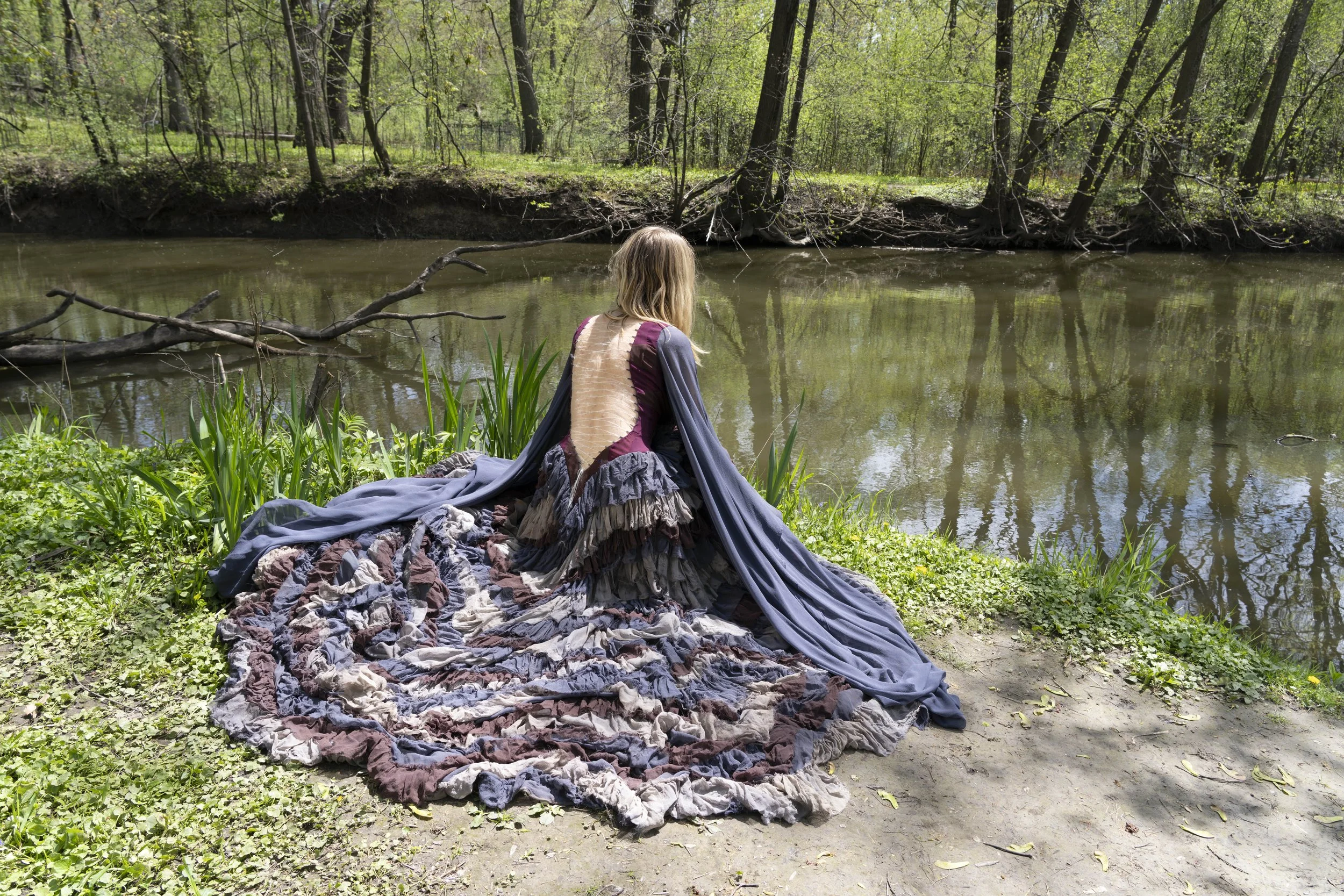
PHOTOGRAPHER: THERESA LANDI.
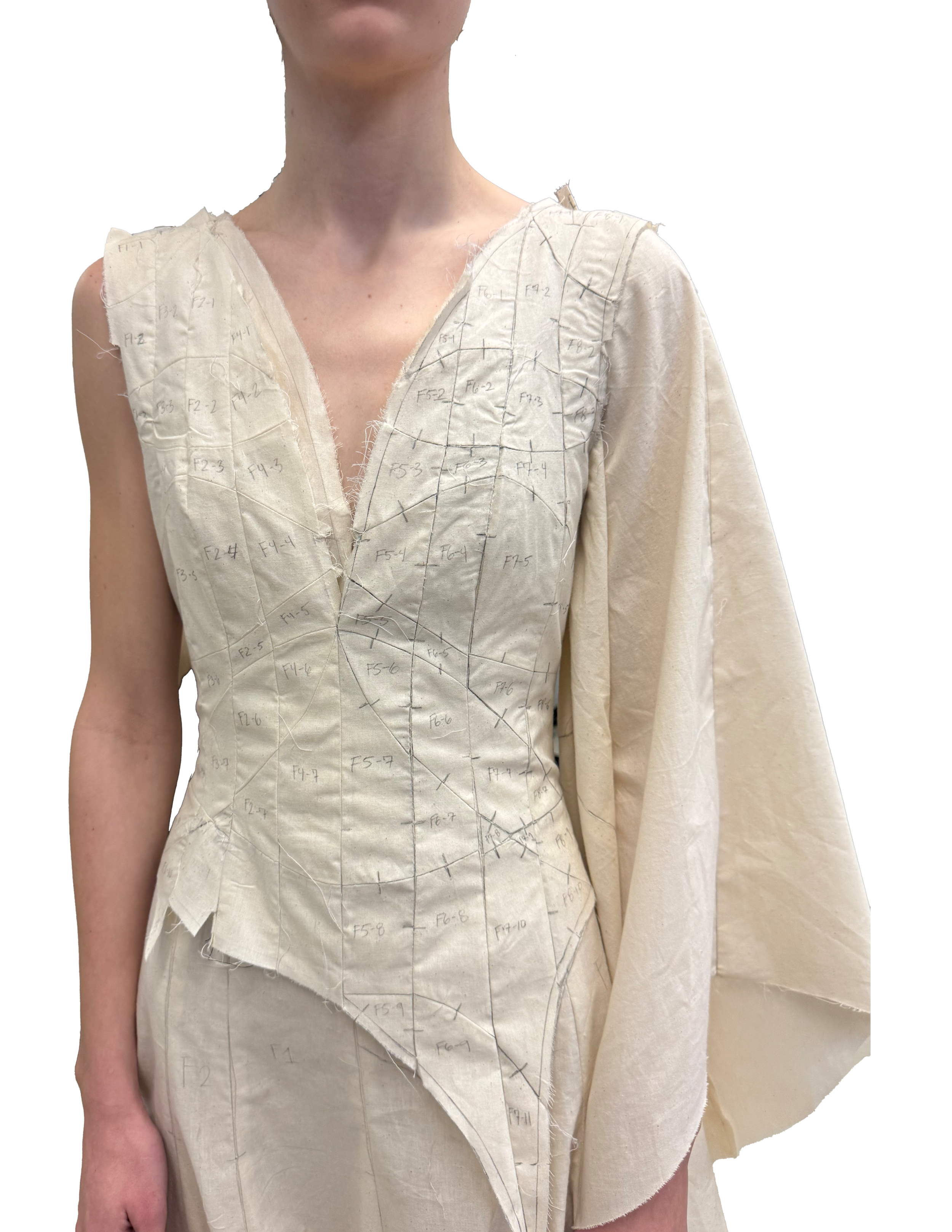
FINAL MUSLIN TOILE
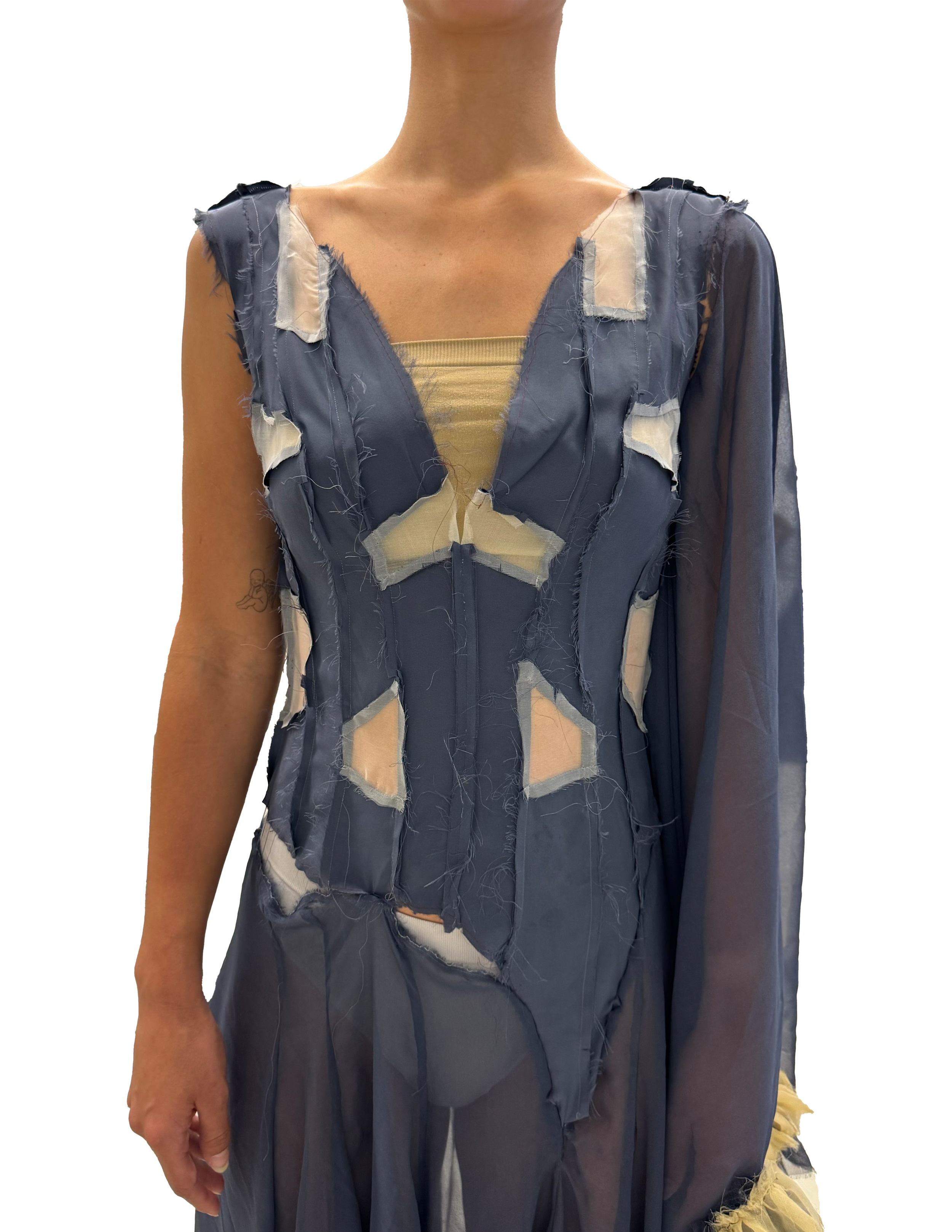
BODICE LININING
Silk Charmeuse and Organza
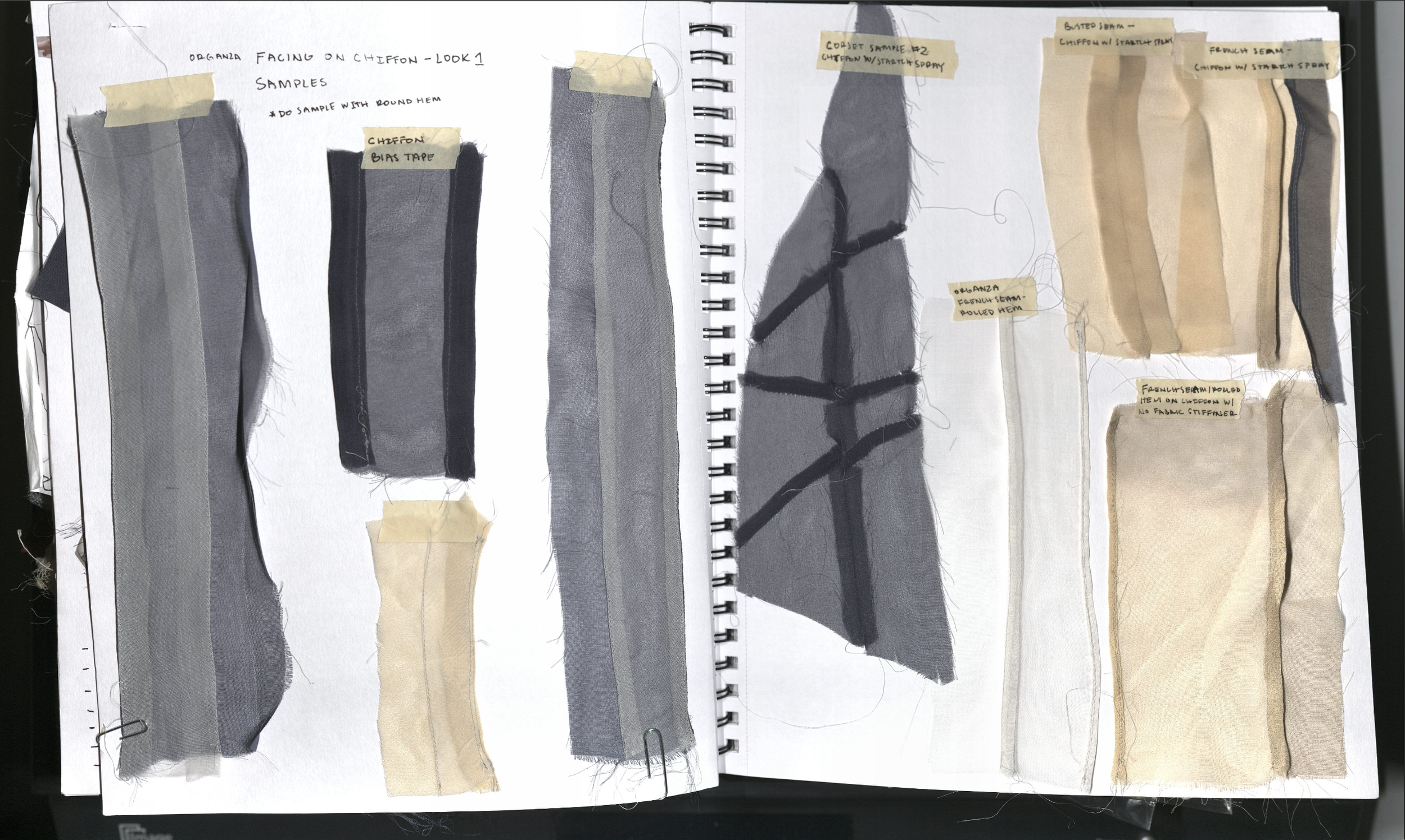
SILK CHIFFON SEAM SAMPLES
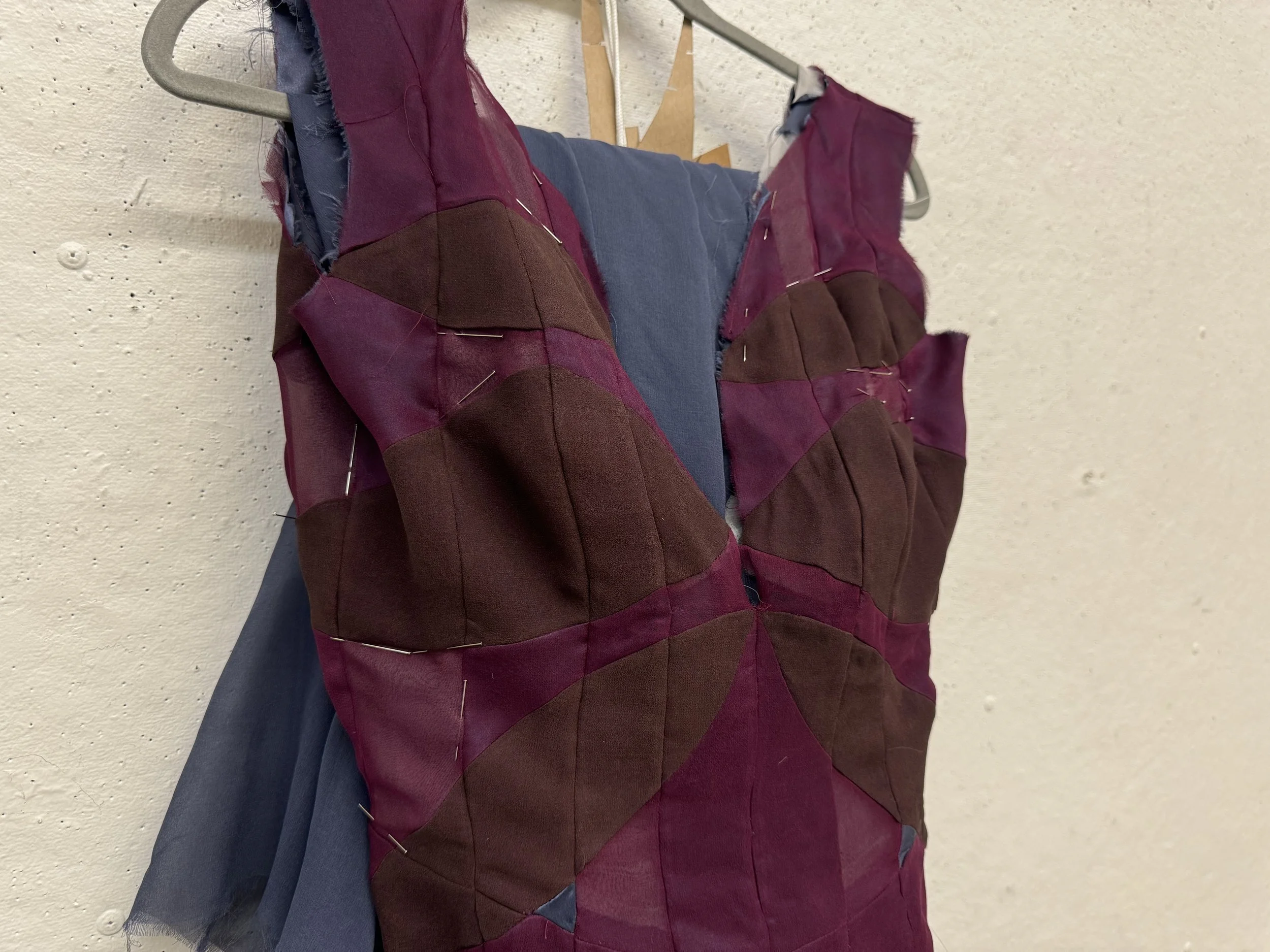
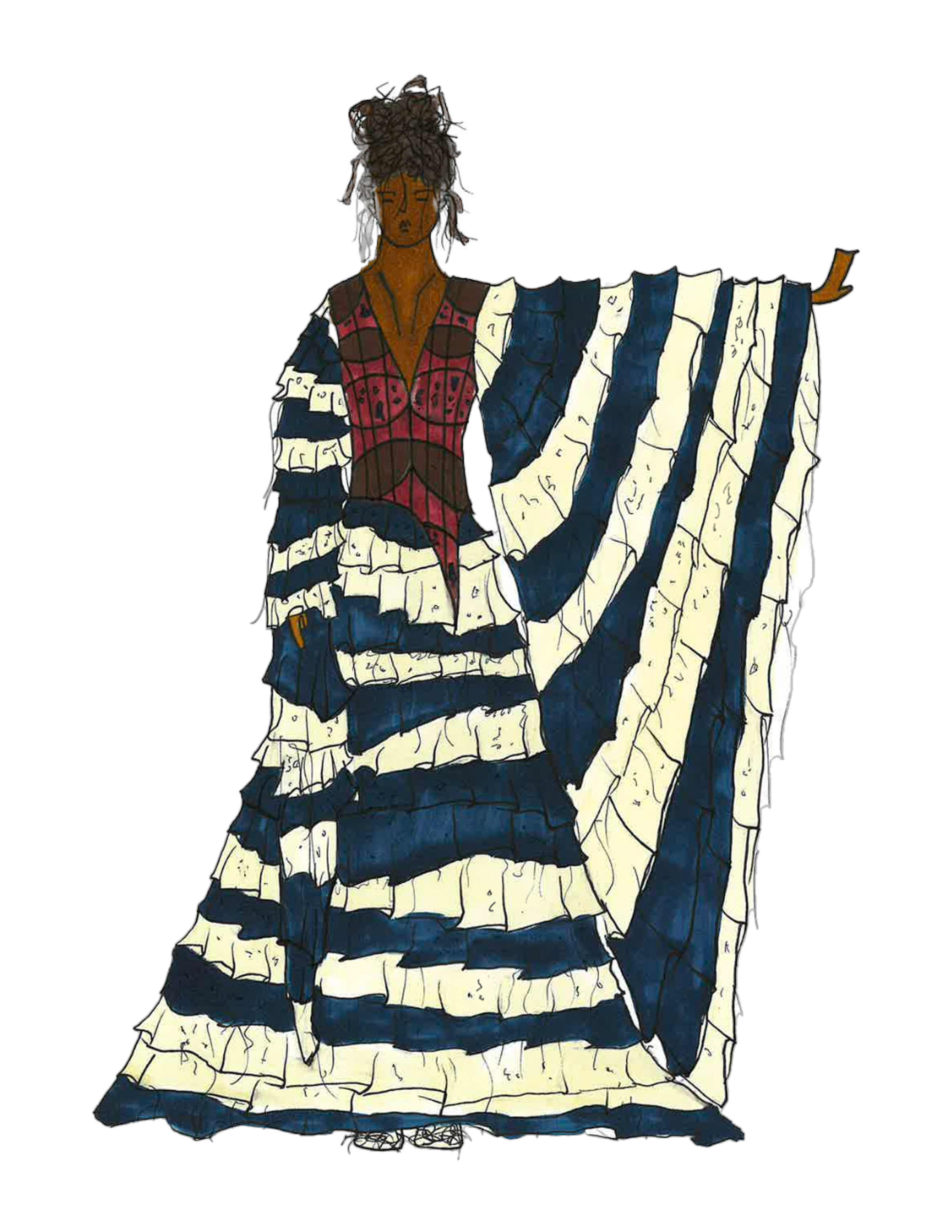
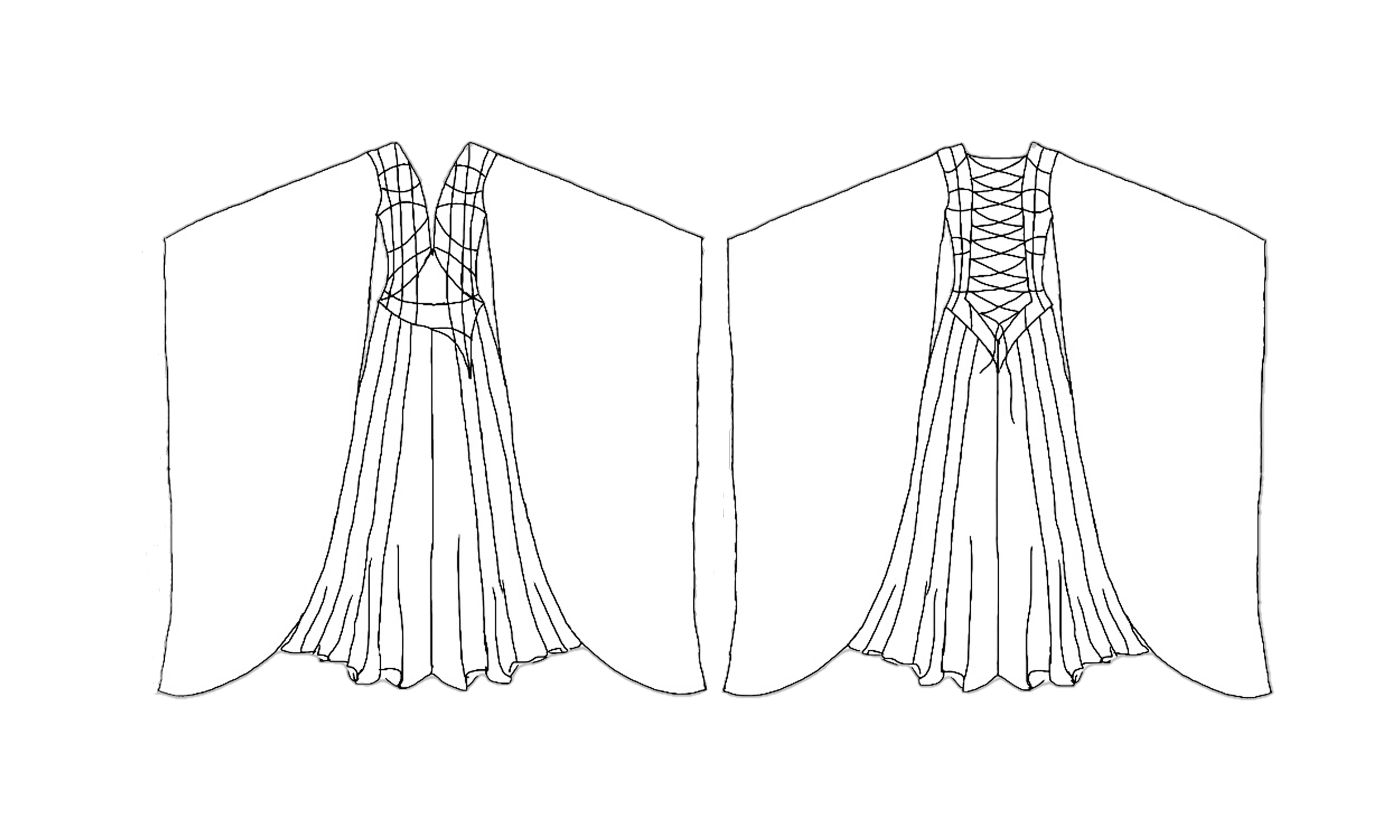
EARLY SKETCHES
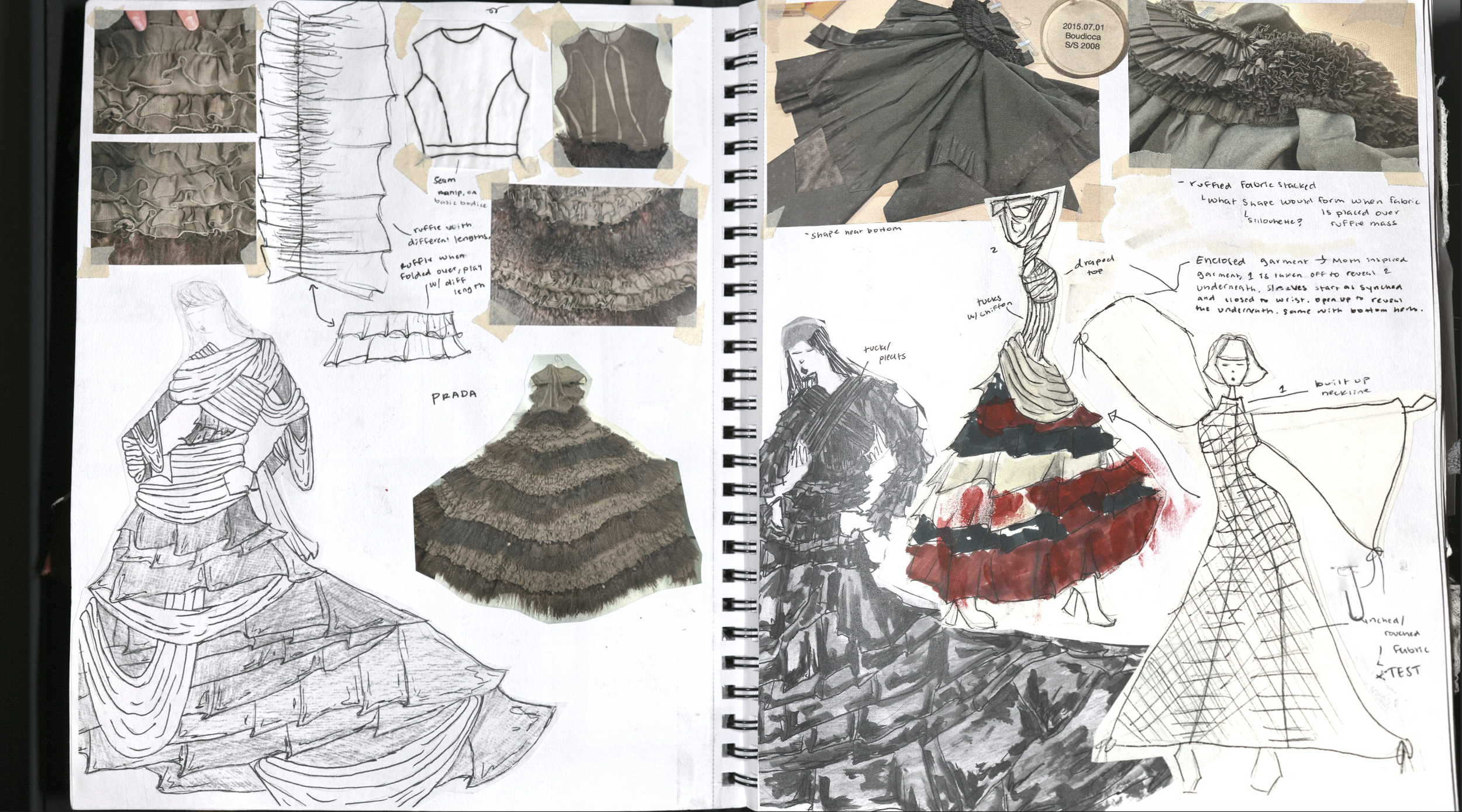
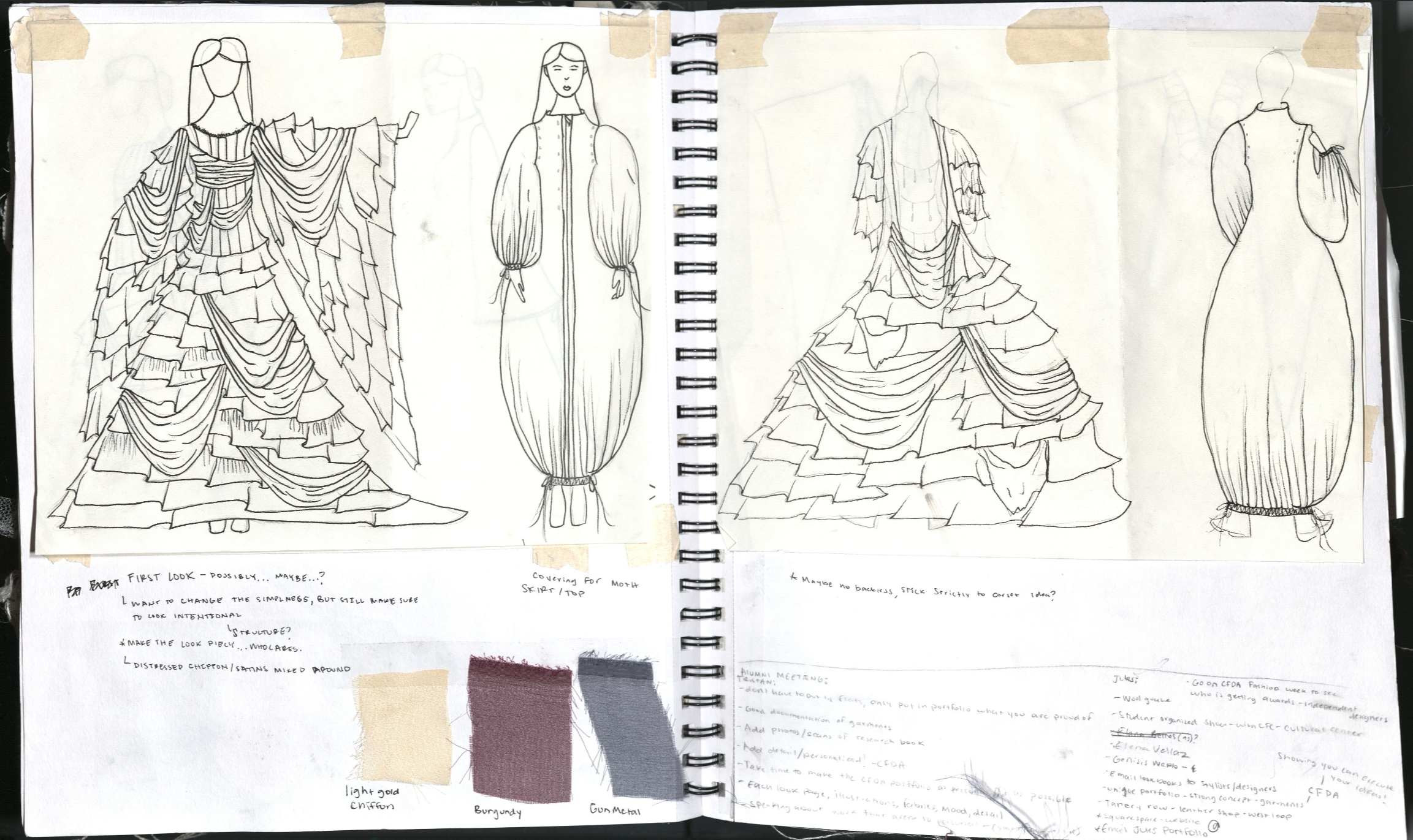
EARLY SKETCH AND DESIGN
PHOTOGRAPHER: CHLOE O’NEILL.
PHOTOGRAPHER: CHLOE O’NEILL.